Has India’s Installed Power Capacity Surged to 5.05 Lakh MW with a Boom in Renewable Energy?
Synopsis
India has achieved a remarkable milestone with its **installed power capacity** hitting **5.05 lakh MW**. This includes a significant increase in renewable energy sources. Discover how government initiatives are propelling this transition and the ambitious goals set for the future.
Key Takeaways
India's total installed generation capacity stands at **5,05,023 MW**. **2,50,643 MW** of this comes from renewable energy sources.
The government is targeting **500 GW of non-fossil energy capacity by 2030**.
Waivers on ISTS charges are aimed at boosting solar and wind projects. **100% FDI** is permitted in the renewable sector under the automatic route.
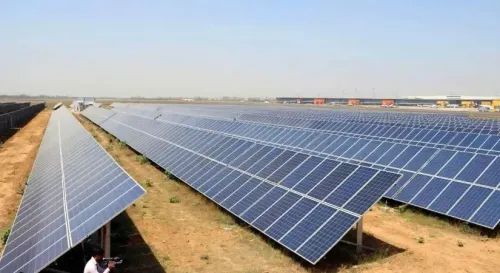
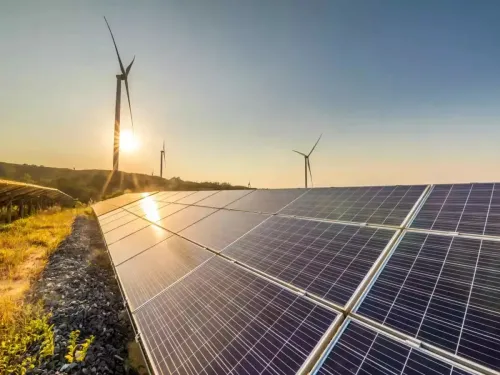
New Delhi, Dec 1 (NationPress) The nation’s total installed generation capacity has now reached 5,05,023 MW, which includes 2,45,600 MW from fossil-fuel sources and 2,59,423 MW from non-fossil fuel sources (with 2,50,643 MW derived from renewable energy sources), as reported to Parliament on Monday.
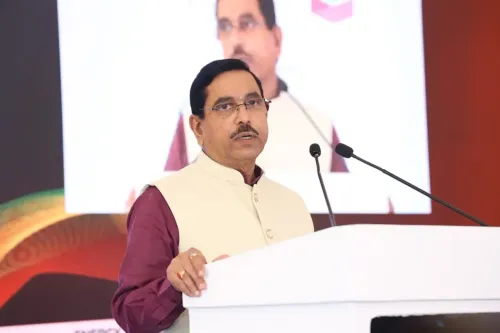
The Minister of State for Power, Shripad Yesso Naik, stated in a written response to the Rajya Sabha that the government has undertaken numerous initiatives to boost and expedite renewable energy capacity, aiming to achieve a target of 500 GW of non-fossil energy capacity by 2030.
For instance, Inter-State Transmission System (ISTS) charges have been waived for the inter-state sale of solar and wind power for projects slated to commence by June 30, 2025, for Green Hydrogen projects until December 2030, and for offshore wind projects until December 2032.
Additionally, the government has released standard bidding guidelines for competitive bidding processes focused on the procurement of power from Grid Connected Solar, Wind, Wind-Solar Hybrid, and Firm and Dispatchable Renewable Energy (FDRE) projects.
The Ministry of New and Renewable Energy (MNRE) has laid out a bidding trajectory aimed at issuing RE power procurement bids totaling 50 GW annually by Renewable Energy Implementing Agencies (REIAs) from FY 2023-24 to FY 2027-28, as mentioned by the minister.
Moreover, foreign direct investment (FDI) has been allowed up to 100% under the automatic route.
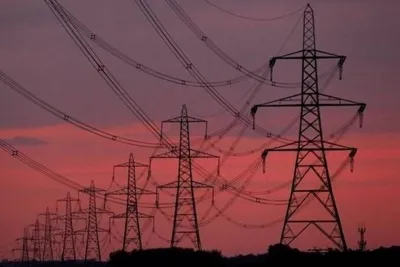
The laying down of new transmission lines and the expansion of sub-station capacity have been financed under the Green Energy Corridor Scheme to facilitate the evacuation of renewable power.
To enhance the necessary transmission infrastructure for the ambitious RE trajectory, a comprehensive transmission plan has been developed through to 2032.
The minister elaborated, saying, "A scheme for establishing Solar Parks and Ultra Mega Solar Power projects is currently being implemented to provide land and transmission facilities for renewable energy developers to set up large-scale projects."
India has also marked a significant milestone in its energy transition by achieving 50% of its installed electricity capacity from non-fossil fuel sources as of June 2025, surpassing the target set under its Nationally Determined Contributions (NDCs) to the Paris Agreement by over five years.
Point of View
I firmly believe that India's commitment to expanding its renewable energy capacity not only exemplifies leadership in combating climate change but also enhances energy security. This transition is essential for sustainable development and showcases India's dedication to fulfilling its global commitments.
NationPress
19 Sept 2026
Frequently Asked Questions
What is India's current total installed power capacity?
India's total installed power capacity has reached **5,05,023 MW**, which includes both fossil-fuel and non-fossil fuel sources.
What percentage of India's power capacity is from renewable sources?
As of now, **2,50,643 MW** of India's power capacity comes from renewable energy sources, showcasing significant growth.
What initiatives has the government taken to promote renewable energy?
The government has waived ISTS charges for specific projects and issued bidding guidelines to enhance renewable energy procurement.
When is India aiming to achieve 500 GW of non-fossil energy capacity?
India aims to achieve **500 GW of non-fossil energy capacity by 2030**.
How is foreign investment impacting India's renewable energy sector?
India has allowed **100% foreign direct investment (FDI)** under the automatic route, boosting the renewable energy sector.