India's non-fossil fuel power capacity hits 300 GW, 54% of total grid
Synopsis
India's electricity grid crossed 300 GW of non-fossil fuel capacity on 31 July 2026 — meaning clean energy now makes up more than half the country's power mix for the first time. With a record 55.29 GW added in a single year and domestic solar module manufacturing at 200 GW, India has hit 60 per cent of its 2030 target. The real challenge now shifts from capacity addition to grid integration and storage.
Key Takeaways
India's non-fossil fuel installed capacity crossed 300 GW as of 31 July 2026 , exceeding 54% of total grid capacity of 552 GW .
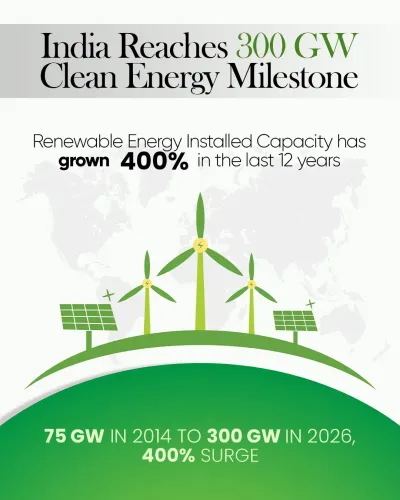
Solar energy reached approximately 165 GW , up from 2.8 GW in 2014; wind energy crossed 58 GW , up from 21 GW .
A record 55.29 GW of clean capacity was added in 2025-26 , including 44.6 GW solar and 6 GW wind.
Renewable energy generation rose from 190.96 BU in 2014-15 to 477.79 BU in 2025-26.
India has achieved 60% of its 500 GW non-fossil fuel target for 2030 .
Domestic solar PV module capacity under ALMM crossed 200 GW , up from 2.3 GW in 2014, backed by the PLI scheme .
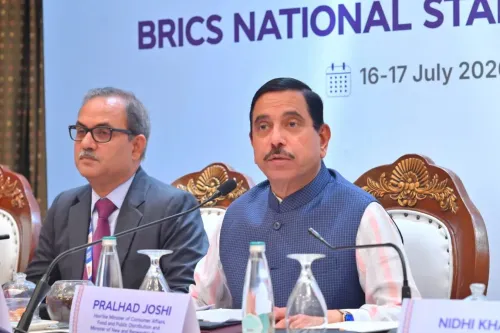
India crossed a landmark 300 GW of non-fossil fuel-based installed electricity generation capacity as of 31 July 2026, the Ministry of New and Renewable Energy announced on 9 August 2026. The milestone means clean energy now accounts for over 54 per cent of the country's total installed capacity of approximately 552 GW, marking a decisive shift in India's power mix.
Solar and Wind Lead the Charge
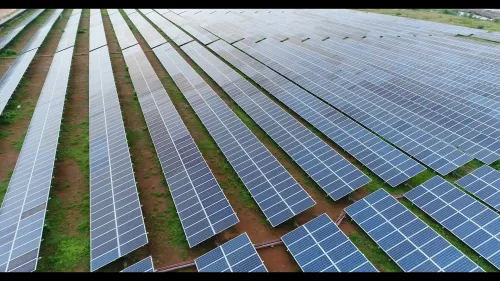
Solar energy is the dominant growth engine, reaching approximately 165 GW of installed capacity — up from a modest 2.8 GW in 2014, a nearly 59-fold expansion in just over a decade. Wind energy has also scaled rapidly, crossing 58 GW from 21 GW in 2014. Together, the two sectors drove a record 55.29 GW of non-fossil fuel capacity addition during 2025-26 alone, with solar contributing 44.6 GW and wind 6 GW of that total.
Progress Toward the 2030 Target
India has now achieved 60 per cent of its 500 GW non-fossil fuel capacity target set for 2030, according to the ministry statement. Renewable energy generation has more than doubled over the same period, rising from 190.96 billion units (BU) in 2014-15 to 477.79 BU in 2025-26. The pace of additions suggests the 500 GW goal is within reach ahead of schedule, though grid integration and storage remain critical variables.
Domestic Manufacturing Scales Up
To underpin supply chain independence, India has expanded its domestic solar manufacturing base significantly. Capacity listed under the Approved List of Models and Manufacturers (ALMM) for Solar PV Modules has crossed 200 GW, rising from just 2.3 GW in 2014. This expansion has been driven in large part by the Production Linked Incentive (PLI) scheme, which incentivises the production of high-efficiency, indigenously manufactured modules.
Green Hydrogen and Industrial Decarbonisation
Beyond electricity generation, the Ministry of New and Renewable Energy is advancing the National Green Hydrogen Mission, positioning India as a potential global hub for the production, use, and export of green hydrogen and its derivatives. Officials framed the clean energy transition not merely as a climate commitment but as a structural driver of industrial competitiveness and energy independence. This comes amid growing international pressure on major economies to accelerate decarbonisation ahead of the 2030 climate benchmarks.
What Comes Next
With 60 per cent of the 500 GW target achieved, the focus is expected to shift toward grid stability, battery storage deployment, and transmission infrastructure — areas that analysts have flagged as potential bottlenecks to absorbing large volumes of variable renewable energy. The record 2025-26 addition sets a high baseline that will need to be sustained or exceeded in coming years to stay on trajectory.
Point of View
But the harder half of the journey starts now. Adding capacity when solar is the cheapest source of new electricity is relatively straightforward; integrating variable renewables into a grid that still depends on coal for despatchable power is not. India's transmission infrastructure and battery storage deployment have not kept pace with generation additions, and that gap will define whether the 500 GW target translates into actual clean electricity consumed — or merely clean electricity curtailed. The domestic manufacturing push via PLI and ALMM is a genuine structural gain, but the green hydrogen ambition remains largely aspirational until electrolyser costs and offtake frameworks are resolved.
NationPress
23 Sept 2026
Frequently Asked Questions
What is India's 300 GW non-fossil fuel capacity milestone?
As of 31 July 2026, India's total installed non-fossil fuel electricity generation capacity crossed 300 GW, accounting for over 54 per cent of the country's total installed capacity of approximately 552 GW. The milestone was confirmed by the Ministry of New and Renewable Energy on 9 August 2026.
How close is India to its 500 GW renewable energy target by 2030?
India has achieved 60 per cent of its 500 GW non-fossil fuel capacity target set for 2030, according to the ministry. At the current pace of additions — a record 55.29 GW was added in 2025-26 alone — the target is considered achievable, though grid integration remains a key challenge.
How much has India's solar capacity grown since 2014?
India's solar installed capacity has grown from just 2.8 GW in 2014 to approximately 165 GW as of mid-2026, a nearly 59-fold increase. Solar contributed 44.6 GW of the record 55.29 GW of clean capacity added in 2025-26.
What is the ALMM and why does it matter for India's energy goals?
The Approved List of Models and Manufacturers (ALMM) is a government framework that mandates the use of domestically certified solar PV modules in government-funded projects. Capacity listed under ALMM has crossed 200 GW, up from 2.3 GW in 2014, reflecting India's push for supply chain independence backed by the PLI scheme.
What is the National Green Hydrogen Mission?
The National Green Hydrogen Mission is a government initiative aimed at positioning India as a global hub for the production, use, and export of green hydrogen and its derivatives. It forms part of India's broader industrial decarbonisation strategy, complementing its renewable electricity expansion.