What Insights Did NITI Aayog Provide on Viksit Bharat and Net Zero?
Synopsis
NITI Aayog's recent unveiling of three pivotal reports offers unique insights into India's journey towards Viksit Bharat and Net Zero, setting the stage for sustainable development and climate action. Discover the comprehensive findings that could shape India's future.
Key Takeaways
NITI Aayog has released three pivotal reports on Viksit Bharat and Net Zero.
The reports detail India’s paths towards sustainable development and greenhouse gas reduction.
Investment requirements for achieving these goals amount to $22.7 trillion by 2070.
Collaboration across sectors is essential for transitioning to low-carbon economies.
These reports will serve as benchmarks for future policy discussions.
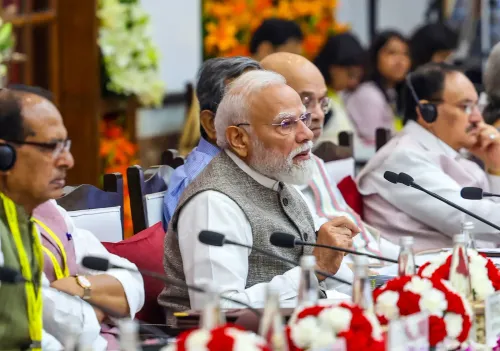
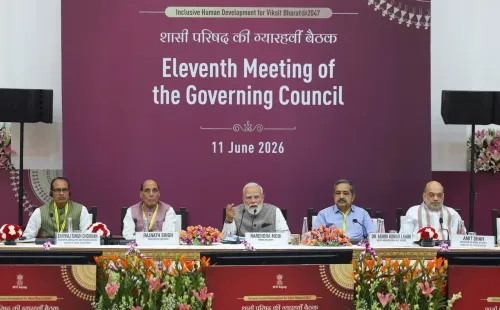
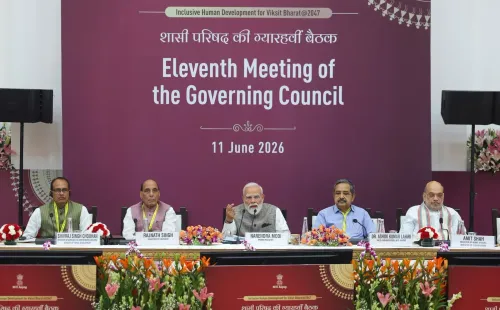
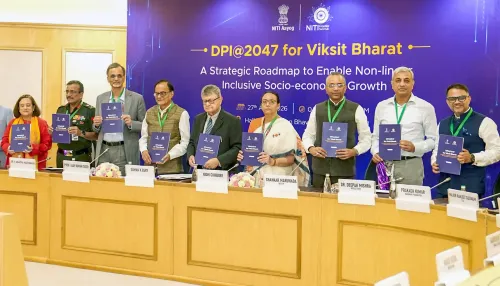
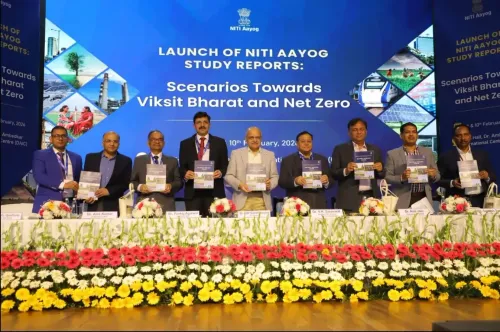
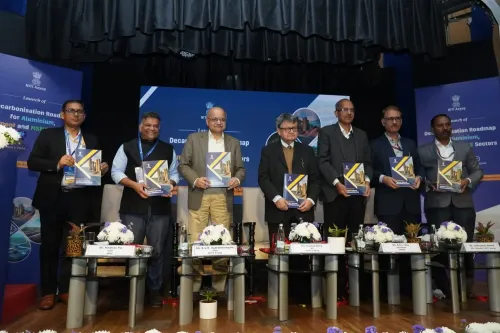
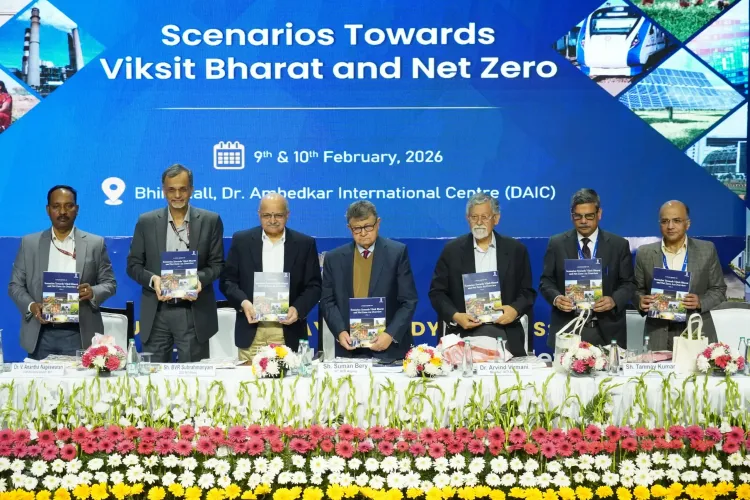
New Delhi, Feb 9 (NationPress) NITI Aayog has unveiled three out of eleven comprehensive reports focusing on scenarios leading towards Viksit Bharat and Net Zero during a significant event at the Ambedkar International Centre in the capital on Monday.
The remaining eight reports are set to be released on Tuesday.
These eleven reports encapsulate the results of India’s inaugural government-led multi-sectoral, integrated analysis aimed at evaluating development scenarios that align with the Prime Minister’s vision for Viksit Bharat 2047, while concurrently targeting a reduction of net greenhouse gas (GHG) emissions to zero by 2070, as stated in an official announcement.
NITI Aayog’s study involves a scenario-based analytical modeling process that merges economic growth, India's developmental goals, and climate obligations.
Input for this study was gathered from ten inter-ministerial working groups analyzing long-term transition scenarios across crucial areas such as macroeconomic impacts of the transition; sectoral low-carbon transitions in energy, transportation, industry, buildings, and agriculture; financing for climate initiatives; critical minerals; R&D and manufacturing; and the societal implications of the transition. This comprehensive evaluation by NITI Aayog aims to guide long-term policy planning.
The reports unveiled on Monday include the analysis titled Scenarios towards Viksit Bharat and Net Zero: An Overview (Vol. 1). This synthesis report distills the core findings derived from the development scenarios evaluated by NITI Aayog. These scenarios take into account historical patterns, existing policies, and further policy measures to accelerate demand for electrification, enhance circular economy practices, boost energy efficiency, encourage swift advancements in low-carbon technologies and fuels, and promote behavioral changes.
The second report, named Scenarios towards Viksit Bharat and Net Zero: Macroeconomic Implications (Vol. 2), elaborates on the macroeconomic effects of the development scenarios on GDP growth, investment, trade, employment, and public finances, illuminating both trade-offs and synergies along India's developmental trajectory. The macroeconomic risks posed by climate change to agriculture, infrastructure, and health, alongside increasing carbon-related trade barriers, are also explored.
The third report titled Scenarios towards Viksit Bharat and Net Zero: Financing Needs (Vol. 9) investigates India’s investment needs in critical sectors such as power, transport, and industry. The analysis concludes that a staggering capital mobilization of $22.7 trillion is essential by 2070 under the Net Zero scenario, which includes a projected financing gap of $6.5 trillion. Additionally, it emphasizes the necessity for domestic financial reforms and enhanced global capital integration.
During the event, Suman Bery, Vice Chairperson of NITI Aayog, remarked, “As one of the world’s largest economies by 2070, India must prioritize the welfare of its citizens and the future world they will inhabit. Consequently, the Net Zero target by 2070 offers direction for Indian stakeholders regarding a world that extends beyond Viksit Bharat 2047. The pathways we develop will be pivotal for others to follow, especially from the global south. I commend the NITI team for their thorough analysis of feasible technological routes towards realizing the Prime Minister’s vision and, crucially, assessing the resource needs: financial, technological, and diplomatic required for this journey.”
In his address, B.V.R Subrahmanyam, CEO of NITI Aayog, stated, “The Net Zero strategy is straightforward – first, electrify energy consumption. Second, ensure green and clean electricity. Third, manage demand through Mission LiFE. Fourth, emphasize circularity and efficiency. Finally, we require cheaper external financing. Clearly articulated, India’s coal usage will increase until 2047, even as energy intensity diminishes and efficiency improves, while achieving Net Zero objectives. India has the potential to emerge as a global leader in clean technologies. An estimated 85 percent of India by 2047 has yet to be constructed, and it can be designed to be climate-friendly.”
Tanmay Kumar, Secretary of the Ministry of Environment, Forest and Climate Change, stated, "India will adhere to Common and Differentiated Responsibility and is capable of meeting Net Zero objectives."
V. Anantha Nageswaran, Chief Economic Advisor to the Government of India, Ministry of Finance, commented, “NITI Aayog has conducted a thorough and rigorous exercise which will serve as a benchmark – a foundational point for future discussions surrounding Viksit Bharat and Net Zero. The reports will be invaluable for policymakers and researchers in charting India's path towards these dual objectives.”
Point of View
It is evident that NITI Aayog’s strategic reports are a significant step in aligning India's development goals with global climate commitments. The findings are not only crucial for policymakers but also for citizens who seek sustainable solutions. This initiative reinforces India's commitment to a greener future, reflecting a responsible approach to economic growth and environmental stewardship.
NationPress
27 Oct 2026
Frequently Asked Questions
What are the key objectives of the reports?
The reports aim to assess development scenarios that meet India's growth vision while achieving net-zero greenhouse gas emissions by 2070.
How will the reports impact India’s climate strategy?
The reports provide essential insights and recommendations that will guide India's long-term policy planning for sustainable development and climate action.
What does 'Viksit Bharat' mean?
'Viksit Bharat' translates to 'Developed India,' reflecting India's aspiration to become a developed nation by the year 2047.
What is the significance of reaching Net Zero by 2070?
Achieving Net Zero by 2070 is pivotal for mitigating climate change impacts and ensuring sustainable development for future generations.