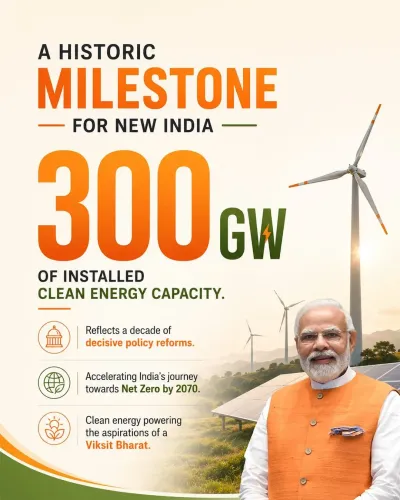
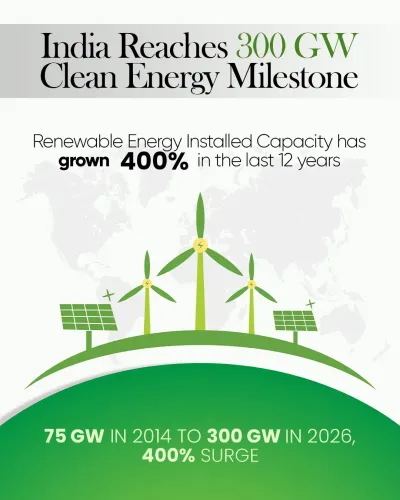
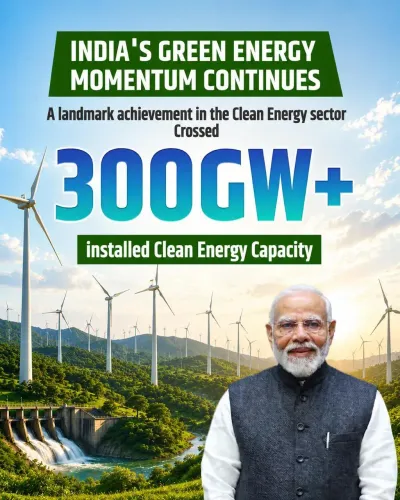
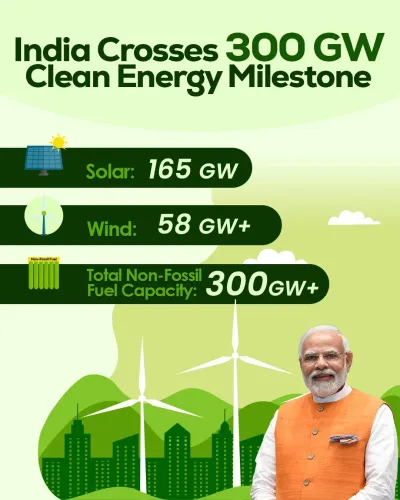
Giriraj Singh Flags India's Non-Fossil Energy Capacity at 297.36 GW
Synopsis
Union Textiles Minister Giriraj Singh shared data on 11 July 2026 showing India's non-fossil fuel energy capacity rose 22 per cent to 297.36 GW in June, highlighting progress toward the government's Panchamrit target of 500 GW by 2030.
Key Takeaways
Union Textiles Minister Giriraj Singh shared the data on 11 July 2026 via X and the NaMo App.
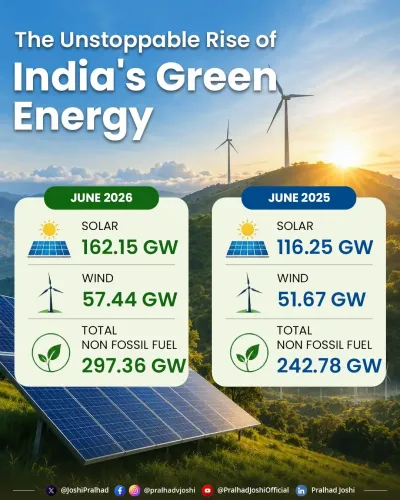
India's non-fossil fuel energy capacity reportedly reached 297.36 GW in June 2026 , a 22 per cent year-on-year increase.
The figure represents approximately 60 per cent of India's Panchamrit target of 500 GW non-fossil capacity by 2030 .
The Panchamrit commitments were announced by PM Modi at COP26 in Glasgow in 2021 .
Official confirmation is expected from the Ministry of Power and Ministry of New and Renewable Energy in their next quarterly reports.
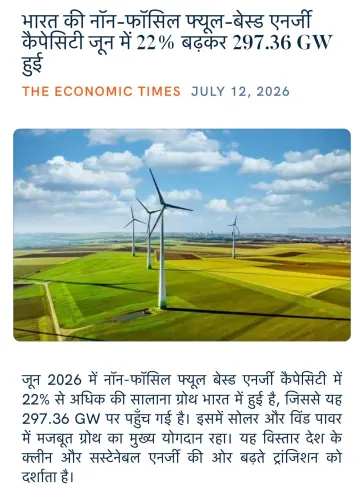
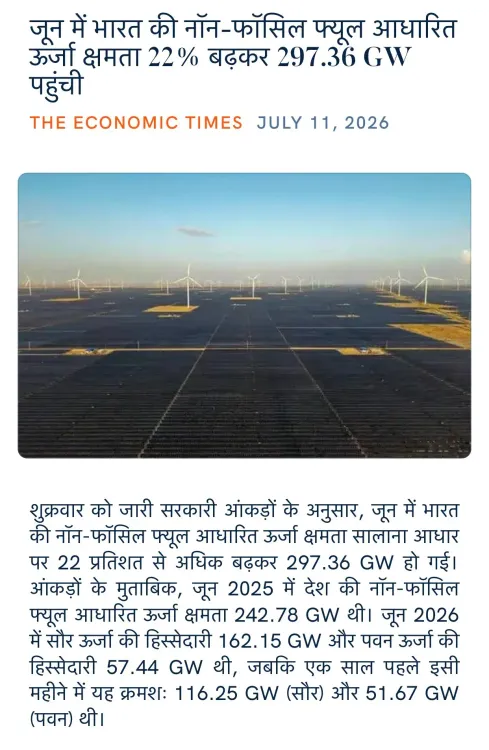
Union Textiles Minister Giriraj Singh on Saturday, 11 July 2026, shared data indicating that India's non-fossil fuel-based energy capacity rose 22 per cent to 297.36 GW in June 2026, posting the figures via X and the NaMo App.
Context
The post, shared in Hindi, states: 'जून में भारत की नॉन-फॉसिल फ्यूल आधारित ऊर्जा क्षमता 22% बढ़कर 297.36 GW पहुंची' — meaning 'India's non-fossil fuel-based energy capacity rose 22% to 297.36 GW in June.' The figures are attributed to a report circulated through the NaMo App, the BJP-linked platform used by party leaders to amplify government-related news. Giriraj Singh, whose primary portfolio is Textiles, shared the data as a broader marker of national economic and environmental progress.
Policy Backdrop
The data point sits within India's Panchamrit climate commitments, announced by Prime Minister Narendra Modi at the COP26 summit in Glasgow in 2021. A central pledge under Panchamrit is achieving 500 GW of non-fossil fuel energy capacity by 2030. At 297.36 GW, India would be approaching roughly 60 per cent of that target with four years remaining. The country's broader climate architecture also includes a net-zero by 2070 goal and obligations under the Paris Agreement.
Successive policy frameworks from the Ministry of New and Renewable Energy have prioritised solar, wind, hydro, and nuclear capacity additions to reduce dependence on fossil fuel imports and meet international pledges. Quarterly capacity reports from the Ministry of Power track this progress and serve as reference points for both domestic policy review and international climate diplomacy.
Stakeholders and Impact
Renewable energy developers and power distribution companies are the primary commercial actors in this expansion. A sustained 22 per cent year-on-year growth rate, if confirmed by official ministry data, would signal continued investment appetite and grid integration progress. For power discoms, absorbing a larger share of variable renewable energy remains a key operational and financial challenge.
For India as a whole, higher non-fossil capacity directly addresses energy security by reducing exposure to volatile global fossil fuel prices — a concern that became acute during the 2022 global energy crisis. The figure, if verified, would also strengthen India's negotiating position at future climate summits.
What's Next
The Ministry of Power and the Ministry of New and Renewable Energy are expected to release their next quarterly capacity reports in the coming weeks, which will provide official confirmation of the June figures. Any related discussions during the monsoon session of Parliament could bring further legislative or budgetary attention to the renewable energy sector. Progress toward the 500 GW Panchamrit target by 2030 will remain a closely watched benchmark for both domestic accountability and India's international climate credibility.
Point of View
If validated, would provide the government with a strong data point to counter criticism that India's 2030 targets are aspirational rather than achievable. At the same time, the gap between 297 GW and the 500 GW Panchamrit goal underscores that the pace of capacity addition must accelerate significantly in the remaining years. The cross-portfolio amplification also signals how the NaMo App ecosystem is used to create a unified political messaging front on flagship national goals.
NationPress
10 Oct 2026
Frequently Asked Questions
What is India's current non-fossil fuel energy capacity in 2026?
According to data shared by Union Textiles Minister Giriraj Singh on 11 July 2026, India's non-fossil fuel-based energy capacity reached 297.36 GW in June 2026, reflecting a 22 per cent year-on-year increase.
What is India's Panchamrit target for renewable energy?
Under the Panchamrit climate commitments announced by PM Modi at COP26 in Glasgow in 2021, India has pledged to achieve 500 GW of non-fossil fuel energy capacity by 2030.
Why did Giriraj Singh post about energy capacity when he is Textiles Minister?
Giriraj Singh shared the data via the NaMo App as part of a broader BJP communications effort to highlight national development milestones, even those outside a minister's direct portfolio.
How much of India's 2030 clean energy target has been achieved?
If the June 2026 figure of 297.36 GW is confirmed, India would have achieved roughly 60 per cent of its 500 GW Panchamrit target with four years remaining.
Where can I find official data on India's renewable energy capacity?
Official capacity data is published by the Ministry of Power and the Ministry of New and Renewable Energy through their quarterly reports, which are the authoritative source for these figures.