Jal Shakti Minister Paatil backs recharge pits for groundwater
Synopsis
Union Jal Shakti Minister C. R. Paatil on 11 July 2026 championed scientifically designed six-foot recharge pits as a scalable solution to India's groundwater crisis, linking the technique to the Catch the Rain campaign and the Viksit Bharat vision of long-term water security.
Key Takeaways
Union Jal Shakti Minister C.
Paatil publicly promoted recharge pits on 11 July 2026 via X, ahead of peak monsoon season.
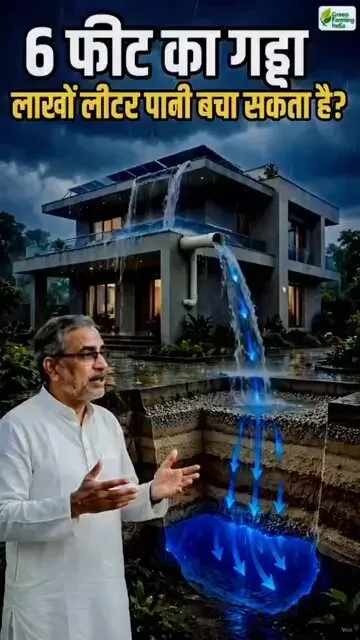
A recharge pit approximately six feet deep , using layered gravel, sand, and soil, can channel rainwater directly into the water table.
The push aligns with the Catch the Rain campaign (launched 2021), Atal Bhujal Yojana (approved 2018), and Jal Jeevan Mission (announced 2019).
Key beneficiaries include farmers , rural households , and urban local bodies in water-stressed regions.
The Central Ground Water Board has documented declining water tables across large parts of India, making decentralised recharge a critical policy priority.
State-level building-code amendments mandating recharge pits and CGWB monitoring reports will be key indicators of on-ground progress.
Union Jal Shakti Minister C. R. Paatil on Saturday, 11 July 2026 used his official X account to advocate for scientifically constructed recharge pits as a practical, low-cost method to replenish India's depleting groundwater reserves, urging citizens and local bodies to adopt the technique ahead of the monsoon season.
Context
In his post, Minister Paatil described a recharge pit — roughly six feet deep and built using layered gravel, sand, and soil — as an 'effective medium to stop rainwater from flowing away wastefully and direct it into the earth's womb' (धरती के गर्भ तक पहुंचाने का प्रभावी माध्यम). He noted that rainwater filtering through these natural layers actively replenishes the water table, providing a long-term foundation for borewells, open wells, and other water sources. The post was tagged with #CatchTheRain, #JalShakti, #RainwaterHarvesting, and #ViksitBharat, signalling its alignment with multiple ongoing central government campaigns.
Policy Backdrop
The message sits squarely within a cluster of flagship central programmes overseen by the Ministry of Jal Shakti. The Catch the Rain campaign, launched in 2021, mainstreamed rainwater harvesting in both rural and urban settings, while the Atal Bhujal Yojana — approved in 2018 — targets aquifer recharge through community-led interventions in groundwater-stressed blocks across the country. The Jal Jeevan Mission, announced in 2019, also carries explicit source-sustainability components that include recharge structures. Together, these schemes reflect a deliberate policy shift from supply-side water delivery toward demand-side conservation and aquifer replenishment.
India's Central Ground Water Board has consistently flagged declining water tables in large parts of the country, making decentralised recharge infrastructure a critical policy priority. Recharge pits represent one of the most scalable interventions because they can be constructed at the household, farm, or community level without heavy capital expenditure.
Stakeholders and Impact
Farmers stand to benefit most directly: sustained groundwater levels reduce dependence on deep borewells and lower irrigation costs. Rural households connected under the Jal Jeevan Mission also depend on aquifer health for the long-term viability of their tap connections. Urban local bodies in water-stressed cities face increasing pressure to mandate recharge structures in new construction, a measure several state governments have already explored through building codes.
Minister Paatil's public communication on the technique is consistent with the Viksit Bharat framework, which explicitly links water security to India's long-term economic and agricultural resilience. By keeping the messaging simple and visual — emphasising a six-foot pit and natural filtration layers — the ministry appears to be targeting grassroots adoption rather than institutional compliance alone.
What's Next
Attention will now turn to whether state governments translate this ministerial nudge into enforceable guidelines or building-code amendments mandating recharge pits in new constructions and agricultural holdings. Central Ground Water Board monitoring reports for notified over-exploited blocks will be a key indicator of whether decentralised recharge efforts are moving the needle on water-table recovery. As the 2026 monsoon progresses, the ministry is expected to amplify the Catch the Rain campaign further, with recharge pits likely positioned as a flagship citizen-action ask.
Point of View
When recharge interventions are most effective — signalling that the Ministry of Jal Shakti is doubling down on citizen-level action to complement its institutional schemes. By reducing a technical intervention to a six-foot pit and three natural layers, the ministry is attempting to democratise groundwater conservation in a way that top-down infrastructure programmes alone cannot. This fits a broader pattern under the Viksit Bharat agenda of framing water security as both a governance commitment and a civic responsibility. The real test will be whether this social-media advocacy translates into state-level mandates and measurable aquifer recovery in over-exploited blocks.
NationPress
11 Jul 2026
Frequently Asked Questions
What is a recharge pit and how does it work?
A recharge pit is a scientifically designed excavation — typically around six feet deep — filled with layers of gravel, sand, and soil that filter rainwater and direct it into the groundwater table, replenishing aquifers that feed borewells and open wells.
What did Jal Shakti Minister C. R. Paatil say about recharge pits?
On 11 July 2026, Minister C. R. Paatil posted on X that a properly built recharge pit can channel thousands to lakhs of litres of rainwater into the ground each year, calling it an invaluable foundation for future water sources under the Catch the Rain campaign.
What is the Catch the Rain campaign?
Catch the Rain is a national campaign launched in 2021 by the Ministry of Jal Shakti to promote rainwater harvesting and conservation across rural and urban India, encouraging communities and households to build water-storage and recharge structures before and during the monsoon.
What is Atal Bhujal Yojana and how is it related to recharge pits?
Atal Bhujal Yojana is a central government groundwater management programme approved in 2018 that focuses on aquifer recharge and sustainable use in water-stressed blocks, with community-led structures like recharge pits forming a core part of its field interventions.
Why is groundwater recharge important for India?
India's Central Ground Water Board has documented falling water tables in large parts of the country due to over-extraction and insufficient natural recharge, threatening irrigation, drinking water supply, and the long-term viability of rural tap connections under Jal Jeevan Mission.