Chirag Paswan Addresses Nation in Live Broadcast on Food Processing
Synopsis
Union Food Processing Minister Chirag Paswan addressed citizens and stakeholders through a live broadcast on X on 11 July 2026, underlining the ministry's push to reduce post-harvest losses, formalise micro enterprises under the PMFME scheme, and expand India's processed food sector.
Key Takeaways
Chirag Paswan , Union Minister of Food Processing Industries, conducted a live broadcast on X on 11 July 2026 .
The PMFME scheme , launched in June 2020 , carries an outlay of Rs 10,000 crore to formalise two lakh micro food processing units over five years.
Post-harvest losses for perishables in India are estimated at 15 to 30 per cent , a key problem the ministry aims to address.
Operation Greens and a network of food parks and cold-chain projects complement the PMFME scheme in building processing infrastructure.
Bihar and eastern states receive targeted policy focus due to high agricultural output but low processing capacity.
The next quarterly PMFME review and upcoming Union Budget are the key near-term milestones for the sector.
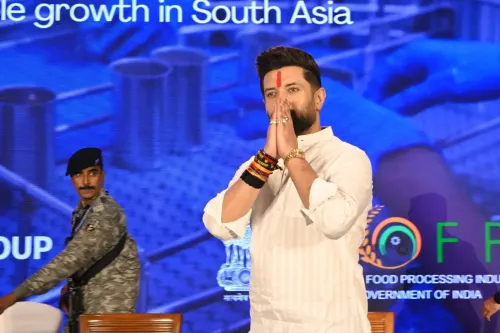
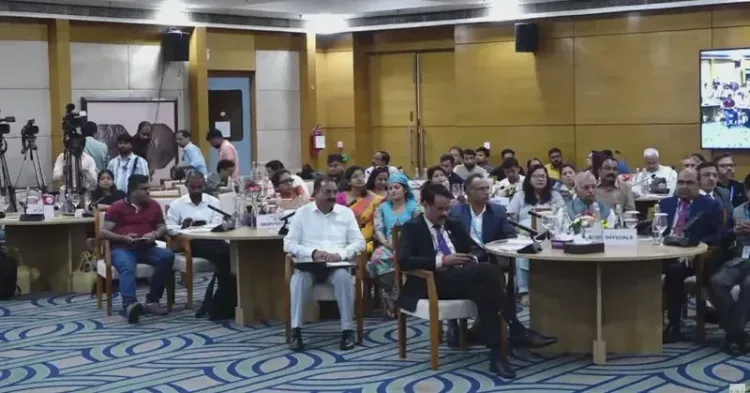
Union Food Processing Minister Chirag Paswan took to a live broadcast on Saturday, 11 July 2026, sharing his address with followers and stakeholders through a linked stream on X, signalling continued public outreach on the food processing sector's priorities.
Context
The broadcast, shared via Paswan's official X account, drew attention to the minister's consistent use of social media as a direct communication channel with citizens, farmers, and micro-entrepreneurs who form the backbone of India's food processing ecosystem. As national president of the Lok Janshakti Party (Ram Vilas) and a key NDA ally, Paswan has used such platforms to reinforce both policy messaging and political visibility.
The ministry he heads — the Ministry of Food Processing Industries (MoFPI) — is responsible for reducing post-harvest losses, promoting value addition, and expanding India's processed food exports. These objectives directly affect millions of small farmers and rural entrepreneurs, particularly in eastern states such as Bihar.
Policy Backdrop
The ministry's flagship programme, the Pradhan Mantri Formalisation of Micro Food Processing Enterprises (PMFME) scheme, was launched in June 2020 with an outlay of Rs 10,000 crore to formalise two lakh micro food processing units over five years through credit-linked grants. The scheme specifically targets the unorganised segment, where most post-harvest value destruction occurs.
Complementing this, Operation Greens — announced in the 2018-19 Union Budget — targets supply-chain stabilisation for tomatoes, onions, and potatoes, while a network of food parks and integrated cold-chain projects has been scaled up since 2014-15 under the Make in India framework. Together, these schemes represent a multi-layered approach to cutting post-harvest losses estimated at 15 to 30 per cent for perishables.
Stakeholders and Impact
Small farmers, micro food enterprises, and rural entrepreneurs stand at the centre of MoFPI's mandate. Bihar and other eastern states receive targeted focus given their high agricultural output but historically low processing capacity — a gap the current government has sought to close through cluster-based models and cold-chain linkages.
The food processing portfolio also carries political significance within the NDA coalition, serving as a signal of inclusion for the Paswan community and a demonstration of the alliance's commitment to Bihar's economic development. Paswan's public broadcasts reinforce this dual role — policy stewardship and community connect.
What's Next
Attention will now turn to the next quarterly review of PMFME scheme implementation, where progress on formalisation targets and credit disbursal will be assessed. Any fresh allocations or revised guidelines emerging from the subsequent Union Budget or parliamentary sessions on agriculture infrastructure could further shape the sector's trajectory.
As the ministry approaches the five-year horizon of its flagship scheme, the pressure to demonstrate measurable outcomes — in formalised units, reduced wastage, and improved farmer realisation — is expected to intensify, making ministerial communication and outreach like this broadcast an increasingly important part of the policy narrative.
Point of View
Bypassing traditional intermediaries to reach rural and semi-urban audiences who are the primary beneficiaries of food processing schemes. For Paswan personally, such outreach serves a dual purpose: reinforcing his credibility as a policy-active minister and consolidating the LJP (Ram Vilas) brand in Bihar ahead of future electoral cycles. The food processing portfolio, while technically unglamorous, sits at the intersection of farmer welfare, rural employment, and export ambition — making it a politically potent brief. How effectively the PMFME scheme's formalisation targets are met will ultimately determine whether this communication strategy translates into tangible political capital.
NationPress
11 Jul 2026
Frequently Asked Questions
Who is Chirag Paswan and what ministry does he head?
Chirag Paswan is the Union Minister of Food Processing Industries and the national president of the Lok Janshakti Party (Ram Vilas) . He is the son of the late Union Minister Ram Vilas Paswan and represents the party in Bihar politics as part of the NDA coalition.
What is the PMFME scheme?
The Pradhan Mantri Formalisation of Micro Food Processing Enterprises (PMFME) scheme was launched in June 2020 with an outlay of Rs 10,000 crore . It provides credit-linked grants to micro units in the unorganised food processing sector, targeting the formalisation of two lakh enterprises over five years.
What is Operation Greens in food processing?
Operation Greens was announced in the 2018-19 Union Budget to stabilise the supply chains and prices of tomatoes, onions, and potatoes by investing in processing and storage infrastructure, reducing price volatility for both farmers and consumers.
Why is food processing important for Bihar?
Bihar has high agricultural output but historically low processing capacity, meaning a large share of farm produce is lost to spoilage before it reaches consumers. Targeted food processing investments aim to cut these losses, raise farmer incomes, and create rural employment in the state.
What are post-harvest losses in India?
Post-harvest losses for perishable commodities in India are estimated at 15 to 30 per cent . Reducing these losses through cold chains, food parks, and processing infrastructure is a central goal of the Ministry of Food Processing Industries .