Odisha CMO Highlights Two Years of Clean Energy Push
Synopsis
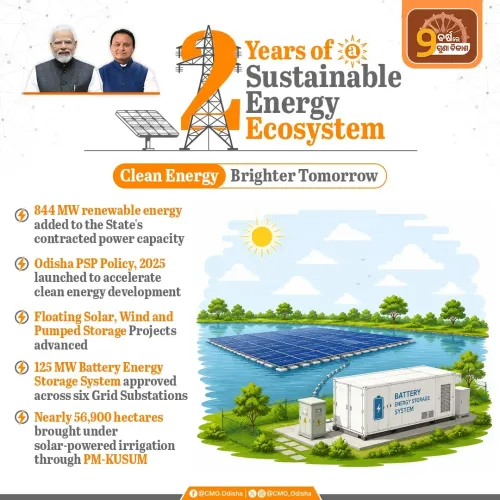
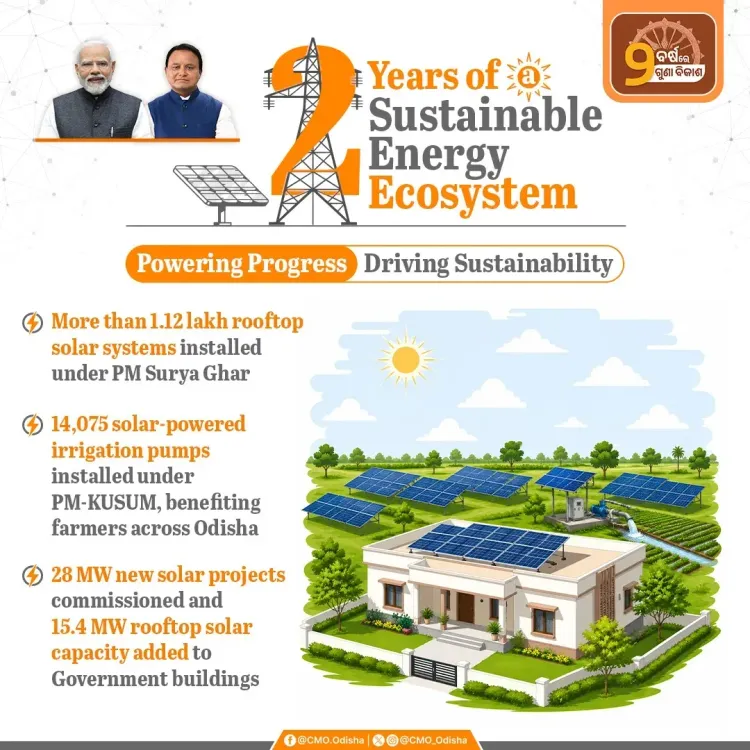
The Chief Minister's Office of Odisha on 11 July 2026 highlighted two years of accelerated clean energy transition, citing rooftop solar, solar-powered irrigation, and broader renewable projects aimed at energy security and reduced fossil fuel dependence.
Key Takeaways
The Chief Minister's Office of Odisha posted on 11 July 2026 highlighting two years of clean energy progress.
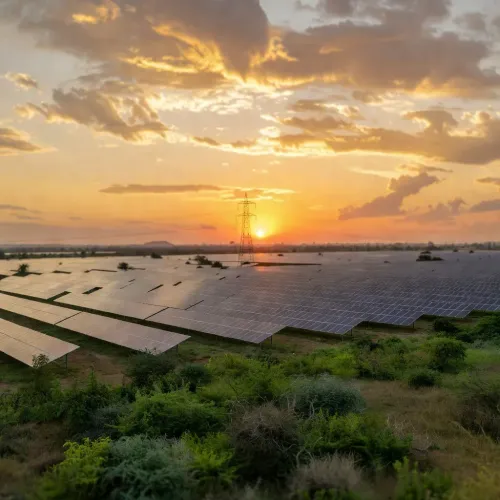
Key focus areas include rooftop solar expansion , solar-powered irrigation , and broader renewable energy projects.
The post tagged @PMOIndia , aligning state progress with the national renewable energy agenda and India's 500 GW non-fossil fuel target by 2030 .
The PM-KUSUM scheme (launched 2019 ) underpins solar irrigation efforts, targeting reduced diesel use among farmers .
Primary beneficiaries are farmers and rural households , who gain from lower input costs and improved energy reliability.
Odisha's clean energy record is expected to factor into upcoming central government reviews of state-level renewable capacity addition.
The Chief Minister's Office of Odisha on Saturday, 11 July 2026, highlighted the state's accelerated transition towards clean and sustainable energy over the past two years, tagging the Prime Minister's Office in its post on X.
The post stated that through 'the expansion of rooftop solar, solar-powered irrigation and renewable energy projects, the State is promoting energy security, reducing dependence on conventional sources and creating a greener future for its people.' The message was addressed to @PMOIndia, signalling a deliberate effort to align Odisha's progress with the national renewable energy agenda.
Context
Odisha, an eastern Indian state with a large agrarian population and significant rural energy demand, has been expanding its renewable energy footprint through both state-level initiatives and centrally sponsored schemes. The two-year window referenced in the post corresponds broadly to the period since mid-2024, during which the state appears to have stepped up its clean energy investments. The CMO's decision to tag the PMO underscores the cooperative federal character of India's energy transition, where states function as primary implementers of national targets.Policy Backdrop
India committed at COP26 in 2021 to achieving 500 GW of non-fossil fuel based electricity capacity by 2030, a target that places enormous responsibility on state governments to scale up local generation. The PM-KUSUM scheme, launched by the central government in 2019, specifically targets solar-powered agricultural pumps to reduce diesel dependency among farmers — a component directly relevant to Odisha's emphasis on solar-powered irrigation. The National Solar Mission, initiated in 2010, laid the foundational framework for grid and off-grid solar deployment that states like Odisha now build upon. Rooftop solar expansion, the other pillar mentioned in the post, aligns with the national push for decentralised generation that reduces pressure on transmission infrastructure.Stakeholders and Impact
Farmers and rural households stand as the primary beneficiaries of the programmes highlighted by the CMO. Solar-powered irrigation reduces input costs for cultivators who would otherwise rely on diesel pumps or erratic grid supply, directly affecting agricultural productivity and income. Rooftop solar installations benefit urban and peri-urban households by lowering electricity bills and improving supply reliability. At a macro level, reduced dependence on conventional sources — primarily coal-based thermal power — contributes to lower carbon emissions and insulates the state's energy system from fuel price volatility. The tagging of the PMO also suggests that Odisha is positioning its clean energy record as a model for federal coordination on climate goals.What's Next
State-level renewable capacity addition figures are expected to feature in upcoming central government reviews of India's 2030 clean energy targets. Budget provisions for additional solar parks and expanded irrigation pump coverage will be closely watched as indicators of whether Odisha intends to deepen or broaden its current trajectory. As India approaches the midpoint of its decade-long clean energy roadmap, states that demonstrate measurable progress in decentralised solar deployment and agricultural energy transition are likely to attract greater central funding and policy support — making Odisha's public communication of its two-year record as much a strategic signal as a progress update.Point of View
Using the tag of @PMOIndia to frame state-level renewable progress within the national 2030 clean energy narrative. It reflects a broader pattern among state governments of leveraging federal scheme branding — particularly PM-KUSUM and rooftop solar — to demonstrate policy delivery credentials. The dual emphasis on energy security and green transition is politically significant: it positions Odisha as both a responsible climate actor and a state that is reducing structural energy vulnerability for its farming communities. Whether the communication is backed by verifiable capacity addition data will determine how much weight it carries in upcoming central reviews of India's climate commitments.
NationPress
11 Jul 2026
Frequently Asked Questions
What clean energy steps has Odisha taken in the last two years?
According to the Chief Minister's Office of Odisha, the state has expanded rooftop solar installations, scaled up solar-powered irrigation, and advanced broader renewable energy projects to promote energy security and reduce dependence on conventional sources.
What is the PM-KUSUM scheme and how does it relate to Odisha?
PM-KUSUM is a central government scheme launched in 2019 to provide solar-powered agricultural pumps to farmers, reducing their reliance on diesel. Odisha's emphasis on solar-powered irrigation aligns directly with this scheme's objectives.
What is India's renewable energy target by 2030?
India committed at COP26 in 2021 to achieving 500 GW of non-fossil fuel based electricity capacity by 2030, a target that depends heavily on state governments scaling up local solar and other renewable projects.
Why did the Odisha CMO tag PMO India in its clean energy post?
Tagging @PMOIndia signals that Odisha is positioning its clean energy progress within the national renewable energy framework, reflecting the cooperative federal model where states implement centrally sponsored schemes to meet India's climate pledges.
Who benefits from Odisha's rooftop solar and solar irrigation push?
Farmers benefit through lower irrigation costs as diesel pumps are replaced by solar-powered alternatives, while rural and urban households gain from more reliable and affordable electricity through rooftop solar installations.