Odisha CMO marks 2 years of farmer welfare push
Synopsis
The Chief Minister's Office of Odisha marked two years of its government by spotlighting the CM-Kisan Yojana, paddy procurement bonuses, zero-interest crop loans and irrigation expansion as pillars of a sustained effort to raise farm incomes and strengthen agricultural infrastructure across the state.
Key Takeaways
The Chief Minister's Office of Odisha posted on 9 June 2026 to mark two years of the current state government.
The CM-Kisan Yojana provides direct financial assistance to farmers as the government's flagship agrarian welfare scheme.
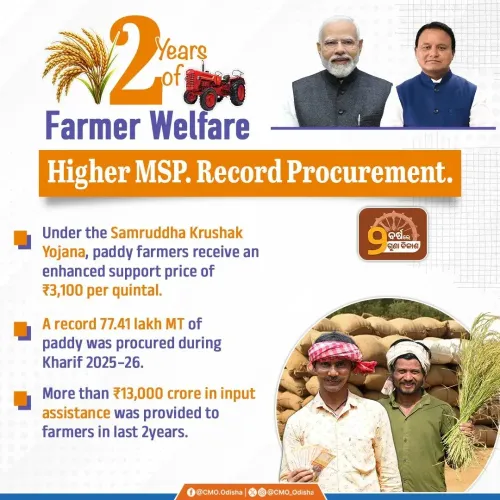
Paddy procurement bonuses supplement the minimum support price, improving income realisation for Odisha's paddy growers.
Zero-interest crop loans reduce cultivation costs and cut dependence on informal moneylenders for small and marginal farmers.
Large-scale irrigation expansion is being pursued to reduce the vulnerability of rain-fed farmland across the state.
The policy approach builds on the earlier KALIA scheme (launched 2018 ), which established direct benefit transfers for Odisha farmers.
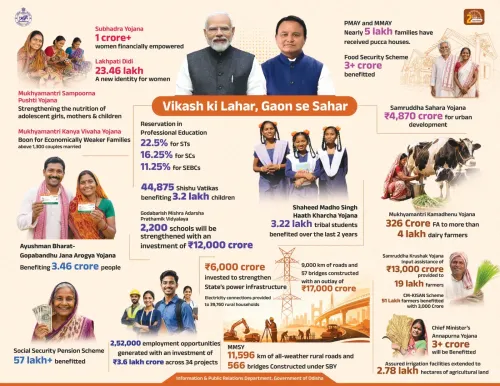
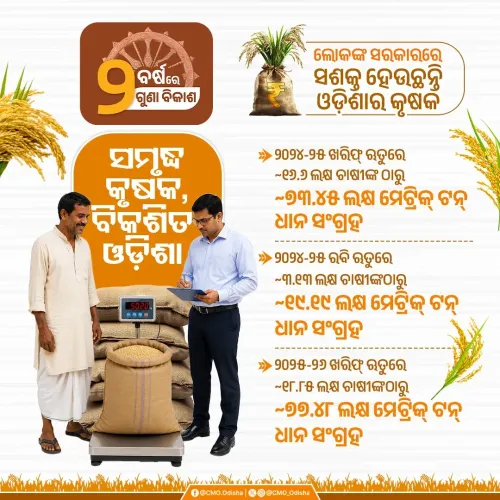
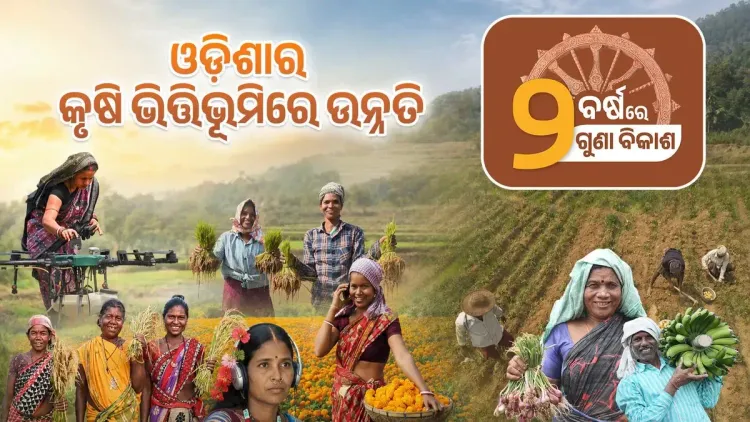
The Chief Minister's Office of Odisha on Tuesday, 9 June 2026 highlighted the state government's sustained efforts to strengthen agricultural infrastructure and social security for farmers, marking two years of what it calls 'Lokanka Sarkar' (the people's government). The post underscored flagship interventions including the CM-Kisan Yojana, paddy procurement bonuses, zero-interest crop loans, and large-scale irrigation expansion as cornerstones of the state's agrarian welfare agenda.
Context
The CMO's post, shared under the hashtags #2YearsofLokankaSarakar, #BikasharaDharaOdishaSara, and #2YearsofKrushakSamruddhi, frames the two-year milestone as a moment to take stock of agricultural progress. The Odia-language message translates broadly as: 'Giving highest priority to agricultural infrastructure development and farmers' social security, the government continues its unrelenting efforts to make Odisha's agricultural sector more prosperous and progressive.' It credits the current dispensation with empowering the state's annadata (food providers) through concrete policy measures.
Policy Backdrop
Odisha's state-funded farm support architecture has deep roots. The KALIA scheme, launched in 2018, pioneered direct input support, crop insurance linkage, and livelihood assistance for small and marginal farmers, establishing a template that subsequent programmes have built upon. The CM-Kisan Yojana represents the current government's flagship iteration of that direct-benefit approach, channelling financial assistance to farmers for day-to-day livelihood needs.
Zero-interest crop loans reduce the cost of cultivation for smallholders who would otherwise depend on informal moneylenders at punishing rates. Paddy procurement bonuses supplement the minimum support price, directly improving the realisation price for growers of Odisha's principal crop. Irrigation expansion, meanwhile, addresses the structural vulnerability of rain-fed agriculture that affects a large share of the state's cultivated area.
Stakeholders and Impact
The primary beneficiaries are small and marginal paddy farmers, who constitute the bulk of Odisha's agrarian population. Eastern Indian states, including Odisha, have historically used targeted welfare schemes to cushion rural incomes against monsoon volatility and commodity price swings. Analysts note that combining direct cash transfers with production-side support — credit, irrigation, and procurement — creates a more resilient income floor than any single intervention alone.
The broader pattern across eastern India reflects a recognition that agrarian distress requires multi-pronged state intervention rather than market mechanisms alone. Odisha's approach, anchored in successive scheme generations from KALIA onward, is frequently cited as a model within the region for integrating social protection with agricultural productivity goals.
What's Next
Attention will now turn to budget allocations for the next agricultural season and physical progress reports on ongoing irrigation projects. Any revision to paddy procurement bonus rates ahead of the kharif harvest will be closely watched by farmer groups and opposition parties alike. The government's ability to sustain and expand these commitments as the fiscal year progresses will determine whether the two-year milestone translates into measurable gains in rural household income across Odisha.
Point of View
Deploying the language of farmer empowerment to consolidate rural support ahead of future electoral cycles. By anchoring the narrative in tangible scheme names — CM-Kisan, zero-interest loans, paddy bonuses — the government signals continuity with Odisha's established tradition of state-led agrarian welfare, a tradition that stretches back to the KALIA scheme era. The emphasis on irrigation alongside income-support measures suggests an attempt to move beyond pure cash-transfer optics toward a more structural productivity argument. Whether the on-ground delivery matches the messaging will ultimately determine the political dividend.
NationPress
24 Sept 2026
Frequently Asked Questions
What is the CM-Kisan Yojana in Odisha?
The CM-Kisan Yojana is an Odisha government scheme that provides direct financial assistance to farmers to support their livelihoods, building on the state's earlier KALIA scheme framework of targeted agrarian welfare.
What paddy procurement bonus does Odisha give farmers?
The Odisha government pays a bonus over and above the central minimum support price when purchasing paddy from farmers, directly raising the effective price growers receive for their crop.
How do zero-interest crop loans work in Odisha?
Under the zero-interest crop loan scheme, eligible farmers in Odisha can borrow for cultivation costs without paying any interest, reducing their financial burden and dependence on informal credit sources.
What is Lokanka Sarkar in Odisha?
'Lokanka Sarkar' translates from Odia as 'the people's government' and is the term the current Odisha administration uses to describe its governance philosophy, emphasising citizen-centric welfare delivery.
What was the KALIA scheme in Odisha?
KALIA, launched in 2018, was a landmark Odisha scheme that provided input assistance, crop insurance linkage and livelihood support directly to small and marginal farmers, and is regarded as a precursor to current programmes like CM-Kisan Yojana.