CM Majhi's Odisha Marks 2 Years of Farm Welfare Push
Synopsis
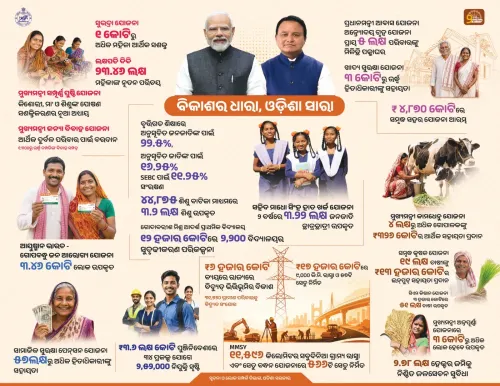
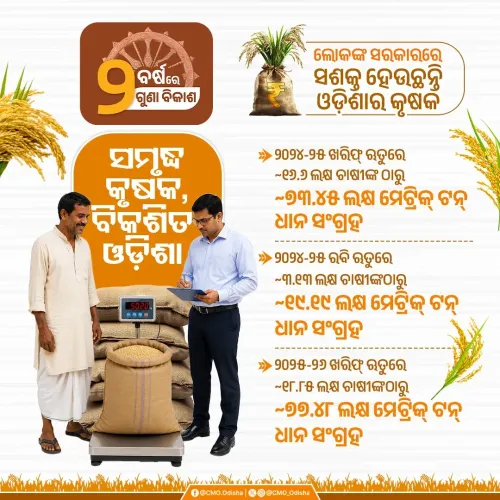
The Chief Minister's Office of Odisha has marked two years of CM Mohan Majhi's government by highlighting direct bank transfers to farmers, expanded irrigation, agricultural infrastructure development, and support for dairy and cattle farmers as pillars of its rural welfare agenda.
Key Takeaways
The Chief Minister's Office of Odisha posted on 10 June 2026 marking two years of the Majhi-led BJP government's farm welfare initiatives.
Financial incentives and crop-support amounts are being transferred directly to farmers' bank accounts , in line with the direct-benefit-transfer model.
The government cites expanded irrigation facilities and agricultural infrastructure development as key achievements.
Positive steps for cattle rearers and dairy farmers have been highlighted as a distinct pillar of the rural economy strategy.
The post was shared under #2YearsofLokankaSarakar and #BikasharaDharaOdishaSara , framing the milestone as a development narrative.
CM Mohan Charan Majhi has led the Odisha government since June 2024 following the BJP's assembly election victory.
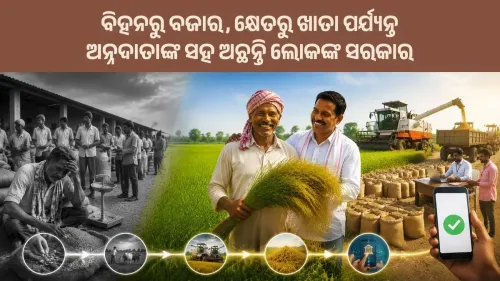
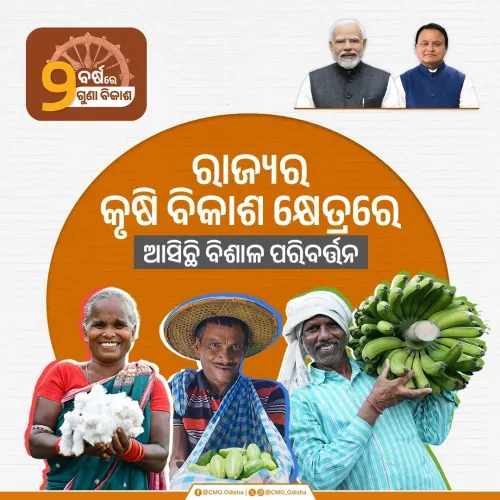
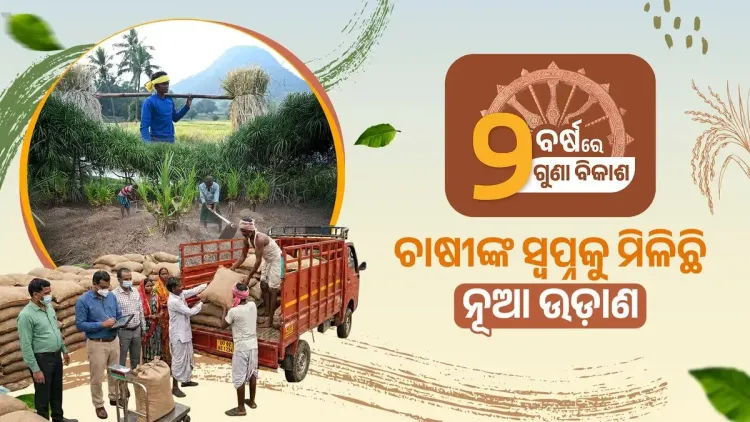
The Chief Minister's Office of Odisha on Wednesday, 10 June 2026 highlighted two years of sustained agricultural reform under Chief Minister Mohan Charan Majhi, stating that the state government has worked continuously for the all-round development of farming and farmers across Odisha.
Context
The official post, shared under the hashtags #2YearsofLokankaSarakar ('Two Years of the People's Government') and #BikasharaDharaOdishaSara ('Stream of Development Across Odisha'), states that financial incentives and support amounts are being transferred directly to farmers' bank accounts. The government says this direct-benefit approach has strengthened the rural economy.
The Odia-language post reads, in translation: 'Under the leadership of respected Chief Minister Shri Mohan Majhi, the state government has been working continuously over the past two years for the all-round development of agriculture and farmers in Odisha. Along with providing fair prices for the crops produced by farmers, financial incentives and assistance are being transferred directly to their bank accounts, which has further strengthened the rural economy.'
Policy Backdrop
Chief Minister Majhi took office in June 2024 after the BJP-led alliance won the Odisha assembly elections, ending a long period of BJD rule. The new administration has maintained the state's traditional emphasis on irrigation expansion and input subsidies while more visibly integrating dairy and animal husbandry support into its agricultural agenda.
Direct benefit transfers to farmers' bank accounts follow the model established nationally by PM-KISAN, the central government's income-support scheme launched in 2019, which delivers annual financial assistance directly to eligible farmer families. Odisha's approach mirrors this architecture at the state level, combining cash transfers with physical infrastructure investment to address both immediate liquidity needs and longer-term productivity constraints.
The post specifically cites expanded irrigation facilities, agricultural infrastructure development, and positive steps for cattle rearers and dairy farmers as pillars of the government's two-year record. It closes with the assertion: 'With greenery in the fields and a resolve for development in every village, the people's government is realising the dream of a prosperous Odisha.'
Stakeholders and Impact
Agriculture employs a large share of Odisha's rural workforce, making farm-sector policy central to the state's broader economic trajectory. Small and marginal farmers, who depend heavily on monsoon rains and state support for inputs, are the primary beneficiaries of direct-transfer programmes and irrigation expansion.
Dairy farmers and cattle rearers represent a secondary but growing constituency in the state's agricultural economy. The government's stated focus on livestock development signals an attempt to diversify rural income sources beyond crop cultivation, a pattern increasingly visible across Indian states seeking to cushion farmers against weather-related income shocks.
What's Next
The two-year milestone communication is likely to be followed by more detailed policy announcements as the government builds its narrative ahead of future electoral cycles. Observers will watch state budget documents and agricultural data releases for verified figures on irrigation coverage, direct-transfer volumes, and dairy sector outcomes to assess the on-ground impact of the measures cited.
The broader test for Odisha's farm welfare push will be whether infrastructure investments translate into measurable improvements in farmer incomes and rural consumption — metrics that will shape both policy continuity and political outcomes in the state.
Point of View
Designed to consolidate the BJP government's agrarian credentials in a state where farming households form a decisive electoral bloc. By anchoring the narrative on direct bank transfers and irrigation — both tangible and verifiable in principle — the government is positioning itself within the mainstream Indian political consensus that cash-plus-infrastructure is the credible formula for rural welfare. The emphasis on dairy and livestock is notable: it signals an effort to broaden the government's rural coalition beyond crop farmers to a constituency that previous administrations addressed less visibly. The real test, however, lies in independent data: until verified outlay and beneficiary figures are published, the milestone remains a statement of intent as much as of achievement.
NationPress
19 Sept 2026
Frequently Asked Questions
Who is the Chief Minister of Odisha in 2026?
Mohan Charan Majhi is the Chief Minister of Odisha. He assumed office in June 2024 after the BJP-led alliance won the state assembly elections, and has led the government through its first two years of farm welfare initiatives.
What is the Odisha government doing for farmers?
The Odisha government under CM Majhi has been transferring financial incentives and crop-support amounts directly to farmers' bank accounts, expanding irrigation infrastructure, developing agricultural facilities, and providing support to dairy farmers and cattle rearers.
What is #2YearsofLokankaSarakar?
#2YearsofLokankaSarakar translates to 'Two Years of the People's Government' in Odia. It is the official hashtag used by the Chief Minister's Office of Odisha to mark the second anniversary of the Majhi-led BJP government in June 2026.
How does Odisha transfer farm support money to farmers?
The Odisha government uses a direct benefit transfer model, crediting financial incentives and agricultural assistance amounts straight into farmers' bank accounts, bypassing intermediaries and aiming to reduce leakage in subsidy delivery.
What is the significance of dairy farming in Odisha's agriculture policy?
The Majhi government has made support for cattle rearers and dairy farmers a distinct pillar of its rural economy strategy, reflecting a wider Indian trend of diversifying farm household incomes beyond crop cultivation to reduce dependence on monsoon-linked yields.