CM Majhi Steers Odisha Toward Renewable Energy Leadership
Synopsis
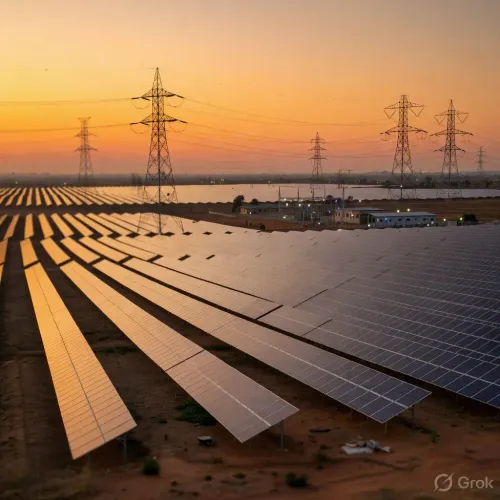
The Chief Minister's Office of Odisha says CM Mohan Majhi is steering the state toward renewable energy leadership through floating solar, wind, pumped storage and battery projects, aligning with India's 500 GW non-fossil target by 2030.
Key Takeaways
The Chief Minister's Office of Odisha declared the state is emerging as a renewable energy leader under CM Mohan Charan Majhi .
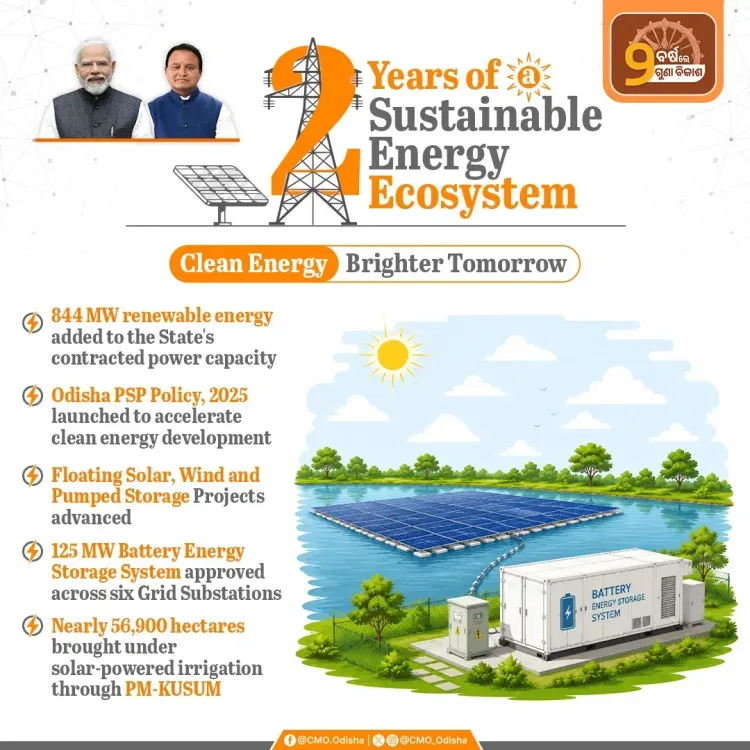
The state is advancing four technology tracks: floating solar, wind, pumped storage, and battery energy storage .
Mohan Majhi became Odisha's first BJP Chief Minister in 2024 , making energy transition a key policy priority.
The strategy aligns with India's national target of 500 GW non-fossil capacity by 2030 and net-zero by 2070 .
Tender outcomes for floating solar and storage projects, and central viability gap funding, will be the next concrete milestones to watch.
The Chief Minister's Office of Odisha announced on Saturday, 11 July 2026 that the state is positioning itself as a national leader in renewable energy, citing progressive policies and strategic investments under the leadership of Chief Minister Mohan Charan Majhi. The statement highlighted advances in floating solar, wind, pumped storage, and battery energy projects as the pillars of a future-ready energy sector.
Context
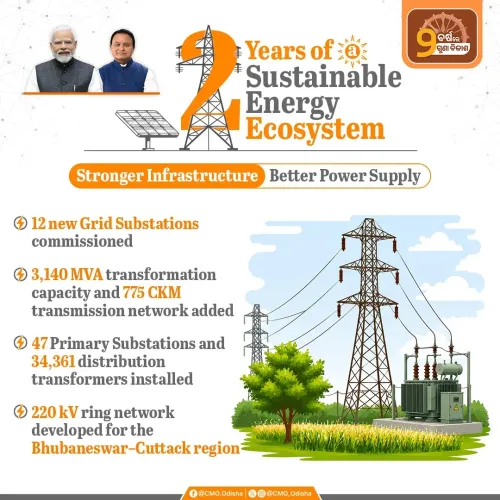
The CMO's post, addressed also to the Prime Minister's Office, stated that Odisha is 'laying the foundation for a resilient, future-ready and sustainable energy sector' through its diversified renewable portfolio. The four technology tracks — floating solar, wind, pumped storage, and battery energy storage systems — represent a broad-spectrum approach rather than dependence on a single source. This signals an intent to build grid reliability alongside raw generation capacity.
Mohan Charan Majhi, who became Odisha's first BJP Chief Minister in 2024, has made energy transition a visible plank of his administration's economic agenda. The state's eastern geography, with its river reservoirs and coastal wind corridors, offers natural advantages for both floating solar and offshore-adjacent wind development.
Policy Backdrop
India's ambition to install 500 GW of non-fossil energy capacity by 2030 — and achieve net-zero emissions by 2070 — has pushed states to accelerate their own renewable pipelines. Odisha's approach mirrors strategies adopted by Rajasthan, Gujarat, and Tamil Nadu, which have attracted large private investments by combining land allocation, transmission access, and renewable purchase obligations into coherent state frameworks.
India's National Solar Mission, launched in 2010, established the original state-level solar targets that have since evolved into broader clean-energy mandates. Pumped hydro storage and grid-scale batteries have grown in strategic importance as intermittent solar and wind capacity scales up, requiring balancing solutions to prevent supply mismatches.
Stakeholders and Impact
Renewable energy investors — both domestic and international — are the primary audience for signals of this kind, as state-level policy clarity directly influences project viability assessments. For Odisha's residents, a diversified and storage-backed grid promises greater supply reliability and insulation from coal-price volatility, which has historically driven electricity tariff fluctuations in eastern India.
The explicit mention of battery energy projects alongside pumped storage is notable: battery storage remains capital-intensive, and state backing — whether through viability gap funding or long-term power purchase agreements — is typically necessary to attract developers. The Ministry of New and Renewable Energy has rolled out central support schemes for storage, and Odisha's alignment with these frameworks could unlock additional funding.
What's Next
Observers will watch for concrete tender announcements for floating solar installations on Odisha's reservoirs, wind capacity auctions, and storage procurement rounds that would give substance to the policy direction outlined by the CMO. Any allocation of viability gap support from the central government or new public-private partnership structures will be key indicators of how quickly the state's ambitions translate into commissioned capacity.
As Indian states compete to attract clean-energy capital, Odisha's ability to move from policy declaration to project execution will determine whether it consolidates a genuine leadership position in the country's renewable transition or remains one of several aspirants in an increasingly crowded field.
Point of View
Positioning Odisha's renewable push within the national 500 GW target narrative and inviting central partnership. For a state historically associated with coal and heavy industry, the explicit embrace of floating solar and battery storage marks a meaningful shift in the political economy of energy in eastern India. Chief Minister Majhi appears to be using the clean-energy agenda both to attract private investment and to differentiate his administration's development identity. Whether this translates into commissioned megawatts will be the real test of the policy's ambition.
NationPress
10 Oct 2026
Frequently Asked Questions
What renewable energy projects is Odisha developing under CM Mohan Majhi?
Odisha is developing floating solar, wind, pumped storage, and battery energy storage projects under Chief Minister Mohan Charan Majhi's administration, as announced by the Chief Minister's Office in July 2026.
Why is Odisha focusing on floating solar and battery storage?
Floating solar uses water reservoirs without consuming land, while battery storage balances intermittent supply from solar and wind — both are priorities as India targets 500 GW of non-fossil capacity by 2030.
Who is Mohan Charan Majhi and what is his energy policy?
Mohan Charan Majhi is Odisha's Chief Minister since 2024 and the state's first BJP leader to hold the post. His administration has prioritised diversified renewable energy investment as a core economic and infrastructure agenda.
How does Odisha's renewable energy plan fit India's national targets?
India aims for 500 GW of non-fossil energy by 2030 and net-zero by 2070. Odisha's multi-technology renewable strategy — mirroring approaches in Rajasthan, Gujarat and Tamil Nadu — is designed to contribute to and benefit from these national goals.
What should investors watch for in Odisha's renewable energy sector?
Key milestones include state tender announcements for floating solar on reservoirs, wind capacity auctions, battery storage procurement rounds, and any central government viability gap funding allocated to Odisha projects.