Odisha CMO Pushes PM Surya Ghar Rooftop Solar for 'Viksit Odisha'
Synopsis
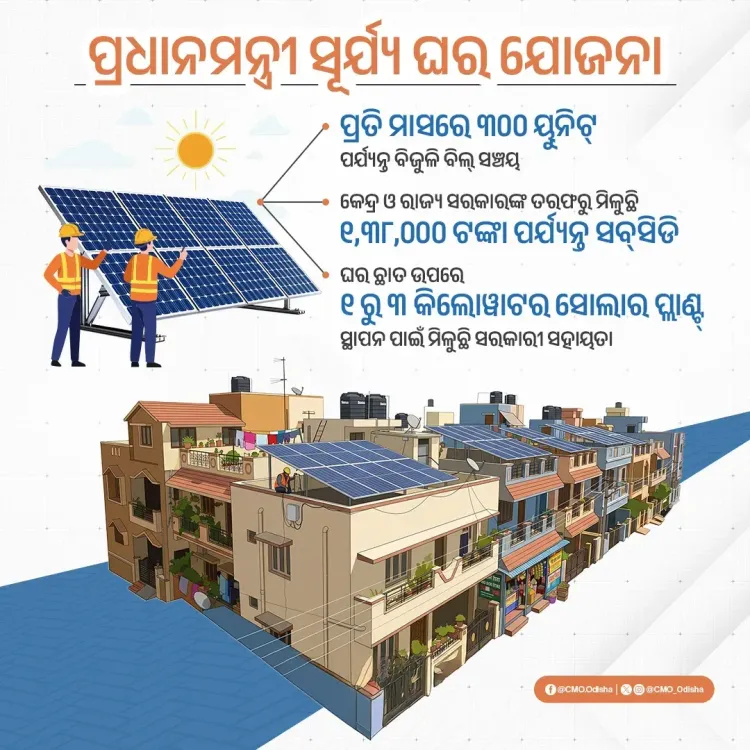
The Chief Minister's Office of Odisha framed rooftop solar adoption under the Pradhan Mantri Surya Ghar Yojana as central to the 'Viksit Odisha' vision, citing combined central and state subsidies that let households save on bills for up to 300 units of monthly electricity and advance a renewable-energy-rich state.
Key Takeaways
The Chief Minister's Office of Odisha promoted rooftop solar under the Pradhan Mantri Surya Ghar Yojana on 4 June 2026.
Households can save on electricity bills for up to 300 units per month after installation.
Both the Union and State governments provide subsidies to lower upfront costs.
The scheme, launched in February 2024, targets one crore households nationally.
The CMO linked the push to its broader 'Viksit Odisha' development agenda.
Exact state-level subsidy quantum and district installation figures were not detailed in the post.
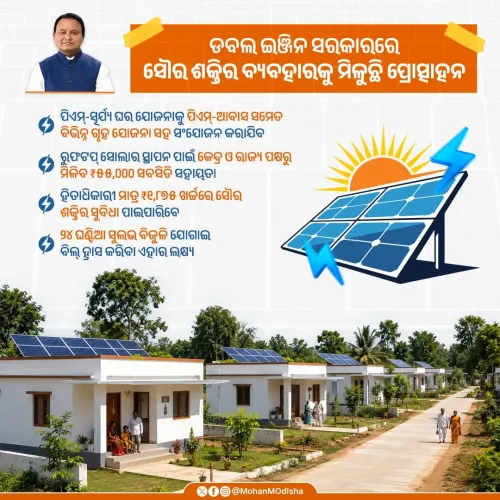
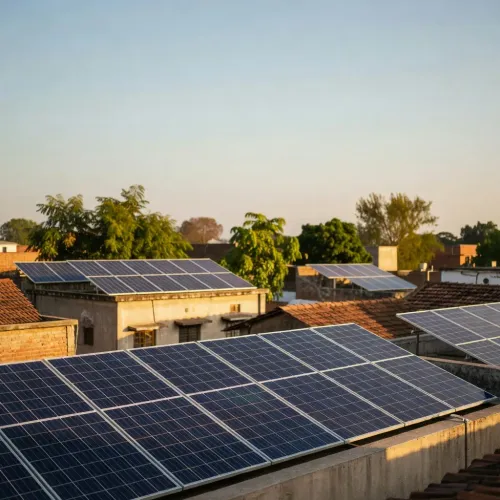
The Chief Minister's Office of Odisha on Thursday, 4 June 2026, pitched rooftop solar adoption under the Pradhan Mantri Surya Ghar Yojana as a cornerstone of the state's 'Viksit Odisha' (Developed Odisha) vision, highlighting combined central and state subsidies that let households save on monthly power bills for up to 300 units. The post, shared from the official handle in Odia, framed renewable energy expansion as both a household-savings measure and a strategic pillar of the state's long-term energy roadmap.
'The dream of building a Developed Odisha is being realised alongside energy conservation,' the CMO said, adding that rooftop solar plants installed under the scheme, supported by subsidies from the Union and State governments, are advancing the goal of an akshaya shakti-samruddha Odisha (a renewable-energy-rich Odisha). The message carried the hashtag #ViksitOdisha.
Context
The Pradhan Mantri Surya Ghar Muft Bijli Yojana was launched by the Government of India in February 2024 with the goal of equipping one crore households nationwide with rooftop solar systems. Eligible families receive central financial assistance to install panels and can draw up to 300 units of free electricity each month, with surplus generation eligible for export to the grid.
Thursday's post positions Odisha squarely within that national push, while underlining the state's own supplementary role. The CMO's framing links three threads — household savings, energy security and the broader 'Viksit Odisha' development narrative — that have featured consistently in the administration's public messaging.
Policy backdrop
India is targeting 500 GW of non-fossil-fuel-based electricity capacity by 2030, with decentralised rooftop solar forming a significant component of that mix. The PM Surya Ghar scheme is the principal central instrument for scaling residential solar, combining capital subsidies with concessional loans and net-metering frameworks executed through state distribution utilities.
For Odisha, a state with substantial industrial power demand and a large rural consumer base, rooftop solar offers a way to ease pressure on the distribution network and reduce aggregate technical and commercial losses. State-level top-ups to the central subsidy — a model adopted by several states — are designed to lower the effective upfront cost for households and accelerate uptake.
Stakeholders and impact
The primary beneficiaries are residential electricity consumers, particularly middle-income households whose monthly consumption falls within or near the 300-unit threshold. For such families, a rooftop installation can effectively neutralise the energy component of the monthly bill once the system is commissioned and net-metered.
Distribution companies stand to gain from reduced peak-hour stress and lower subsidy burdens on agricultural and domestic tariff slabs over time. Local solar installers, MSMEs in the renewable supply chain and certified vendors empanelled under the scheme also benefit from a wider order pipeline. The post does not specify district-wise installation numbers or the exact quantum of the state's supplementary subsidy.
What's next
The immediate watch is on cumulative rooftop solar installations in Odisha and the pace of subsidy disbursement over the next two quarters, both of which will indicate whether the combined central-state package is translating into on-ground capacity addition. Awareness campaigns, vendor empanelment and the responsiveness of discom net-metering processes will be decisive variables.
If uptake accelerates, Odisha could emerge as a meaningful contributor to the national rooftop solar tally, reinforcing the CMO's 'Viksit Odisha' positioning while delivering measurable bill relief to households. The post signals that renewable energy will remain a recurring theme in the state's development communication in the months ahead.
Point of View
Anchoring PM Surya Ghar within the 'Viksit Odisha' narrative. It signals continued alignment between Bhubaneswar and New Delhi on renewable energy delivery, with rooftop solar increasingly used as a retail-facing welfare touchpoint that doubles as climate policy. The framing also positions household bill savings, rather than abstract capacity targets, as the political pitch. Expect renewable energy to feature prominently in Odisha's development communication as India approaches its 2030 non-fossil capacity milestones.
NationPress
18 Oct 2026
Frequently Asked Questions
What is the PM Surya Ghar Yojana?
The Pradhan Mantri Surya Ghar Muft Bijli Yojana is a central scheme launched in February 2024 that helps households install rooftop solar plants and receive up to 300 units of free electricity each month through capital subsidies and concessional financing.
How much electricity can a household save under the scheme in Odisha?
Eligible households can save on electricity bills for consumption of up to 300 units per month, depending on the size of the rooftop solar plant installed and the household's actual usage pattern.
Who provides the subsidy for rooftop solar in Odisha?
Both the Union government and the State government of Odisha provide subsidies under the PM Surya Ghar framework, with the central component forming the bulk of the support and the state supplementing it.
How does rooftop solar support the Viksit Odisha vision?
Rooftop solar advances 'Viksit Odisha' by combining household-level bill savings with state-wide renewable capacity addition, reducing distribution-side stress and aligning Odisha with India's broader clean energy goals.
How can a household in Odisha apply for PM Surya Ghar Yojana?
Households can register through the national PM Surya Ghar portal, select an empanelled vendor, and coordinate with the local distribution company for net-metering and subsidy disbursement after installation.