CM Yogi: 6 Lakh UP Families Go Solar Under PM Surya Ghar Scheme
Synopsis
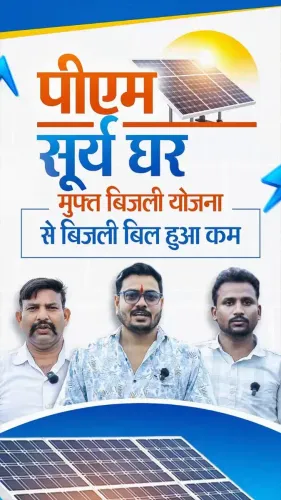
The Chief Minister's Office of Uttar Pradesh says more than 6 lakh families have installed rooftop solar panels under the PM Surya Ghar: Muft Bijli Yojana, achieving energy self-reliance and reducing electricity bills by 50 to 60 per cent, as stated by CM Yogi Adityanath.
Key Takeaways
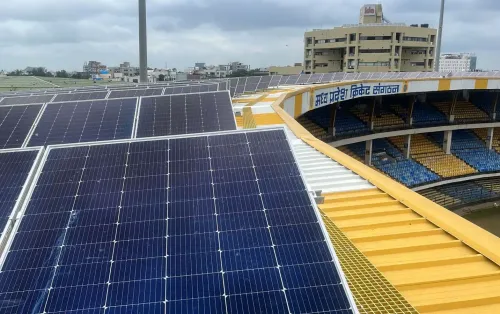
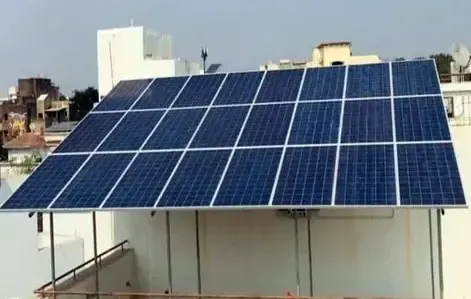
More than 6 lakh families in Uttar Pradesh have installed rooftop solar systems under the PM Surya Ghar: Muft Bijli Yojana .
Beneficiary households have seen electricity bills fall by an estimated 50 to 60 per cent .
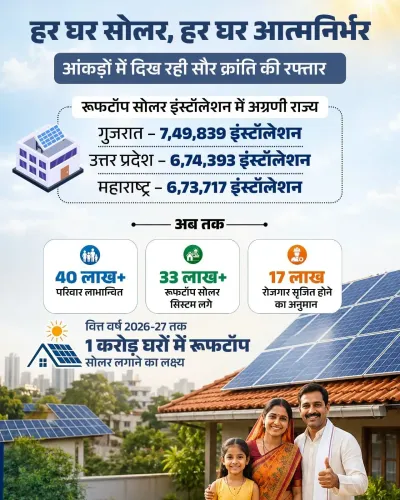
The central scheme, launched in 2024 by PM Narendra Modi , targets one crore rooftop solar installations nationwide.
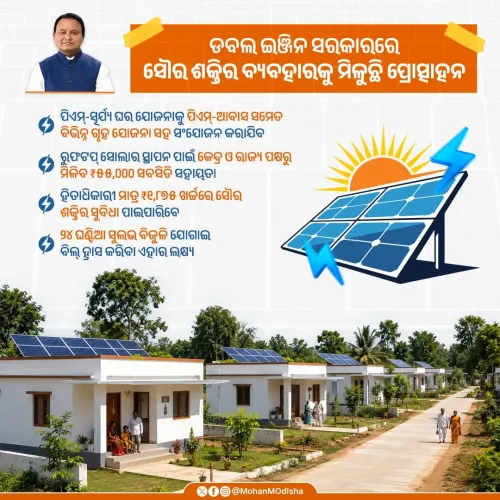
The scheme provides eligible households up to 300 units of free electricity per month through solar generation.
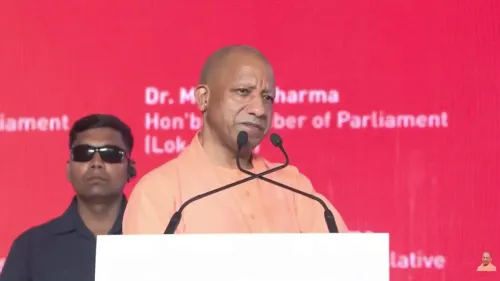
CM Yogi Adityanath shared the update, underscoring Uttar Pradesh 's role as a key implementing state in India's rooftop solar push.
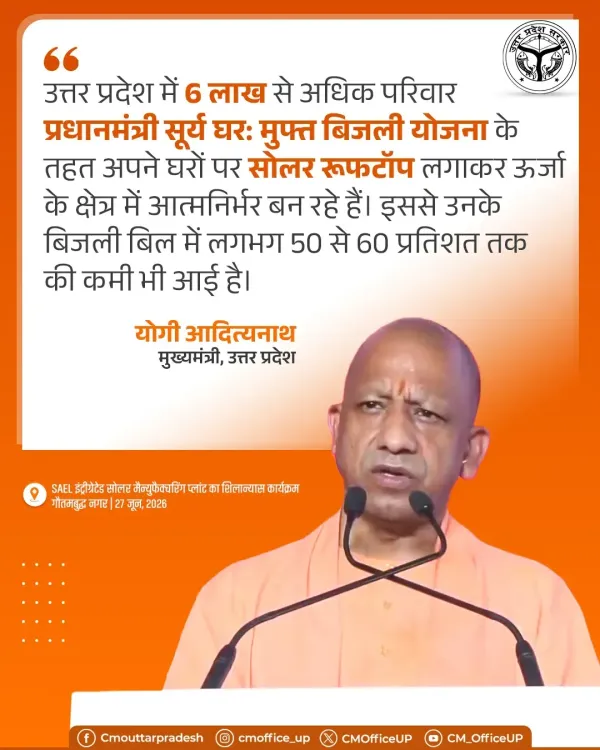
The Chief Minister's Office of Uttar Pradesh announced on Saturday, 27 June 2026 that more than 6 lakh families across the state have installed rooftop solar systems under the central government's PM Surya Ghar: Muft Bijli Yojana, achieving energy self-reliance and cutting electricity bills by an estimated 50 to 60 per cent.
The post, attributed to Chief Minister Yogi Adityanath, states in Hindi: 'उत्तर प्रदेश में 6 लाख से अधिक परिवार प्रधानमंत्री सूर्य घर: मुफ्त बिजली योजना के तहत अपने घरों पर सोलर रूफटॉप लगाकर ऊर्जा के क्षेत्र में आत्मनिर्भर बन रहे हैं।' ('More than 6 lakh families in Uttar Pradesh are becoming self-reliant in energy by installing solar rooftops on their homes under the PM Surya Ghar: Muft Bijli Yojana.')
Context
The PM Surya Ghar: Muft Bijli Yojana is a central government scheme launched in 2024 under Prime Minister Narendra Modi with a national target of installing rooftop solar systems in one crore households across India. The scheme provides eligible beneficiaries up to 300 units of free electricity per month through solar generation, backed by central subsidies. Uttar Pradesh, as India's most populous state, carries one of the largest implementation responsibilities under this programme.
Policy Backdrop
India's push for distributed rooftop solar generation is part of a broader strategy to meet national renewable energy targets while reducing the financial burden on household electricity consumers. The scheme combines central subsidies with state-level execution machinery, requiring active coordination between state discom utilities, local bodies, and installation agencies. CM Yogi Adityanath, who has led the Uttar Pradesh government since 2017, has positioned the state as an active participant in centrally sponsored welfare and energy programmes. The reported 50 to 60 per cent reduction in electricity bills reflects the scheme's core design: solar generation offsets daytime grid consumption, directly lowering monthly billing for enrolled households.
Stakeholders and Impact
The primary beneficiaries are residential households in Uttar Pradesh — both urban and rural — who have completed rooftop solar installations under the scheme. For low- and middle-income families, a near-halving of the monthly electricity bill represents a significant saving, particularly as summer power demand and tariff pressures rise. Beyond individual households, the aggregate generation capacity of more than 6 lakh rooftop installations contributes to reducing peak-load pressure on the state grid, with downstream benefits for grid stability and distribution infrastructure.
What's Next
With Uttar Pradesh reporting over 6 lakh installations, attention will now turn to how quickly the state can scale further toward its share of the national one crore household target. State authorities are expected to release periodic progress updates, and any additional Uttar Pradesh-level incentives layered on top of central subsidies will be closely watched. The trajectory of installation numbers and verified bill-reduction data will be key indicators of the scheme's on-ground effectiveness in India's largest state.
Point of View
Lending the state government visible credit for a centrally funded welfare programme ahead of any future electoral cycle. By foregrounding the 50 to 60 per cent bill reduction figure, the messaging is calibrated to resonate with cost-conscious middle and lower-income voters who bear the brunt of rising power tariffs. The update also fits a consistent pattern of the Yogi Adityanath administration amplifying welfare delivery metrics on social media to signal administrative competence. Independently verified installation and savings data will be essential to assess whether the headline numbers translate into durable household-level impact.
NationPress
26 Sept 2026
Frequently Asked Questions
What is the PM Surya Ghar: Muft Bijli Yojana?
The PM Surya Ghar: Muft Bijli Yojana is a central government scheme launched in 2024 to install rooftop solar systems in one crore households across India, providing up to 300 units of free electricity per month to beneficiaries through solar generation backed by central subsidies.
How many families in UP have benefited from the PM Surya Ghar scheme?
According to the Chief Minister's Office of Uttar Pradesh , more than 6 lakh families in the state have installed rooftop solar panels under the scheme as of June 2026 .
How much can electricity bills be reduced under PM Surya Ghar scheme?
The CM Office of UP states that enrolled households have seen their electricity bills reduced by approximately 50 to 60 per cent following rooftop solar installation under the scheme.
Who launched the PM Surya Ghar scheme?
The scheme was launched by the central government under Prime Minister Narendra Modi in 2024 as part of India's broader push for distributed rooftop solar generation and household energy self-reliance.
What is the national target of the PM Surya Ghar scheme?
The national target of the PM Surya Ghar: Muft Bijli Yojana is to install rooftop solar systems in one crore (10 million) households across India, with states like Uttar Pradesh playing a key role in implementation.