How is the Muft Bijli scheme providing zero electricity bills to over 7.7 lakh households?

Synopsis
Discover how the PM Surya Ghar Muft Bijli Yojana is revolutionizing India's energy sector. With over 7.7 lakh households now enjoying zero electricity bills, this initiative is not only making clean energy accessible but also empowering families across the nation. Explore the details of this transformative scheme!
Key Takeaways
Over 7.7 lakh households now enjoy zero electricity bills.
The scheme promotes clean energy and energy independence.
Financial assistance is available to reduce installation costs.
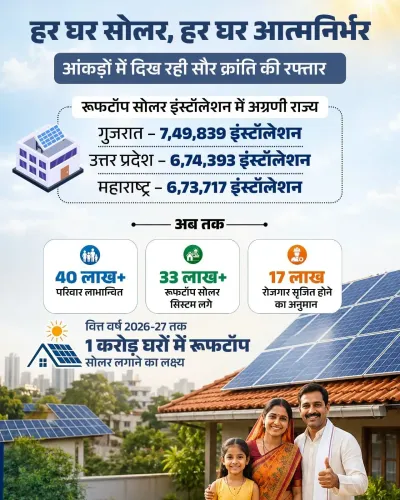
Target to install rooftop solar in one crore households by 2026-27.
Gujarat leads with significant installations.
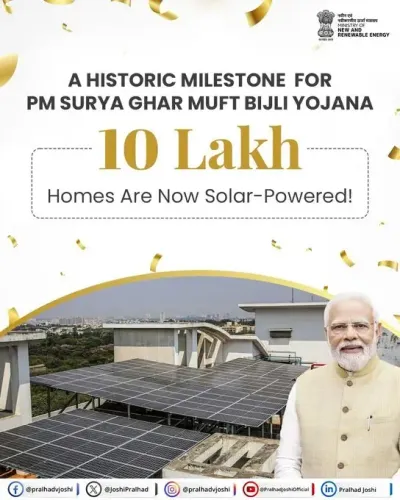
New Delhi, Dec 16 (NationPress) The PM Surya Ghar Muft Bijli Yojana is progressively reshaping the landscape of residential electricity in India. As per the information shared by the Ministry of New and Renewable Energy, over 7.7 lakh households have reported receiving zero electricity bills after the installation of rooftop solar systems. This initiative, which was launched in February 2024, seeks to make clean energy accessible while alleviating the financial burden of electricity expenses for families nationwide.
In a recent response provided in the Rajya Sabha, Union Minister of State for New and Renewable Energy Shripad Yesso Naik revealed that as of December 9, a total of 19,45,758 rooftop solar systems have been installed across the country.
The ministry noted, "These installations have benefited 24,35,196 households under this flagship initiative." The goal of the PM Surya Ghar Muft Bijli Yojana is to achieve rooftop solar installations in one crore households in the residential sector by the fiscal year 2026–27, with a total budget of Rs 75,021 crore.
This scheme is aimed at enhancing energy independence, reducing electricity costs, and facilitating India's transition to clean energy.
According to the ministry's data, Gujarat stands out as the leading state under this initiative, with over 4.93 lakh rooftop solar installations benefiting more than 7.10 lakh households, of which more than 3.62 lakh consumers are now enjoying zero electricity bills.
Andhra Pradesh, Assam, and Haryana have also made notable progress, with thousands of families benefitting from rooftop solar systems.
To ensure that rooftop solar installations remain financially feasible for households, the government is offering Central Financial Assistance alongside collateral-free loans at a favorable interest rate of 5.75 percent. This financial aid is intended to lower the initial cost of installation and encourage broader participation.
The government has also implemented strategies to increase adoption among rural households and economically disadvantaged sections of society. Guidelines have been released for the installation of rooftop solar systems under the Utility Led Aggregation and RESCO models, aimed at minimizing the financial and operational hurdles faced by beneficiaries.
Point of View
The PM Surya Ghar Muft Bijli Yojana is a commendable initiative by the government, reflecting its commitment to sustainable energy and financial relief for households. The scheme's ambitious targets and impressive progress indicate a significant step towards achieving energy self-reliance and promoting clean energy sources in India.
NationPress
30 Sept 2026
Frequently Asked Questions
What is the PM Surya Ghar Muft Bijli Yojana?
It is a government initiative aimed at providing zero electricity bills to households through the installation of rooftop solar systems.
How many households are benefiting from this scheme?
Over 7.7 lakh households have reported zero electricity bills after installing rooftop solar systems under this scheme.
What financial assistance is available for households?
The government offers Central Financial Assistance and collateral-free loans at a concessional interest rate of 5.75 percent to support installation costs.
Which states are leading in rooftop solar installations?
Gujarat is leading with over 4.93 lakh installations, followed by states like Andhra Pradesh, Assam, and Haryana.
What are the goals of the PM Surya Ghar Muft Bijli Yojana?
The scheme aims to achieve rooftop solar installations in one crore households by FY 2026–27 and to promote clean energy transition.