Joshi: PM Surya Ghar Yojana cuts power bills by 71% for 42 lakh homes
Synopsis
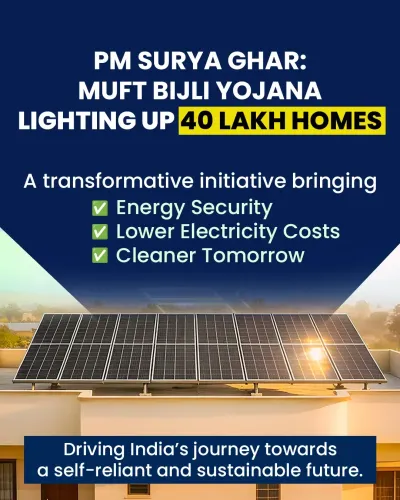
Union Minister Pralhad Joshi says a recent survey shows PM Surya Ghar: Muft Bijli Yojana has delivered an average 71 per cent cut in power bills for nearly 42 lakh enrolled households, as India pursues its one-crore-home rooftop solar target.
Key Takeaways
Union Minister Pralhad Joshi cited a recent survey showing an average 71 per cent reduction in electricity bills for rooftop solar users under PM Surya Ghar: Muft Bijli Yojana.
Nearly 42 lakh households have already been enrolled under the scheme, against a government target of one crore households .
The PM Surya Ghar: Muft Bijli Yojana was announced in the Union Budget 2024-25 with central financial assistance for residential rooftop solar installations.
India has a broader commitment to achieve 500 GW of non-fossil fuel capacity by 2030 , with rooftop solar forming a key decentralised component.
The scheme is administered by the Ministry of New and Renewable Energy and requires coordination with state governments and electricity distribution companies.
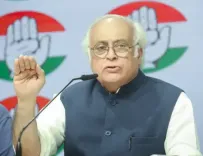
Union Consumer Affairs and New and Renewable Energy Minister Pralhad Joshi on Thursday, 11 June 2026 highlighted the expanding reach of the PM Surya Ghar: Muft Bijli Yojana, citing a recent survey that found rooftop solar adopters are experiencing an average 71 per cent reduction in their electricity bills, with nearly 42 lakh households already enrolled under the scheme.
Context
In his post on X, Minister Joshi wrote that the scheme is 'reducing electricity bills' and 'strengthening energy security,' framing the programme as central to what he called 'India's solar revolution.' He attributed the initiative to Prime Minister Narendra Modi, crediting the scheme's design with delivering 'tangible benefits to millions of families.' The minister noted that the journey of enrolling households 'continues,' signalling that the rollout is still in progress.
The PM Surya Ghar: Muft Bijli Yojana was announced in the Union Budget 2024-25 with an ambition to install rooftop solar systems in one crore households across India, backed by central financial assistance in the form of direct subsidies. The scheme is administered by the Ministry of New and Renewable Energy, of which Joshi is the cabinet minister.
Policy Backdrop
India's push for rooftop solar sits within a broader renewable energy strategy that traces its formal origins to the Jawaharlal Nehru National Solar Mission launched in 2010, which set the foundation for scaling both grid-connected and off-grid solar applications. Over successive years, technology costs fell sharply and central subsidies were restructured to make residential installations more accessible.
The current scheme represents the most direct household-facing intervention yet, pairing installation subsidies with the promise of free or heavily subsidised electricity for qualifying families. India has also committed to achieving 500 GW of non-fossil fuel capacity by 2030, and rooftop solar is a key decentralised pillar of that target alongside large utility-scale solar parks. Domestic manufacturing has been supported through production-linked incentives to reduce dependence on imported components.
Stakeholders and Impact
The primary beneficiaries are residential electricity consumers, particularly households in the lower and middle segments of the consumption ladder for whom electricity bills represent a meaningful share of monthly expenditure. A 71 per cent average reduction in power bills, if sustained at scale, would represent significant household savings running into hundreds of crores of rupees annually across enrolled families.
State electricity distribution companies and grid operators are also stakeholders, as widespread rooftop generation alters load patterns and requires grid-balancing investments. The scheme's success depends on coordination between the central ministry, state governments, and local distribution utilities to process subsidy applications and manage net-metering arrangements.
What's Next
The government's stated target of one crore household installations means the current figure of 42 lakh represents roughly 42 per cent of the goal, leaving a substantial pipeline ahead. Observers will watch for fresh budget allocations in the next fiscal cycle, state-level implementation reports, and whether the pace of enrolment accelerates as awareness and subsidy disbursement mechanisms mature. The scheme's performance will also be a data point in India's periodic reviews of its climate commitments ahead of international forums.
Point of View
Using a survey-derived statistic to translate an infrastructure target into a kitchen-table benefit. The 71 per cent bill-reduction figure, if it holds up to independent scrutiny, would be among the most compelling household-level outcomes cited for any central energy scheme in recent memory. Framing the programme through PM Modi's personal brand — rather than the ministry's institutional identity — is consistent with the BJP's broader electoral communication strategy on flagship welfare delivery. The gap between 42 lakh and the one-crore target also signals that the government is managing expectations while sustaining momentum messaging.
NationPress
23 Sept 2026
Frequently Asked Questions
What is PM Surya Ghar Muft Bijli Yojana?
PM Surya Ghar: Muft Bijli Yojana is a central government scheme announced in the Union Budget 2024-25 that provides financial subsidies to help households install rooftop solar systems, with the aim of delivering free or heavily subsidised electricity to one crore homes across India.
How much has the PM Surya Ghar scheme reduced electricity bills?
According to a recent survey cited by Union Minister Pralhad Joshi, rooftop solar users enrolled under the PM Surya Ghar: Muft Bijli Yojana have seen an average 71 per cent reduction in their electricity bills.
How many households have benefited from PM Surya Ghar Yojana so far?
Nearly 42 lakh households have already been enrolled and benefited under the PM Surya Ghar: Muft Bijli Yojana as of June 2026, according to Minister Pralhad Joshi, against a total target of one crore households.
Who is the minister in charge of rooftop solar in India?
Pralhad Joshi is the Union Minister of New and Renewable Energy and is the cabinet minister responsible for overseeing the PM Surya Ghar: Muft Bijli Yojana and India's broader rooftop solar programme.
What is India's solar energy target by 2030?
India has committed to achieving 500 GW of non-fossil fuel power capacity by 2030, with rooftop solar forming a key decentralised pillar alongside large-scale solar parks and other renewable sources.