Joshi: 40 Lakh Homes Now Under PM Surya Ghar Solar Scheme
Synopsis
Union Minister Pralhad Joshi announced on 29 May 2026 that 40 lakh households have joined PM Surya Ghar: Muft Bijli Yojana, reaching 40 percent of the scheme's one-crore target. The rooftop solar initiative, launched by PM Modi in February 2024, aims to convert households into power producers and deliver zero electricity bills through central subsidies.
Key Takeaways
40 lakh households have been enrolled under PM Surya Ghar: Muft Bijli Yojana as of 29 May 2026 , per Minister Pralhad Joshi.
The scheme targets one crore households in total, meaning 40 percent of the goal has been achieved.
Enrolled families receive central government subsidies to offset installation costs and can work towards zero electricity bills via net metering.
The scheme was launched by Prime Minister Narendra Modi in February 2024 following its announcement in Union Budget 2024-25 .
India's broader renewable energy target is 500 GW of non-fossil fuel capacity by 2030 and net-zero by 2070 .
The initiative aligns with the Atmanirbhar Bharat and Viksit Bharat frameworks, positioning households as energy prosumers.
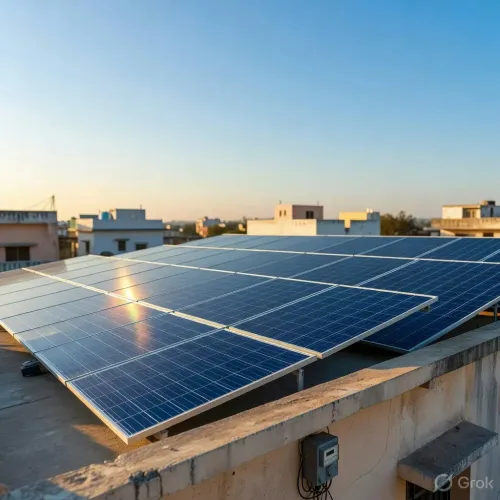
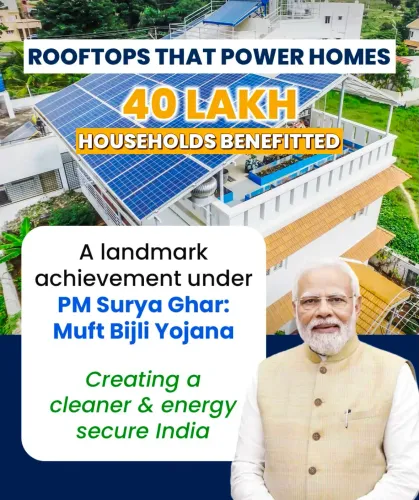
Union Consumer Affairs and New and Renewable Energy Minister Pralhad Joshi announced on Friday, 29 May 2026, that 40 lakh households across India have been empowered with rooftop solar installations under the PM Surya Ghar: Muft Bijli Yojana, calling it a historic milestone in the country's clean energy journey.
Context
Joshi credited the achievement to the leadership of Prime Minister Narendra Modi, stating that the scheme is 'turning citizens from power consumers to power producers.' The minister highlighted that enrolled families stand to benefit from government subsidies, reduced electricity expenses, and the prospect of zero electricity bills — framing the rollout as a transformation in how ordinary households relate to the national grid.
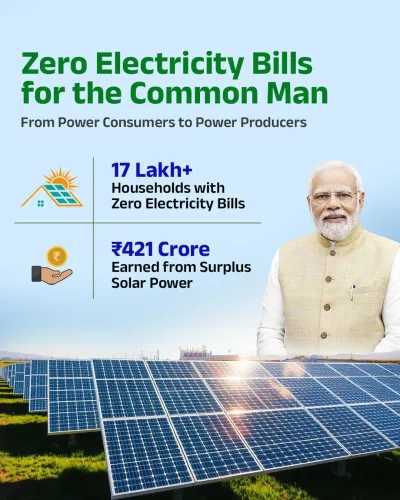
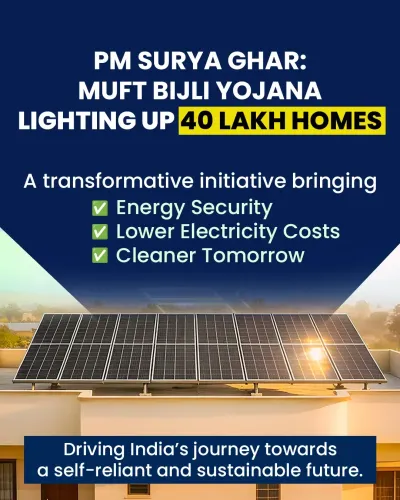
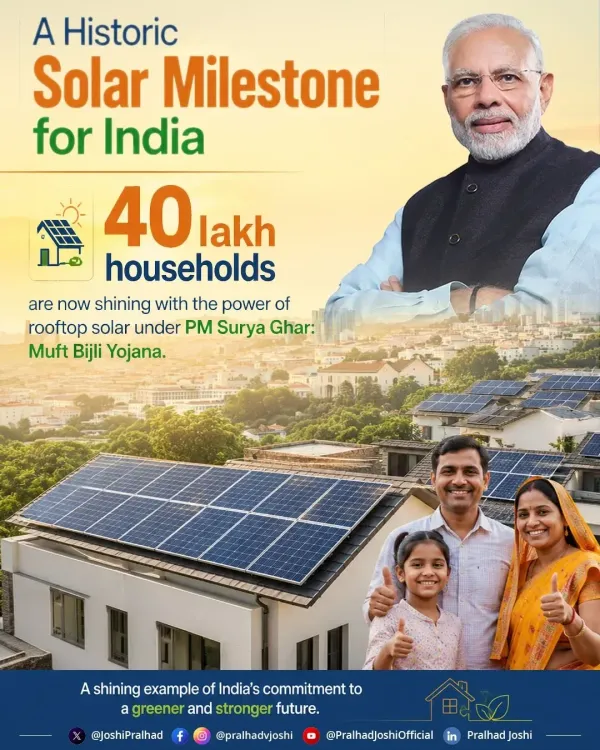
The post, shared on X (formerly Twitter), was accompanied by an image and carried hashtags #40LakhPMSuryaGhar and #ViksitBharat, signalling the government's intent to position the milestone within its broader self-reliance narrative.
Policy Backdrop
PM Surya Ghar: Muft Bijli Yojana was announced in the Union Budget 2024-25 and formally launched by Prime Minister Modi in February 2024 with a target of solarising one crore (10 million) households through central financial assistance and direct subsidies. The scheme is designed around the concept of the 'prosumer' — a household that both consumes electricity and feeds surplus solar power back to the grid.
The initiative sits within India's larger renewable energy architecture, which targets 500 GW of non-fossil fuel capacity by 2030 and net-zero emissions by 2070. Rooftop solar is seen as a critical lever for decentralised generation, reducing dependence on coal-based power and easing strain on state electricity distribution companies.
The scheme is administered by the Ministry of New and Renewable Energy, which Joshi heads alongside the Consumer Affairs portfolio, giving him direct oversight of both subsidy delivery and consumer-side impact.
Stakeholders and Impact
The 40 lakh household figure represents 40 percent of the scheme's one-crore target. For enrolled families, the central subsidy structure is intended to reduce the upfront cost of rooftop solar installation, with the long-term benefit of sharply lower monthly electricity bills. Households generating surplus power can earn credits through net metering arrangements with their local distribution utility.
Beyond individual savings, the aggregate installed capacity from 40 lakh rooftop systems contributes meaningfully to India's distributed renewable energy base. Consumer advocacy groups and clean energy researchers have pointed to such schemes as essential for bringing energy security down to the household level, particularly in states with frequent outages or high per-unit tariffs.
State governments and electricity distribution companies remain key implementation partners, and their administrative capacity — particularly for subsidy disbursement and net metering approvals — will shape how quickly the remaining 60 lakh households are onboarded.
What's Next
With 40 lakh of the targeted one crore households now covered, the government faces the steeper challenge of scaling up to the remaining 60 lakh. Attention will turn to state-level implementation pipelines, the pace of subsidy disbursements, and whether grid infrastructure in smaller towns and rural areas can support widespread net metering. Joshi's announcement is likely to be followed by state-wise progress data and further outreach drives as the scheme approaches the halfway mark of its ambitious target. The milestone also sets a political benchmark ahead of future budget cycles, where continued funding for the scheme will be scrutinised against delivery numbers.
Point of View
Arriving roughly two years after the scheme's launch and demonstrating visible delivery on a flagship Budget promise. By framing ordinary households as 'power producers,' the government is weaving an energy-independence narrative directly into kitchen-table economics — a messaging strategy that resonates with middle-class and aspirational rural voters alike. The announcement also reinforces Minister Joshi's dual portfolio advantage: he oversees both consumer welfare and renewable energy, allowing him to present the scheme simultaneously as a cost-relief measure and a green transition achievement. The harder test will come in scaling from 40 lakh to one crore, where state-level bottlenecks in subsidy processing and grid connectivity have historically slowed similar programmes.
NationPress
13 Oct 2026
Frequently Asked Questions
What is PM Surya Ghar Muft Bijli Yojana?
PM Surya Ghar: Muft Bijli Yojana is a central government scheme launched by Prime Minister Narendra Modi in February 2024 to install rooftop solar systems in one crore Indian households, providing subsidies to reduce electricity bills to zero.
How many households have benefited from PM Surya Ghar so far?
As of 29 May 2026, 40 lakh (four million) households have been covered under the scheme, according to Union Minister Pralhad Joshi, representing 40 percent of the one-crore target.
What subsidy does the government give under PM Surya Ghar Yojana?
The scheme offers central financial assistance to offset the upfront cost of rooftop solar installation. Beneficiary households can also earn credits for surplus power fed back to the grid through net metering, working towards zero monthly electricity bills.
Who is the minister in charge of PM Surya Ghar Yojana?
Union Minister Pralhad Joshi, who holds the portfolio of New and Renewable Energy alongside Consumer Affairs, Food and Public Distribution, is the minister responsible for overseeing the scheme's implementation.
What is India's renewable energy target for 2030?
India aims to achieve 500 GW of non-fossil fuel electricity capacity by 2030 and reach net-zero emissions by 2070. Rooftop solar schemes like PM Surya Ghar are a key part of this decentralised energy strategy.