Joshi: PM Surya Ghar Powers 17 Lakh Homes, Earns ₹421 Cr
Synopsis
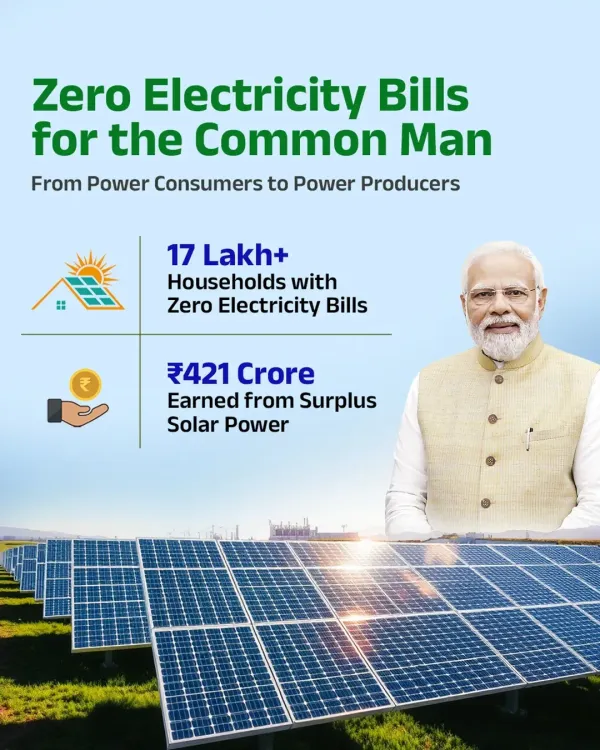
Union Minister Pralhad Joshi says the PM Surya Ghar Muft Bijli Yojana has eliminated electricity bills for over 17 lakh households and helped beneficiaries earn ₹421 crore through surplus solar generation, marking a significant step in India's push for decentralised renewable energy.
Key Takeaways
Union Minister Pralhad Joshi highlighted PM Surya Ghar Muft Bijli Yojana milestones on 9 June 2026 .
More than 17 lakh households are now receiving zero electricity bills under the scheme.
Beneficiaries have collectively earned ₹421 crore by selling surplus solar power back to the grid.
The scheme's one-crore household target means enrolment currently stands at roughly 17 per cent of the goal.
India's 2022 NDC targets 50 per cent of cumulative power from non-fossil sources by 2030 , with rooftop solar central to that commitment.
The post was shared under #12YearsOfSeva , linking the milestone to the Modi government's governance anniversary narrative.
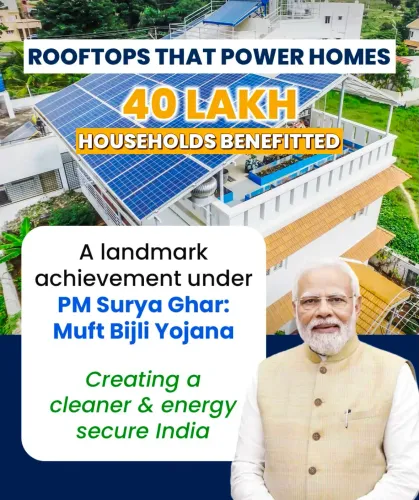
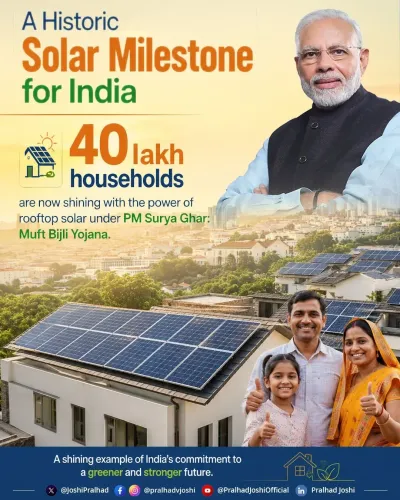
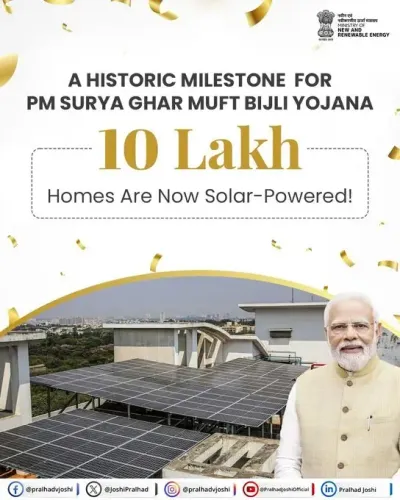
Union Consumer Affairs and New and Renewable Energy Minister Pralhad Joshi on Tuesday, 9 June 2026, highlighted the growing scale of the PM Surya Ghar Muft Bijli Yojana, citing that more than 17 lakh households are now receiving zero electricity bills and that beneficiaries have collectively earned ₹421 crore through surplus solar power fed back to the grid.
Context
Joshi's post, shared under the hashtag #12YearsOfSeva, credits the scheme's momentum to the leadership of Prime Minister Narendra Modi and frames it as a structural shift — turning residential households from power consumers into power producers. The minister stated that the initiative is 'transforming millions of families' and described it as 'a remarkable stride towards energy self-reliance, sustainable development, and inclusive growth.'
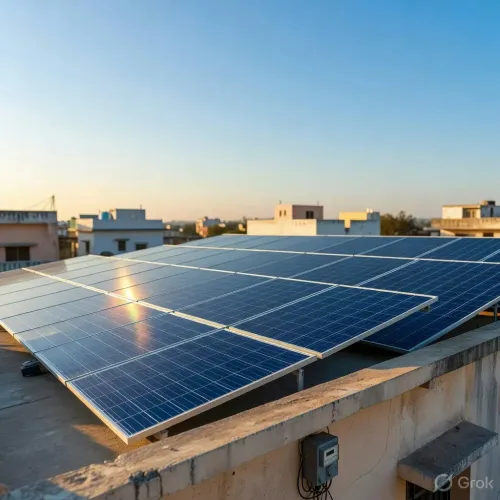
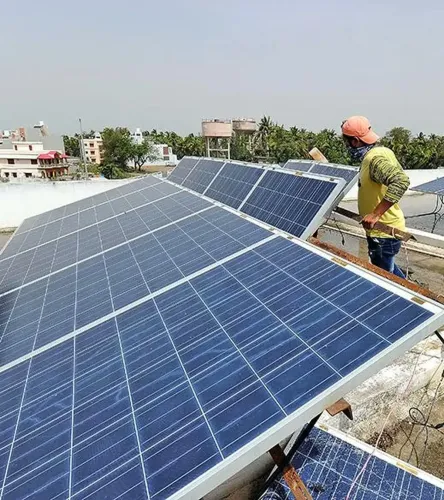
The PM Surya Ghar Muft Bijli Yojana provides central subsidies for rooftop solar panel installations and is backed by net-metering provisions that allow households to sell excess electricity to distribution companies, generating an additional income stream for beneficiaries.
Policy Backdrop
India's rooftop solar push has deep policy roots. The Jawaharlal Nehru National Solar Mission, launched in 2010, first established the framework for scaling grid-connected solar capacity across the country. Successive governments expanded targets and subsidy structures, with the current scheme representing the most direct household-level intervention to date.
In 2022, India updated its Nationally Determined Contribution under the Paris Agreement, targeting 50 per cent of cumulative electric power from non-fossil sources by 2030. Decentralised rooftop solar programmes such as PM Surya Ghar are central to meeting that commitment while simultaneously reducing household dependence on fossil-fuel-derived grid power and curbing energy import bills.
Stakeholders and Impact
The primary beneficiaries are residential households — particularly those in middle- and lower-income brackets — for whom electricity costs represent a significant share of monthly expenditure. Zero-bill status for over 17 lakh homes translates into direct and recurring savings, while the ₹421 crore in surplus-power earnings introduces a new income channel for participating families.
Power distribution companies are also stakeholders, as net-metering integration requires grid-management adjustments. Broader gains accrue to India's climate commitments and to the stated goal of reducing fossil-fuel import dependence, which carries macroeconomic implications for the current account.
What's Next
The government has set a target of reaching one crore households under the rooftop solar scheme. With 17 lakh households already enrolled, the programme is at roughly 17 per cent of that goal, making the pace of fresh installations and subsidy disbursements a key metric to watch in coming quarters. Analysts and policy observers will also track whether supplementary budget allocations are made in upcoming fiscal cycles to sustain the subsidy pipeline and grid-integration infrastructure needed to scale the programme further.
Point of View
Designed to convert a policy scheme into a political dividend as the BJP marks a governance milestone. By foregrounding household-level financial outcomes — zero bills and direct income — the communication shifts the renewable energy narrative from infrastructure megaprojects to kitchen-table economics, a register that travels well with urban and semi-urban middle-class voters. The ₹421 crore surplus-earnings figure is particularly significant: it repositions solar adoption not as an environmental sacrifice but as a financially rational household decision, broadening the scheme's political constituency. If the one-crore household target is met at pace, the programme could become one of the more electorally legible clean-energy interventions of the current government's tenure.
NationPress
24 Oct 2026
Frequently Asked Questions
What is the PM Surya Ghar Muft Bijli Yojana?
PM Surya Ghar Muft Bijli Yojana is a central government scheme that provides subsidies for rooftop solar panel installations on residential homes, allowing households to generate their own electricity and sell surplus power back to the grid through net metering.
How many households have zero electricity bills under PM Surya Ghar?
According to Union Minister Pralhad Joshi's post on 9 June 2026, more than 17 lakh households are currently receiving zero electricity bills under the PM Surya Ghar scheme.
How much money have households earned from surplus solar power in India?
Minister Joshi cited that beneficiaries of the PM Surya Ghar scheme have collectively earned ₹421 crore through surplus solar power fed back to the electricity grid.
What is the target of the PM Surya Ghar rooftop solar scheme?
The government has set a target of enrolling one crore households under the PM Surya Ghar Muft Bijli Yojana. With over 17 lakh households currently enrolled, the scheme is at approximately 17 per cent of that goal.
How does India's rooftop solar scheme help meet its climate targets?
India updated its Nationally Determined Contribution in 2022 to target 50 per cent of cumulative electric power from non-fossil sources by 2030. Decentralised rooftop solar programmes like PM Surya Ghar directly contribute to this goal while also reducing household energy costs and fossil-fuel import dependence.