Pralhad Joshi: PM Surya Ghar crosses 50 lakh families
Synopsis
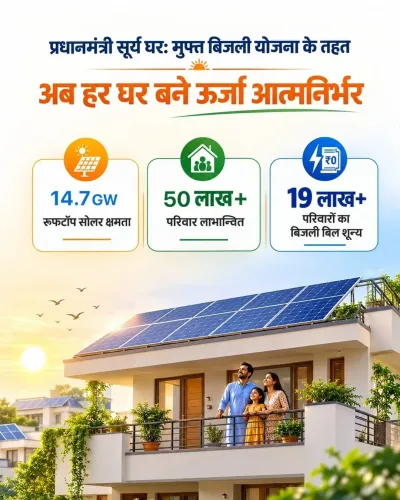
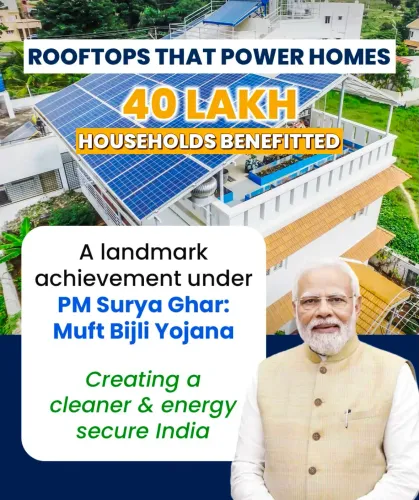
Union Minister Pralhad Joshi announced on Independence Day that the PM Surya Ghar Muft Bijli Yojana has reached 50 lakh enrolled families, with beneficiaries achieving zero electricity bills and earning income by selling surplus solar power — marking a key milestone toward the scheme's one-crore household target.
Key Takeaways
50 lakh families have enrolled under the PM Surya Ghar Muft Bijli Yojana as of Independence Day, August 15 .
The scheme, launched in February 2024 , targets one crore households with rooftop solar installations offering up to 300 units of free electricity per month .
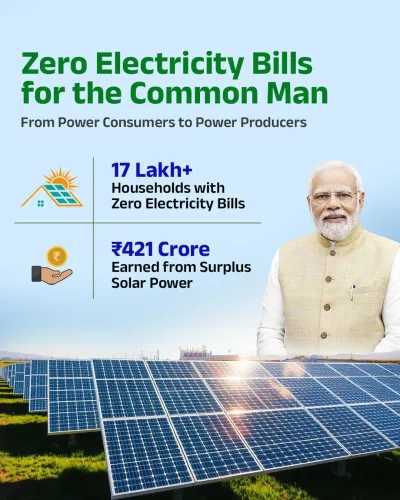
Thousands of enrolled families have achieved zero electricity bills ; thousands more are earning income by selling surplus power to the grid.
Union Minister Pralhad Joshi posted the milestone in both English and Kannada, quoting Prime Minister Narendra Modi .
The scheme supports India's broader goal of 500 GW non-fossil fuel capacity by 2030 and net-zero emissions by 2070 .
The gap between 50 lakh enrollments and the one-crore target — and between enrollment and actual installation — remains the key metric to watch.
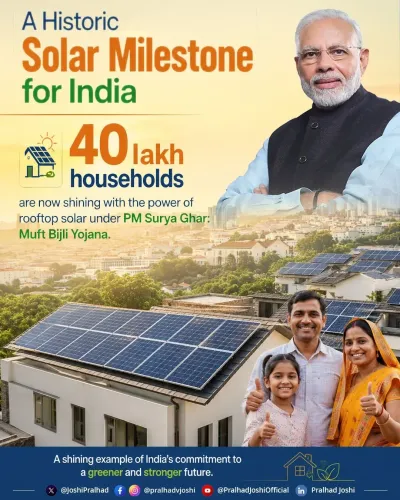
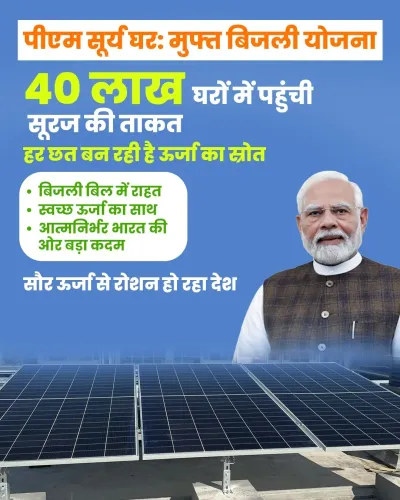
On Independence Day, August 15, Union Minister for New and Renewable Energy Pralhad Joshi marked a milestone in India's rooftop solar push — 50 lakh families are now enrolled under the PM Surya Ghar Muft Bijli Yojana, with thousands already running on zero electricity bills and earning income by selling surplus power back to the grid.
What PM Surya Ghar promises — and what it's delivering
Launched in February 2024 by Prime Minister Narendra Modi, the PM Surya Ghar Muft Bijli Yojana set an ambitious target: rooftop solar installations across one crore households, each eligible for up to 300 units of free electricity per month. The scheme pairs central subsidies with net-metering provisions, allowing households to sell any surplus generation to their local distribution company — turning a rooftop into a revenue stream.
Joshi, posting in both English and Kannada on the occasion of Independence Day, quoted Prime Minister Modi directly: 'ನಾವು @PMSuryaGhar ಯೋಜನೆಯನ್ನು ಪ್ರಾರಂಭಿಸಿದ್ದೇವೆ' ['We have started the PM Surya Ghar scheme'] — a deliberate bilingual signal to Karnataka's large voter and beneficiary base. The choice of Independence Day to highlight the 50-lakh mark frames household solar adoption as a national-progress story, not just a welfare statistic.
Rooftop solar's role in India's 500 GW race
The Ministry of New and Renewable Energy, which Joshi heads alongside Consumer Affairs, sits at the centre of India's pledge to reach 500 GW of non-fossil fuel capacity by 2030 and achieve net-zero emissions by 2070. Utility-scale solar parks and production-linked incentives for panel manufacturing are the headline acts — but rooftop programmes like PM Surya Ghar carry a different kind of weight: they distribute energy security directly into individual homes.
When a family in a tier-2 town eliminates its electricity bill and starts earning a few hundred rupees monthly from surplus units, the scheme stops being an infrastructure story and becomes a household-economy story. That dual dividend — environmental and financial — is precisely the political and policy logic the BJP government has built around this programme.
The gap between 50 lakh and one crore
Reaching 50 lakh enrollments is a meaningful checkpoint, but the scheme's stated target of one crore households means the programme is, by its own yardstick, halfway there. State-level implementation speed, subsidy disbursement timelines, and grid-readiness for net metering will determine whether the second half moves as fast as the first.
The next milestone to watch: how many of those 50 lakh enrolled families have actual panels commissioned and generating — and how many are still in the pipeline. Enrollment and installation are two different numbers, and the gap between them will tell the real story of PM Surya Ghar's on-ground momentum.
Point of View
PM Surya Ghar is a rare programme that bridges the party's pro-growth energy agenda with a tangible household-level benefit — reduced bills and new income — making it a durable campaign asset. The bilingual English-Kannada post signals Joshi's dual role as a national minister and a Karnataka-facing political leader. The real policy test, however, lies in closing the gap between enrollment figures and actual commissioned installations, a distinction the government has so far kept deliberately blurred.
NationPress
29 Sept 2026
Frequently Asked Questions
What is the PM Surya Ghar Muft Bijli Yojana?
PM Surya Ghar Muft Bijli Yojana is a central government scheme launched in February 2024 to install rooftop solar systems in one crore Indian households, offering up to 300 units of free electricity per month and allowing families to earn income by selling surplus power.
How many families have joined PM Surya Ghar so far?
According to Union Minister Pralhad Joshi's Independence Day post, 50 lakh families are now part of the PM Surya Ghar initiative, with thousands already benefiting from zero electricity bills.
Can households earn money from PM Surya Ghar?
Yes. The scheme includes net-metering provisions that allow enrolled households to sell surplus solar electricity back to their local power distribution company, generating additional monthly income.
What is India's renewable energy target by 2030?
India has set a target of 500 GW of non-fossil fuel energy capacity by 2030, with rooftop solar programmes like PM Surya Ghar forming one component alongside utility-scale solar and wind projects.
Who oversees the PM Surya Ghar scheme?
The scheme is overseen by the Ministry of New and Renewable Energy, currently headed by Union Minister Pralhad Joshi.