Kishan Reddy: 40 Lakh Homes Under PM Surya Ghar Yojana
Synopsis
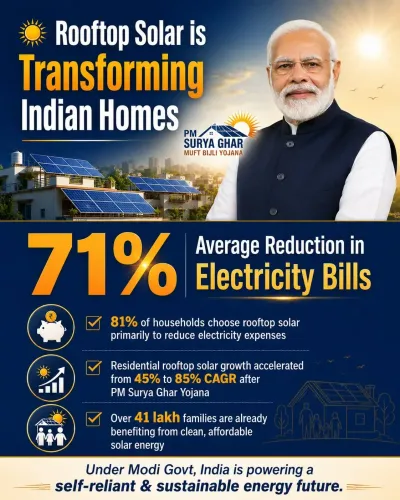
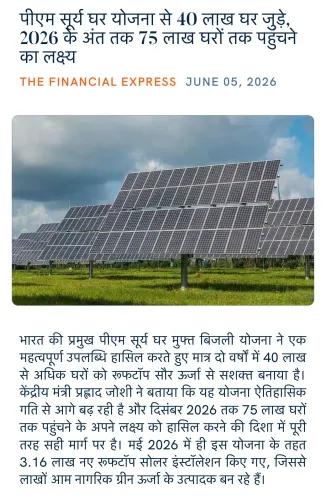
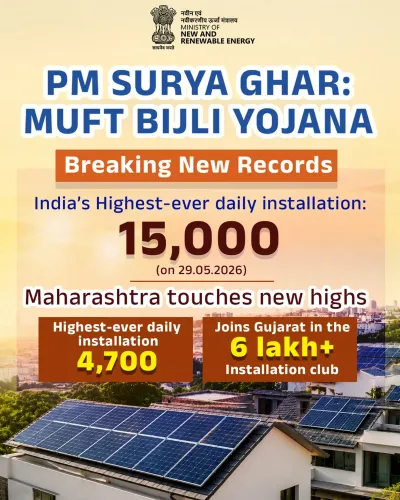
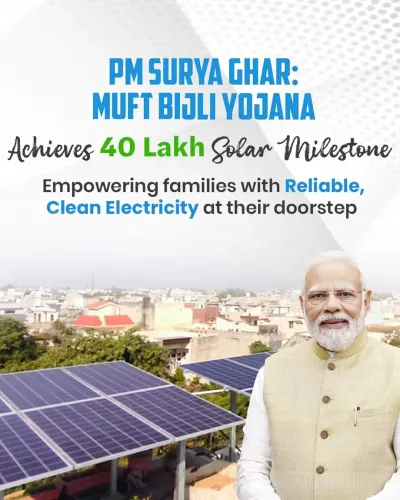
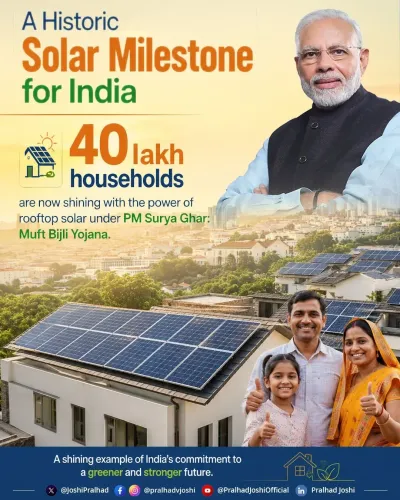
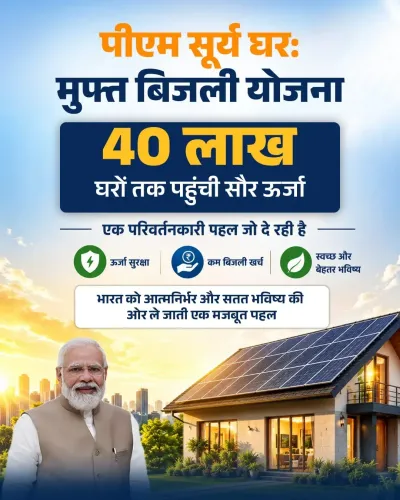
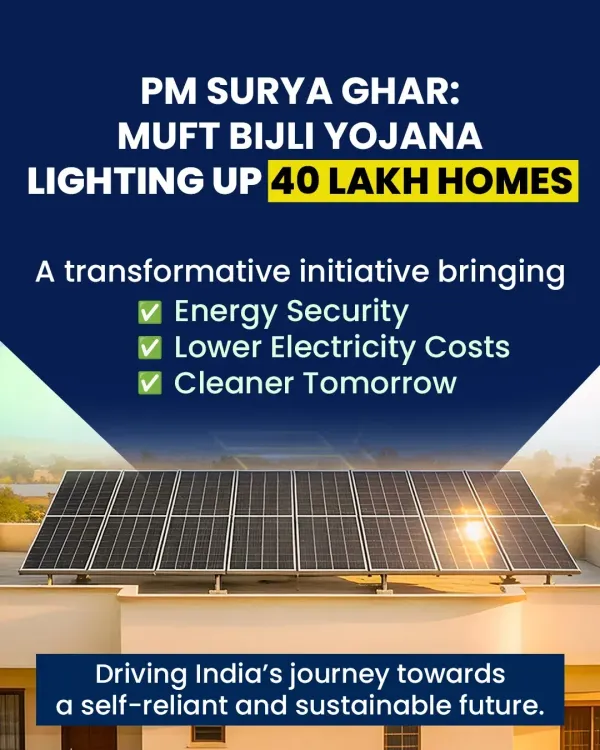
Union Minister G. Kishan Reddy on 29 May 2026 announced that over 40 lakh households have joined PM Surya Ghar: Muft Bijli Yojana, marking a major milestone in India's push to bring rooftop solar to one crore homes with subsidised free electricity.
Key Takeaways
Union Coal and Mines Minister G.
Kishan Reddy announced on 29 May 2026 that over 40 lakh households are now enrolled under PM Surya Ghar: Muft Bijli Yojana .
The scheme, announced in Union Budget 2024 , targets one crore households and offers up to 300 units of free electricity per month through subsidised rooftop solar installations.
The milestone represents approximately 40 per cent of the scheme's stated one-crore household target.
The policy builds on a decade-long solar lineage including the Jawaharlal Nehru National Solar Mission (2010) and PM-KUSUM (2019) .
India is pursuing 500 GW of non-fossil fuel capacity by 2030 and net-zero emissions by 2070 , with rooftop solar a key distributed-generation pillar.
State discoms and domestic solar manufacturers are central to implementation, linking the scheme to both energy access and Atmanirbhar Bharat industrial goals.
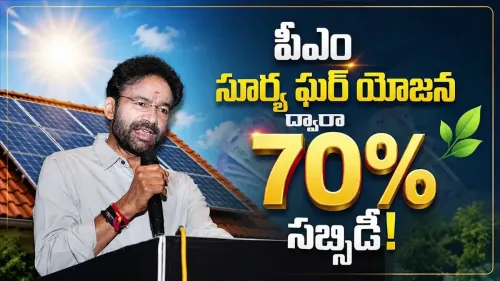
Union Coal and Mines Minister G. Kishan Reddy on Friday, 29 May 2026 hailed the enrolment of over 40 lakh households under the PM Surya Ghar: Muft Bijli Yojana, calling it a historic milestone in India's rooftop solar movement and crediting the achievement to Prime Minister Narendra Modi's leadership on clean energy.
Context
Reddy's post declared that India is 'powering one of the world's largest rooftop solar movements,' with the scheme delivering lower electricity bills, cleaner energy, and greater energy independence to participating families. The minister framed the milestone as part of India's broader journey toward a 'greener, self-reliant and sustainable future' under Modi's vision.
The PM Surya Ghar: Muft Bijli Yojana was announced in the Union Budget 2024 with a stated target of reaching one crore households. The scheme provides central financial assistance and subsidies for rooftop solar installations, promising up to 300 units of free electricity per month to beneficiary families. Crossing the 40 lakh mark represents progress toward that one-crore goal.
Policy Backdrop
India's rooftop solar push sits within a decade-long policy arc that began with the Jawaharlal Nehru National Solar Mission in 2010 and was extended through the Pradhan Mantri Kisan Urja Suraksha evam Utthaan Mahabhiyan (PM-KUSUM) scheme in 2019, which targeted solar pumps and decentralised plants for farmers. PM Surya Ghar is the latest and most household-centric iteration of that lineage.
The scheme aligns with India's nationally stated goal of achieving 500 GW of non-fossil fuel capacity by 2030 and reaching net-zero emissions by 2070. Distributed rooftop generation complements utility-scale solar parks by reducing strain on state distribution companies, or discoms, and cutting household dependence on grid power drawn from thermal sources.
That Reddy — a minister whose portfolio centres on coal and mines — is amplifying a renewable energy milestone reflects the government's messaging strategy of presenting the coal-to-renewables transition as a unified national mission rather than a sectoral contradiction. His role as BJP Telangana state president also gives the announcement a political dimension in a state where electricity subsidies and energy costs are active voter concerns.
Stakeholders and Impact
The primary beneficiaries are residential households across India, particularly in states with high solar irradiance, who stand to reduce monthly electricity expenditure through subsidised rooftop installations. State discoms are key implementation partners, responsible for net-metering connections and processing subsidy disbursements, making their administrative capacity a critical variable in rollout speed.
Domestic solar manufacturers are also stakeholders, as the scheme's subsidy structure is linked to use of domestically produced modules, reinforcing the Atmanirbhar Bharat industrial policy objective alongside the energy goal. Any acceleration in installations therefore feeds directly into demand for Indian-made solar equipment.
What's Next
With 40 lakh households connected against a target of one crore, the scheme has covered roughly 40 per cent of its stated goal. Observers and policymakers will watch state-level installation data to identify where rollout has lagged and whether subsidy outlays require a mid-term budget revision to sustain momentum. Any formal government review or expansion announcement tied to the next Union Budget cycle will be a key marker of the programme's trajectory.
The milestone also sets a benchmark for India's international climate commitments: sustained rooftop solar growth strengthens the country's case at multilateral forums that its household-level decarbonisation is moving at scale, not just in headline utility projects.
Point of View
The programme is at a critical scaling juncture where state-level execution capacity and sustained subsidy funding will determine whether the headline number becomes a genuine transformation story or a plateau. The milestone also feeds India's international climate diplomacy, offering a household-scale data point to complement utility-sector renewable claims.
NationPress
13 Oct 2026
Frequently Asked Questions
What is PM Surya Ghar Muft Bijli Yojana?
PM Surya Ghar: Muft Bijli Yojana is a central government scheme announced in Union Budget 2024 that provides subsidies for rooftop solar installations in residential households, offering up to 300 units of free electricity per month to beneficiaries.
How many households have joined PM Surya Ghar Yojana?
As of May 2026, over 40 lakh households have been connected under PM Surya Ghar: Muft Bijli Yojana, according to Union Minister G. Kishan Reddy's announcement on 29 May 2026.
What is the target of PM Surya Ghar Yojana?
The scheme targets one crore households across India, meaning the 40 lakh milestone represents roughly 40 per cent of the programme's stated goal.
Who announced the 40 lakh PM Surya Ghar milestone?
Union Coal and Mines Minister and BJP Telangana president G. Kishan Reddy announced the milestone on his official X account on 29 May 2026.
How does PM Surya Ghar Yojana help reduce electricity bills?
The scheme subsidises rooftop solar panel installation, allowing households to generate their own electricity and claim up to 300 units free per month, directly reducing the amount they pay to state distribution companies.