Kishan Reddy backs PM Surya Ghar Yojana for common households
Synopsis
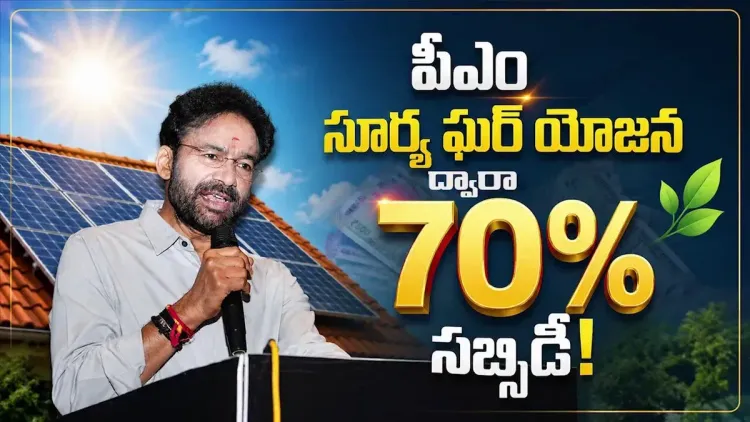
Union Coal and Mines Minister G. Kishan Reddy championed the PM Surya Ghar Muft Bijli Yojana on 23 May 2026, saying PM Modi's scheme brings rooftop solar within reach of every common household, offering free electricity and income from surplus power sold to the grid.
Key Takeaways
Union Coal and Mines Minister G.
Kishan Reddy publicly promoted the PM Surya Ghar Muft Bijli Yojana on 23 May 2026 .
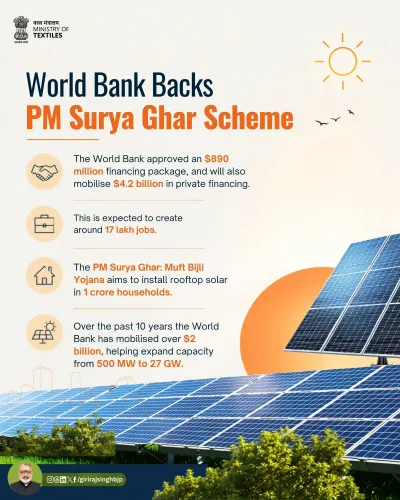
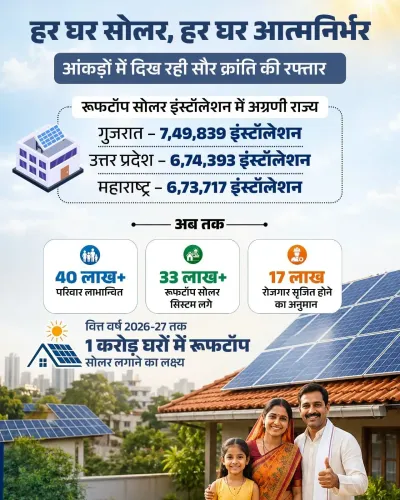
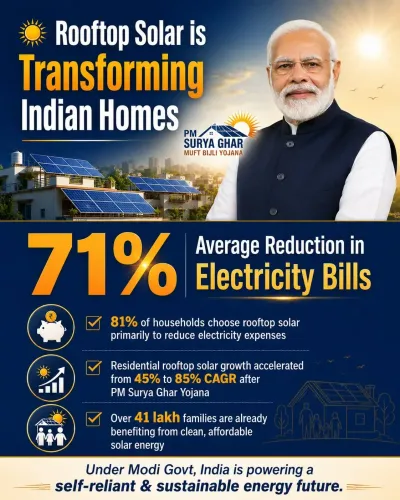
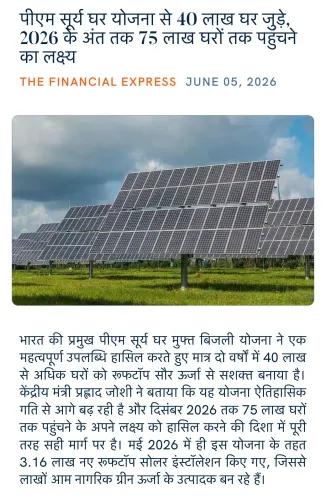
The scheme, launched by Prime Minister Narendra Modi , targets one crore households with rooftop solar installations backed by central financial assistance.
Beneficiaries can receive free electricity for personal use and earn additional income by selling surplus power to electricity distribution companies.
The Ministry of New and Renewable Energy is the nodal agency overseeing subsidy disbursement and grid integration.
The policy builds on India's solar mission lineage dating to the Jawaharlal Nehru National Solar Mission of 2010 .
Telangana is a key state to watch for ground-level scheme uptake, given Kishan Reddy's dual role as Union Minister and BJP Telangana president .
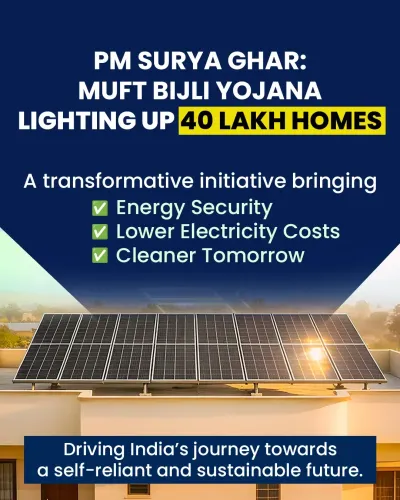
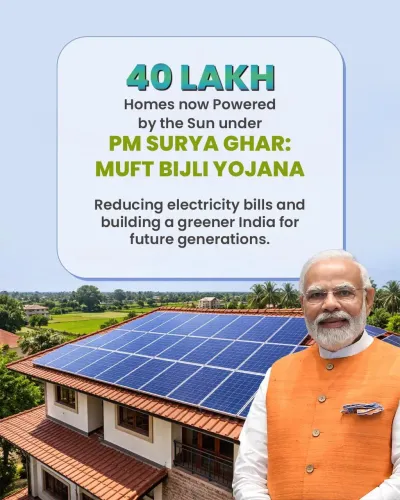
Union Coal and Mines Minister G. Kishan Reddy on Saturday, 23 May 2026 highlighted the PM Surya Ghar Muft Bijli Yojana, calling it a transformative step by Prime Minister Narendra Modi to make green energy accessible to every ordinary citizen, including the poor and middle class.
In a post in Telugu, the minister said Prime Minister Modi launched the scheme with a clear directive: spread widespread awareness among the people so that 'every home has a solar panel on its roof.' He noted that the scheme offers a substantial subsidy to make rooftop solar installations financially viable for common households.
Context
The PM Surya Ghar Muft Bijli Yojana was approved by the central government to install rooftop solar systems across one crore households with central financial assistance. The scheme is designed so that beneficiary families not only receive free electricity for their own consumption but can also sell surplus power back to electricity distribution companies, generating an additional income stream.
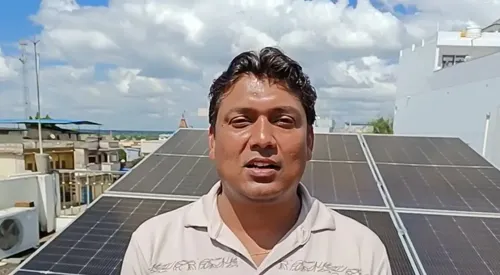
Kishan Reddy, who is also the BJP Telangana state president, framed the scheme as a direct benefit to saamaanyudu (the common man), emphasising the dual advantage of zero electricity bills and the potential to earn from surplus generation. His post was accompanied by a video underscoring the scheme's outreach.
Policy Backdrop
India's rooftop solar push has a long policy lineage. The Jawaharlal Nehru National Solar Mission, launched in 2010, set the initial framework for grid-connected solar capacity and rooftop installations. The current scheme builds on that foundation, scaling ambitions to individual households rather than only utility-scale projects.
The nodal body for implementation is the Ministry of New and Renewable Energy, which oversees subsidy disbursement and grid integration. The Coal Minister's vocal endorsement of the solar scheme reflects a broader policy continuity within India's energy portfolio — where conventional mining and renewable expansion are treated as complementary, not competing, priorities.
Stakeholders and Impact
Middle-class families and poor households are the primary target beneficiaries. For these groups, rooftop solar represents a potential end to monthly electricity expenditure and, through net metering arrangements, a new source of income from surplus power sold to the grid.
Electricity distribution companies are also stakeholders, as increased decentralised generation changes their procurement and grid-management calculus. Wider adoption could ease pressure on centralised power supply, particularly during peak summer demand periods when household consumption is highest.
What's Next
Attention will now focus on state-level installation numbers, the pace at which subsidies are released to beneficiaries, and how smoothly surplus power is integrated into state grids during the 2025-26 financial year. Telangana, where Kishan Reddy serves as BJP president, will be a closely watched state for ground-level uptake.
The minister's public communication push signals that the BJP intends to make the PM Surya Ghar Muft Bijli Yojana a visible electoral and governance deliverable, particularly in states where energy costs remain a household concern. How quickly installations translate into tangible bill reductions for ordinary families will determine the scheme's political and policy resonance.
Point of View
Not just environmental benefit, reflects a welfare-first communication strategy that has proved electorally effective for the ruling party. With Telangana remaining a competitive state for the BJP, the minister's visibility on a pro-poor energy scheme serves both governance and political signalling. The real test will be whether installation and subsidy timelines match the ambition of the public messaging.
NationPress
9 Oct 2026
Frequently Asked Questions
What is PM Surya Ghar Muft Bijli Yojana?
PM Surya Ghar Muft Bijli Yojana is a central government scheme that installs rooftop solar panels in households, providing free electricity for personal use and allowing families to sell surplus power back to electricity distribution companies for additional income.
Who is eligible for the PM Surya Ghar scheme?
The scheme primarily targets poor and middle-class households across India, with the government aiming to cover one crore homes through central financial assistance for rooftop solar installations.
What did G. Kishan Reddy say about the solar scheme?
Union Coal and Mines Minister G. Kishan Reddy stated on 23 May 2026 that PM Modi launched the scheme to make green energy accessible to every common citizen, and called for widespread public awareness so that every home has a solar panel on its roof.
Can households earn money from rooftop solar under this scheme?
Yes. Under the PM Surya Ghar Muft Bijli Yojana, households can sell electricity generated beyond their own consumption back to electricity distribution companies, creating a supplementary income source.
Which ministry implements the PM Surya Ghar Yojana?
The Ministry of New and Renewable Energy is the nodal ministry responsible for implementing the scheme, including overseeing subsidy disbursement and integration of rooftop solar output into the grid.