CM Shivakumar Chairs Belagavi Division Review Meet
Synopsis
Chief Minister D.K. Shivakumar chaired a Belagavi regional divisional progress review at Suvarna Vidhana Soudha on 9 July 2026, issuing directives to officials on drought management, drinking water, agriculture, infrastructure, forest clearances, road works, and Muzrai temple security and administration.
Key Takeaways
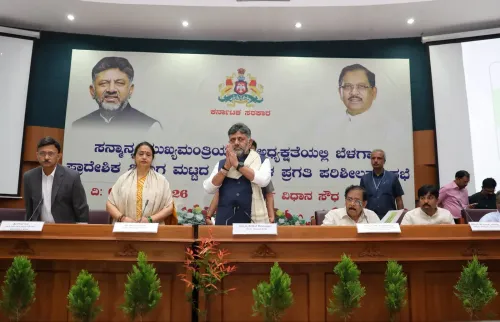
Shivakumar chaired the Belagavi divisional progress review meeting at Suvarna Vidhana Soudha on 9 July 2026 .
Directives were issued across seven sectors : drought management, drinking water, agriculture, infrastructure, forest clearances, road works, and Muzrai temple security.
Belagavi division in northern Karnataka recurrently faces water stress and agricultural distress, making these reviews particularly consequential ahead of the monsoon.
The Muzrai Department , which oversees state-administered Hindu temples, was included in the review alongside core development departments.
Karnataka has institutionalised such divisional review meetings across its four administrative divisions since the early 2010s to monitor scheme implementation.
Follow-up meetings and potential 2026-27 supplementary budget allocations for drought relief and temple security will indicate how directives translate into action.
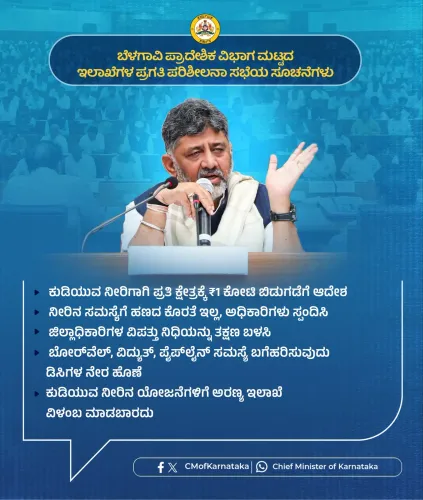
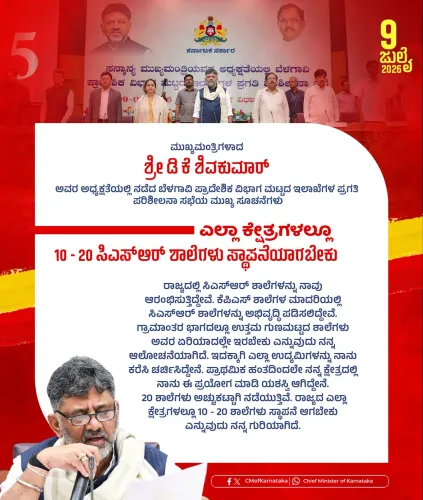
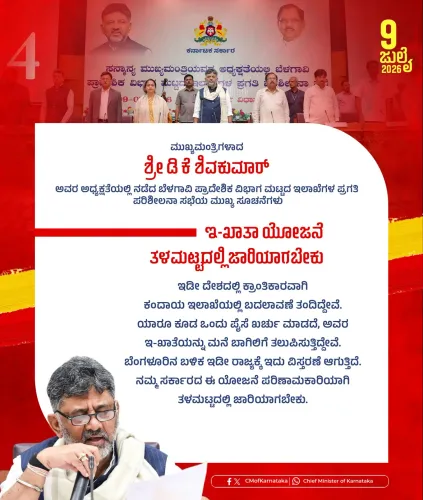
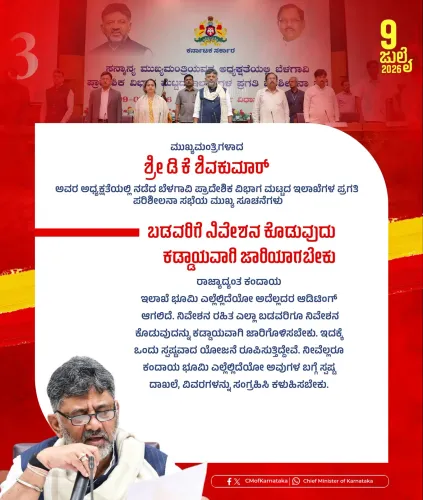
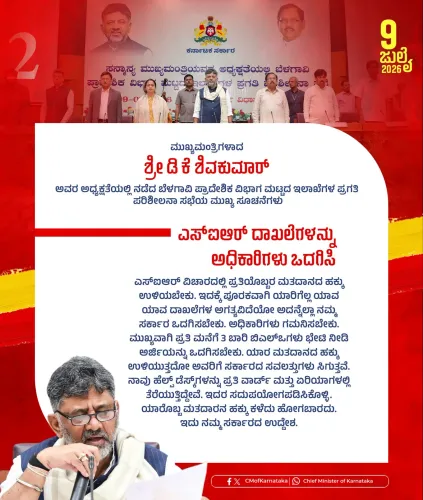
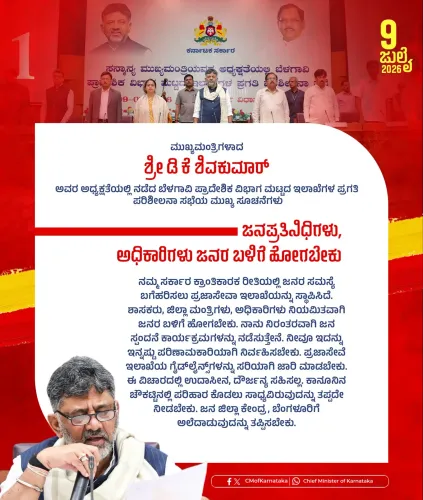
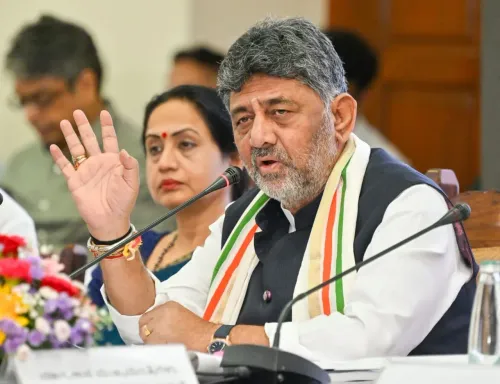
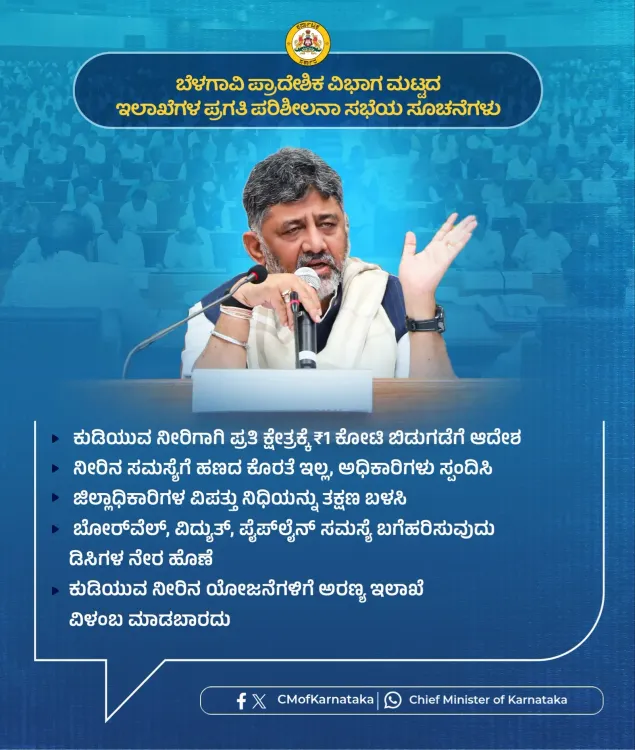
The Chief Minister's Office of Karnataka announced on Thursday, 9 July 2026 that Chief Minister D.K. Shivakumar chaired a regional divisional progress review meeting at Suvarna Vidhana Soudha, Belagavi, issuing key directives to officials across multiple departments covering drought management, drinking water, agriculture, infrastructure, forest clearances, road works, and the security and administration of Muzrai temples.
The post, shared by the official Chief Minister's Office of Karnataka account, states in Kannada: 'ಸುವರ್ಣ ವಿಧಾನಸೌಧದಲ್ಲಿ ಇಂದು ಮುಖ್ಯಮಂತ್ರಿಗಳಾದ ಶ್ರೀ @DKShivakumar ಅವರ ಅಧ್ಯಕ್ಷತೆಯಲ್ಲಿ ನಡೆದ ಬೆಳಗಾವಿ ಪ್ರಾದೇಶಿಕ ವಿಭಾಗ ಮಟ್ಟದ ಇಲಾಖೆಗಳ ಪ್ರಗತಿ ಪರಿಶೀಲನಾ ಸಭೆ' ['Today's Belagavi regional divisional-level departmental progress review meeting chaired by Chief Minister Shri D.K. Shivakumar at Suvarna Vidhana Soudha'], listing significant instructions issued to officials on each of the agenda items.
Context
Suvarna Vidhana Soudha in Belagavi serves as Karnataka's regional legislative and administrative hub for the northern division. The facility was purpose-built to bring government closer to the districts of northern Karnataka, which have historically faced challenges around water stress, agricultural distress, and infrastructure gaps. Divisional review meetings held here allow the Chief Minister and senior officials to assess on-the-ground progress without requiring district administrations to travel to Bengaluru. The meeting on 9 July 2026 covered seven broad sectors: drought management, drinking water supply, agriculture, infrastructure, forest clearance permissions, road construction works, and the security and governance of Muzrai temples — reflecting the breadth of administrative concerns in the Belagavi division.Policy Backdrop
Karnataka has conducted periodic divisional progress reviews across its four administrative divisions — Belagavi, Mysuru, Kalaburagi, and Bengaluru — since at least the early 2010s. These forums are designed to cut through inter-departmental delays and monitor scheme implementation at the ground level. Drought contingency planning and drinking-water reviews have been a recurring feature of such meetings, particularly ahead of and during the southwest monsoon, following the severe drought episodes of 2015-16 and 2018-19 that badly affected northern Karnataka. Forest clearance and road project monitoring operate under the Forest Conservation Act, 1980 and state-level committees that coordinate between the forest department and line agencies. The inclusion of Muzrai Department matters — the body oversees Hindu temples, endowments, and religious institutions across Karnataka — signals the state's practice of integrating regulatory and welfare oversight within a single administrative forum.Stakeholders and Impact
The directives issued at the meeting are expected to directly affect farmers in the Belagavi division, who depend on timely drought-relief measures and agricultural support. Rural households across the division stand to benefit from improved drinking-water supply coordination, especially in taluks that face seasonal scarcity during pre-monsoon months. Road construction and infrastructure decisions affect connectivity across the division's districts, while forest clearance instructions have implications for pending infrastructure projects awaiting green approvals. Temple trusts and devotees in the region are stakeholders in the Muzrai security and administration directives, which address both the physical protection and governance accountability of state-administered religious institutions.What's Next
Follow-up divisional review meetings are typically scheduled after the southwest monsoon establishes itself, to assess relief deployment and infrastructure progress. Any supplementary budget allocations for drought relief or temple security upgrades under the 2026-27 fiscal cycle will be a key indicator of how the directives from this meeting translate into on-ground action. The Belagavi division's performance on drinking water and agricultural support will remain under scrutiny as the monsoon season progresses.Point of View
Using Suvarna Vidhana Soudha as a platform to signal responsiveness to northern Karnataka — a region that has historically felt distant from Bengaluru's policy corridors. Bundling Muzrai temple administration alongside drought and infrastructure signals a deliberate effort to address both development and cultural governance concerns in a politically competitive belt. The timing — at the onset of the southwest monsoon — reflects the standard playbook of pre-empting water and agricultural crises with visible executive action. Whether the directives translate into measurable outcomes will depend on departmental follow-through in the weeks ahead.
NationPress
9 Jul 2026
Frequently Asked Questions
What was discussed at CM Shivakumar's Belagavi divisional review meeting on 9 July 2026?
The meeting at Suvarna Vidhana Soudha covered drought management, drinking water supply, agriculture, infrastructure, forest clearance permissions, road construction works, and the security and administration of Muzrai temples in the Belagavi division.
What is Suvarna Vidhana Soudha and why is it used for these meetings?
Suvarna Vidhana Soudha is a purpose-built regional legislative and administrative complex in Belagavi, used by the Karnataka government to conduct divisional review meetings and occasional assembly sessions closer to the districts of northern Karnataka.
What is the Muzrai Department in Karnataka?
The Muzrai Department is the Karnataka government body responsible for the oversight, security, and administration of Hindu temples, endowments, and religious institutions across the state.
Why does Karnataka hold divisional progress review meetings?
Karnataka has conducted periodic divisional reviews across its four administrative divisions since the early 2010s to monitor scheme implementation, resolve inter-departmental bottlenecks, and coordinate on agriculture, water, roads, and forest permissions at the regional level.
How does Belagavi division's drought history affect these reviews?
Northern Karnataka districts in the Belagavi division have recurrently faced water stress and agricultural distress, particularly after the severe droughts of 2015-16 and 2018-19, making drought management and drinking-water reviews a priority agenda item at such meetings.