CM Shivakumar Chairs State-Wide Law, Monsoon Review
Synopsis
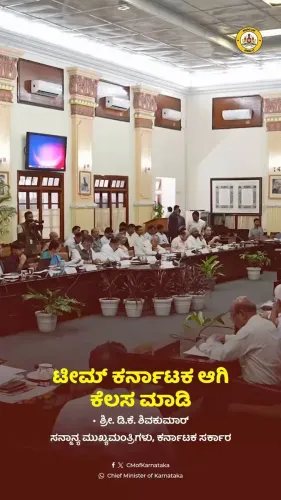
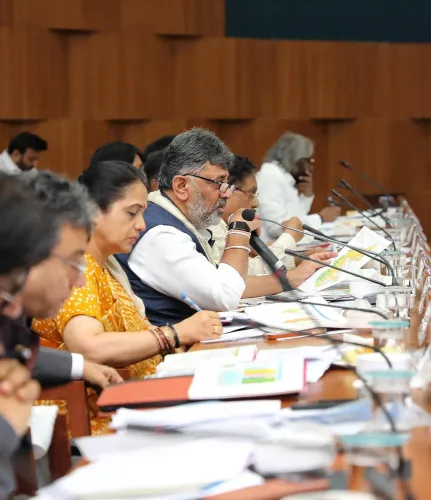
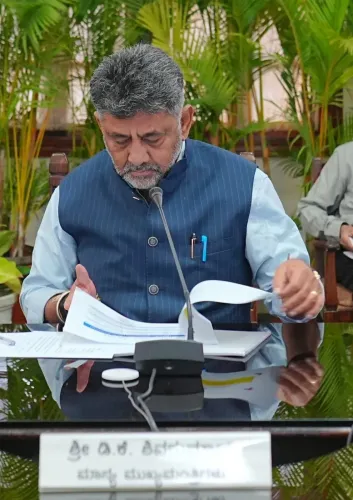
Chief Minister D.K. Shivakumar on June 13 held a state-wide review at Vidhana Soudha with Deputy Commissioners, CEOs, and Superintendents of Police from all districts, issuing directions on law and order, monsoon precautions, and faster administrative delivery.
Key Takeaways
Shivakumar chaired the meeting at Vidhana Soudha on June 13, 2026 .
Officials from all districts — Deputy Commissioners, Chief Executive Officers, and Superintendents of Police — attended.
Three core themes were discussed: law and order maintenance, pre-monsoon precautionary measures, and accelerating administrative work.
The Chief Minister reviewed key issues and issued 'necessary directions' to district officials.
Karnataka's Western Ghats and coastal geography make annual pre-monsoon coordination a critical state priority.
Follow-up district action plans on flood mitigation and law-and-order deployment are expected in coming weeks.
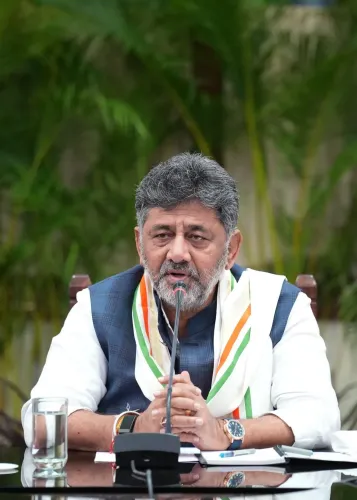
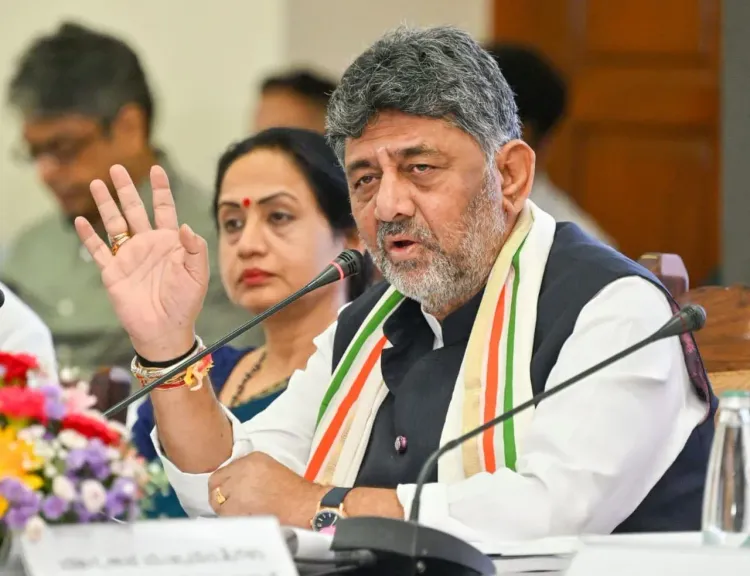
Chief Minister D.K. Shivakumar on Saturday, June 13, 2026, convened a comprehensive administrative review meeting at Vidhana Soudha, Bengaluru, bringing together Deputy Commissioners, Chief Executive Officers, and Superintendents of Police from all districts of Karnataka. The meeting addressed law and order, monsoon preparedness, and the pace of administrative delivery across the state.
Context
The Chief Minister's Office of Karnataka confirmed that the meeting, held at the seat of the state's legislature and administration, saw Shivakumar personally review a range of issues and issue 'necessary directions' to district-level officials. The trilateral format — combining revenue administration, local governance, and policing — signals a unified command approach to the state's seasonal and security challenges.
The post noted that discussions covered 'effective maintenance of law and order across the state, precautionary measures to be taken ahead of the monsoon season, and steps to further accelerate administrative work.'
Policy Backdrop
Karnataka has a well-established tradition of pre-monsoon coordination meetings between the Chief Minister's office and district machinery. Similar exercises were conducted in 2022 for disaster preparedness, and state-level law-and-order reviews involving Superintendents of Police and Deputy Commissioners have been held periodically, including after incidents in 2023.
The state's diverse geography — spanning the Western Ghats, the coastal belt, and the Deccan plateau — makes pre-monsoon coordination especially critical. Flooding, landslides, and disruption to rural connectivity are recurring concerns during the June–September rainfall season. Accelerating administrative work ahead of the monsoon is also a standard directive, as fieldwork becomes difficult once heavy rains set in.
Stakeholders and Impact
Deputy Commissioners are the nodal officers for revenue, disaster response, and inter-departmental coordination at the district level, making their presence at the review central to translating state directives into ground-level action. Chief Executive Officers of Zilla Panchayats oversee rural development spending and local infrastructure, while Superintendents of Police are responsible for maintaining public order across each district.
Residents in flood-vulnerable districts — particularly along the Western Ghats and coastal Karnataka — stand to benefit most directly from early precautionary planning. Urban areas, including Bengaluru, also face recurring waterlogging and law-and-order pressures during the monsoon period.
What's Next
District administrations are expected to translate the Chief Minister's directions into concrete action plans covering flood mitigation infrastructure, early-warning systems, and law-and-order deployment ahead of peak monsoon months. Follow-up compliance reports from Deputy Commissioners are a standard outcome of such state-level reviews.
The meeting signals that the state government intends to front-load administrative preparedness before the monsoon intensifies, with Shivakumar positioning himself as the direct point of accountability for district-level performance across Karnataka's 31 districts.
Point of View
CEOs, and SPs to a single room is a deliberate show of centralised accountability — it signals that the Chief Minister wants no ambiguity about who carries the directive chain. The timing, just as the southwest monsoon approaches Karnataka, follows a pattern seen across Indian states where administrations use the pre-rain window to lock in disaster-response commitments before fieldwork becomes logistically harder. For Shivakumar, the meeting also serves a political purpose: visibly owning the state's administrative machinery reinforces an image of hands-on governance. The real test will be whether district-level action plans emerge quickly and are tracked publicly, or whether the directives remain at the level of a well-photographed review.
NationPress
27 Oct 2026
Frequently Asked Questions
Why did CM Shivakumar call a meeting with all district officials?
Chief Minister D.K. Shivakumar convened the meeting to review law and order across Karnataka, issue pre-monsoon precautionary directives, and push district administrations to accelerate pending administrative work before the rainfall season intensifies.
Where was the Karnataka district officials meeting held?
The meeting was held at Vidhana Soudha in Bengaluru, the seat of Karnataka's legislature and key state administrative offices, on June 13, 2026.
Which officials attended the Karnataka CM's review meeting?
Deputy Commissioners (district collectors), Chief Executive Officers of Zilla Panchayats, and Superintendents of Police from all districts of Karnataka attended the meeting.
What monsoon precautions is the Karnataka government taking?
The Chief Minister's review meeting specifically addressed precautionary measures ahead of the monsoon season, with directions issued to district officials, particularly important given Karnataka's flood-prone Western Ghats and coastal regions.
Does Karnataka hold such district review meetings regularly?
Yes, Karnataka governments have conducted annual pre-monsoon coordination meetings with district officials for disaster preparedness, and state-level law-and-order reviews have also been held periodically, making this part of an established administrative pattern.