CM Shivakumar Holds Video Meet on Karnataka Drought

Synopsis
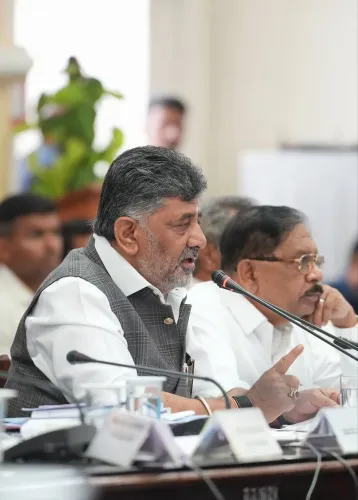
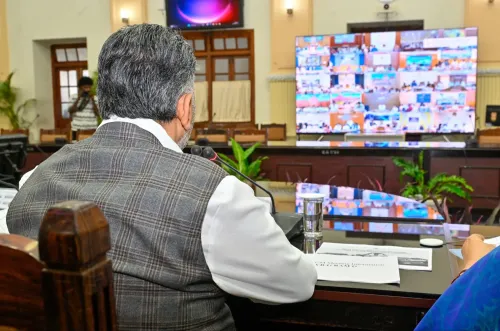
Chief Minister DK Shivakumar on 19 July 2026 convened a video conference at Vidhana Soudha with District Commissioners and Zilla Panchayat CEOs to review Karnataka's drought situation and issue key administrative directives, signalling an active state relief response ahead of the kharif season.
Key Takeaways
Chief Minister DK Shivakumar chaired a video conference on 19 July 2026 at Vidhana Soudha, Bengaluru on the drought situation.
The meeting included District Commissioners (IAS officers) and Chief Executive Officers of Zilla Panchayats across Karnataka.
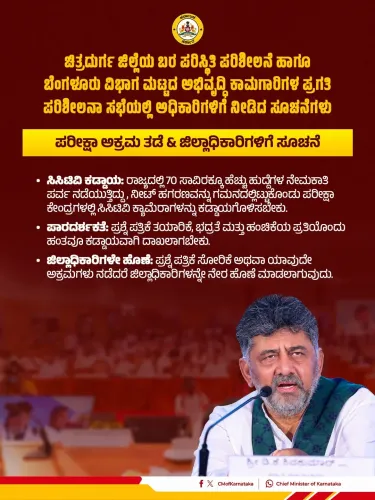
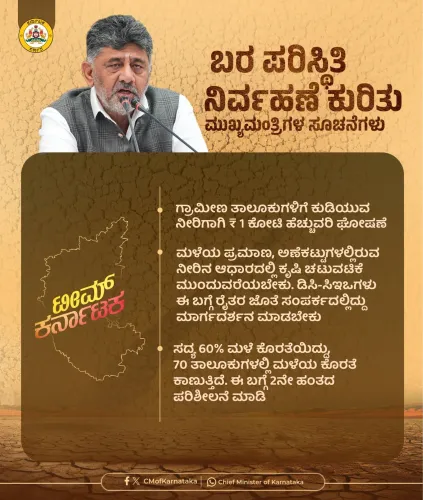
Key directives were issued by the Chief Minister during the video dialogue for district-level drought response.
Karnataka has a history of drought declarations in 2019 and 2023 , particularly in rain-shadow and northern districts.
The next steps include possible formal drought notification and requests for National Disaster Response Fund assistance from the central government.
Farmers and rural households dependent on rain-fed agriculture are the primary communities at risk.
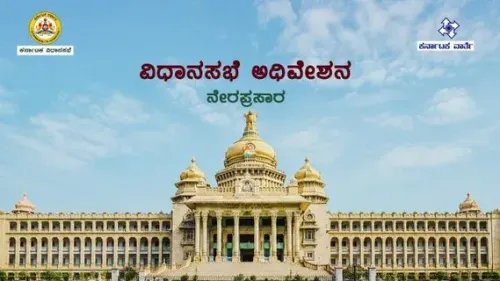
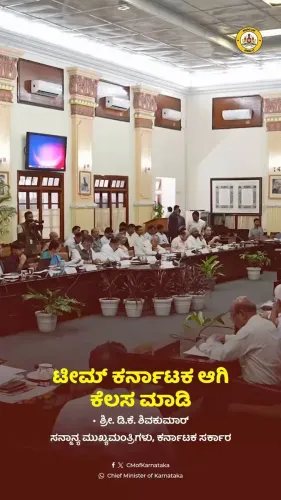
The Chief Minister's Office of Karnataka announced on Sunday, 19 July 2026 that Chief Minister DK Shivakumar chaired a video conference at Vidhana Soudha, Bengaluru, with District Commissioners and Chief Executive Officers across the state to assess the drought situation and issue key directives for relief and management.
Context
The official post, shared by the Chief Minister's Office, states in Kannada: 'ಬರ ಪರಿಸ್ಥಿತಿ ಕುರಿತು ಜಿಲ್ಲಾಧಿಕಾರಿಗಳು ಮತ್ತು ಸಿಇಒಗಳ ಜೊತೆ ವಿಡಿಯೋ ಸಂವಾದ' — meaning 'a video dialogue with District Commissioners and CEOs on the drought situation.' The meeting was held at Vidhana Soudha, the seat of Karnataka's legislature and secretariat in Bengaluru, where the Chief Minister's office is headquartered.
The conference brought together senior district-level administrators — Indian Administrative Service officers serving as District Commissioners — who are the primary implementers of state relief directives on the ground. The Chief Executive Officers referenced are heads of Zilla Panchayats, who coordinate rural development and welfare delivery at the district level.
Policy Backdrop
Karnataka has a documented history of drought stress, particularly in its rain-shadow regions and northern districts, which are vulnerable to deficient south-west monsoon seasons. The state has issued official drought declarations in multiple districts in previous years, including 2019 and 2023, triggering activation of state calamity relief mechanisms and requests for central government assistance.
Under India's disaster management framework, state governments conduct regular video conferences with district officials to assess crop damage surveys, drinking water availability, livestock distress, and the implementation of contingency crop plans. Such reviews are a standard administrative step preceding formal drought notification and release of relief funds.
Stakeholders and Impact
The communities most directly affected by drought conditions in Karnataka are farmers and rural households, particularly those dependent on rain-fed agriculture in districts with below-normal rainfall. Timely administrative coordination of this nature is critical to ensuring that crop-loss assessments, input subsidies, and drinking water supply arrangements reach affected populations without delay.
District Commissioners and Zilla Panchayat CEOs are the administrative nodes through which state directives translate into on-ground action — from organising water tankers to facilitating access to crop insurance and the National Disaster Response Fund. The directives issued by CM Shivakumar during this video conference will shape the pace and scale of relief operations across affected districts.
What's Next
Attention will now turn to whether the state government issues a formal drought declaration for specific districts, which would unlock access to the State Disaster Response Fund and enable Karnataka to seek assistance from the National Disaster Response Fund managed by the central government. District-wise crop damage assessment reports, compiled by revenue officials, are expected to inform any such notification.
Progress on contingency crop plan implementation — including distribution of drought-resistant seed varieties and provision of cattle fodder — will be closely watched by farming communities and civil society groups. The outcome of this administrative review signals that the state government is moving into an active drought-response posture ahead of the critical kharif crop season.
Point of View
Not a routine seasonal concern. This mirrors the administrative playbook used in 2023, when early coordination with district officials helped Karnataka fast-track its formal drought declaration and central relief requests. The move also carries political weight: direct visibility of the Chief Minister in relief coordination reinforces the Congress government's positioning as responsive to agrarian distress ahead of any potential electoral cycle. The quality of follow-through — whether formal drought notification and fund releases materialise swiftly — will ultimately determine whether this administrative review translates into tangible relief for affected farmers.
NationPress
18 Oct 2026
Frequently Asked Questions
Why did CM DK Shivakumar hold a video conference on drought in Karnataka?
CM DK Shivakumar held the video conference on 19 July 2026 to assess the drought situation across Karnataka districts and issue directives to District Commissioners and Zilla Panchayat CEOs for coordinated relief action.
Which districts in Karnataka are affected by drought in 2026?
The Chief Minister's Office has not yet released a specific list of drought-affected districts from the 19 July 2026 meeting; a formal drought declaration identifying affected districts is expected to follow the administrative review.
What is Vidhana Soudha and why are meetings held there?
Vidhana Soudha is the seat of the Karnataka state legislature and secretariat in Bengaluru, and it houses the Chief Minister's office, making it the primary venue for high-level state government meetings.
How does Karnataka declare a drought and get central government funds?
Karnataka conducts crop damage surveys through District Commissioners, issues a formal drought notification, and then submits a memorandum to the central government seeking assistance from the National Disaster Response Fund.
Has Karnataka faced drought before and how did the government respond?
Yes, Karnataka declared drought in multiple districts in 2019 and 2023 following deficient south-west monsoon seasons, triggering state calamity relief mechanisms and coordination with the central government for financial assistance.