CM Shivakumar Chairs Drought Review, Orders ₹1 Cr Grant
Synopsis
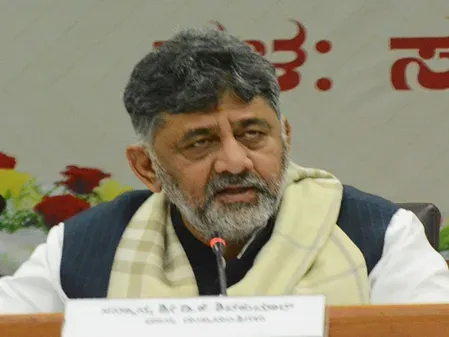
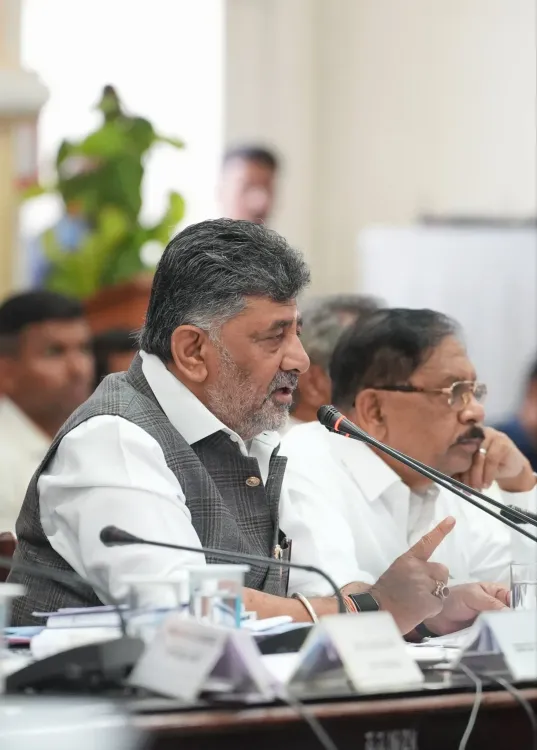
Chief Minister DK Shivakumar chaired a drought review video conference at Vidhana Soudha on 19 July 2026, announcing a ₹1 crore per-taluk drinking-water grant, mandatory borewell video recording, and a 15-day deadline for submitting a comprehensive drought report to the central government amid a 39% statewide monsoon deficit.
Key Takeaways
Karnataka recorded a 39% overall monsoon deficit as of 18 July 2026, with more than 170 taluks affected and Vijayanagara district at the worst with a 67% shortfall .
Major reservoir storage has dropped to 359.98 TMC (40% capacity) , compared to 681.83 TMC at the same time last year.
CM DK Shivakumar announced an additional ₹1 crore grant per rural taluk to address drinking water shortages.
All new borewell drilling must be mandatorily video-recorded ; CEOs face direct accountability for fraudulent cases.
A comprehensive drought report must be submitted to the central government within 15 days .
Departments of Agriculture, Animal Husbandry, and Rural Development are directed to work on a war footing with priority on small and marginal farmers.
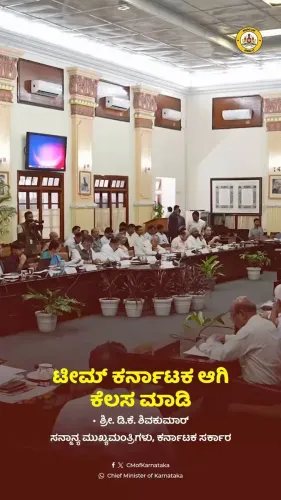
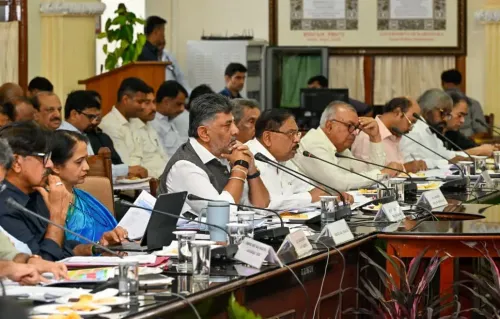
The Chief Minister's Office of Karnataka announced on Sunday, 19 July 2026 that Chief Minister DK Shivakumar chaired a video conference at the Vidhana Soudha conference hall with district collectors and chief executive officers across the state to assess the worsening drought situation and issue emergency directives.
Context
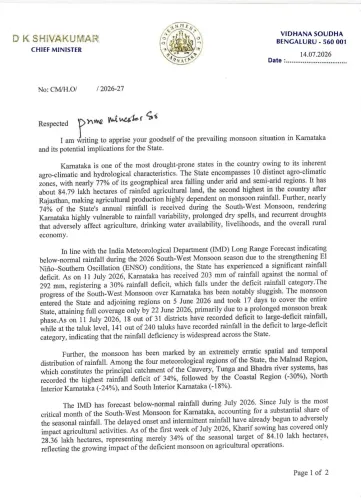
Karnataka is facing a severe 39 percent overall deficit in southwest monsoon rainfall as of 18 July 2026, with more than 170 taluks reporting rain scarcity. Vijayanagara district in northern Karnataka has recorded the steepest shortfall at 67 percent below normal. Regional deficits span all zones: Malnad (-43%), Coastal (-35%), North Interior (-33%), and South Interior (-31%).
Reservoir storage has fallen sharply. Major reservoirs hold only 40 percent of capacity — 359.98 TMC currently against 681.83 TMC at the same point last year. Hydropower reservoirs at Linganamakki, Supa, and Varahi average just 23 percent storage. The Cauvery basin stands at 51 percent and the Krishna basin at 48 percent.
Policy Backdrop
CM Shivakumar announced an additional grant of ₹1 crore per rural taluk to address drinking water shortages — one of the most immediate humanitarian concerns during drought conditions. The state has a history of such emergency allocations during monsoon deficit years, building on frameworks established during the 2023 drought when large parts of Karnataka faced similar shortfalls.
A significant new anti-corruption measure was also announced: all new borewell drilling must be mandatorily video-recorded, and CEOs will be held directly accountable for any fraudulent or 'bogus' borewell cases. This builds on earlier third-party audit mandates introduced after the 2018-19 drought relief programmes to curb leakages in groundwater schemes.
Stakeholders and Impact
The directives place small and marginal farmers at the centre of the state's relief strategy. The Agriculture, Animal Husbandry, and Rural Development departments have been instructed to operate on a war footing. Farmers have been urged to shift to low water-intensive crops to manage the drought more effectively.
On the power front, special attention is to be paid to transformer repairs, and a 4G exemption has been granted to keep additional transformers on standby — a measure aimed at ensuring uninterrupted electricity to rural areas dependent on borewells and irrigation pumps. Deputy Chief Minister Dr G. Parameshwara and ministers Ramalinga Reddy, KJ George, Eshwar Khandre, and Yatindra Siddaramaiah were present at the review meeting alongside senior departmental officials.
What's Next
The state government has set a 15-day deadline to submit a comprehensive drought report to the central government, with officials directed to present ground-level facts clearly to any visiting central team. The CM invoked a 'Team Karnataka' approach, asking officials to move beyond paper reports and demonstrate field-level administrative teamwork and efficiency.
The rollout of the mandatory borewell video-recording protocol and the release of the additional drinking-water grants to rural taluks will be closely watched as indicators of how swiftly the state machinery responds to one of the worst monsoon deficits in recent years.
Point of View
And attempts to pre-empt that pattern. If the central team visit and fund release are delayed, the political pressure on the Congress government — which has staked its credibility on farmer welfare — will intensify considerably.
NationPress
18 Oct 2026
Frequently Asked Questions
How bad is the drought in Karnataka in 2026?
Karnataka is facing a 39% overall monsoon deficit as of 18 July 2026, with more than 170 taluks affected. Vijayanagara district has the worst shortfall at 67% below normal, and major reservoir storage has fallen to just 40% of capacity.
What did CM DK Shivakumar announce for drought relief?
CM DK Shivakumar announced an additional ₹1 crore grant per rural taluk for drinking water, mandatory video recording of all new borewell drilling, a 15-day deadline to submit a drought report to the central government, and a war-footing approach for agriculture and rural development departments.
What is the borewell video recording rule in Karnataka?
The Karnataka government has made it mandatory to video-record all new borewell drilling to curb fraudulent or 'bogus' borewell claims. Chief Executive Officers of local bodies will be held directly accountable if fake cases are found.
What are the current water levels in Karnataka reservoirs?
As of mid-July 2026, major Karnataka reservoirs hold 359.98 TMC , which is about 40% of capacity , compared to 681.83 TMC at the same time last year. Hydropower reservoirs at Linganamakki, Supa, and Varahi average only 23% storage.
Will Karnataka get central government help for the drought?
The state government has been directed to submit a comprehensive drought report to the central government within 15 days and to clearly present ground realities to any visiting central assessment team, as part of the process to seek federal disaster relief funds.