CM Shivakumar Holds Crisis Meet as Karnataka Reels Under Monsoon Deficit
Synopsis
Karnataka CM D K Shivakumar convened an emergency video conference with all district collectors and district panchayat CEOs on 19 July 2026, as the southwest monsoon shortfall pushed kharif sowing to just 34% of target and reservoir storage to 34% capacity, triggering a war-footing directive on drinking water, fodder, and employment.
Key Takeaways
Karnataka CM D K Shivakumar held an emergency video conference with all district collectors and district panchayat CEOs on 19 July 2026 over the worsening drought situation.
Kharif sowing has reached only 34 per cent of the seasonal target due to a severe southwest monsoon shortfall.
Water storage in major state reservoirs has fallen to 34 per cent of capacity, with groundwater levels also declining sharply.
Preliminary reports indicate widespread crop damage across Karnataka's rain-fed agricultural districts.
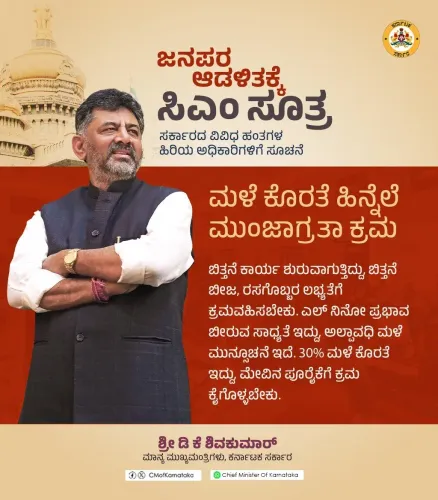
The government has declared ensuring drinking water and fodder for every citizen and livestock animal its 'supreme duty,' ordering the entire administration to work on a war footing .
Key agenda items included drinking water supply, livestock fodder, agricultural activity, and employment generation in drought-hit districts.
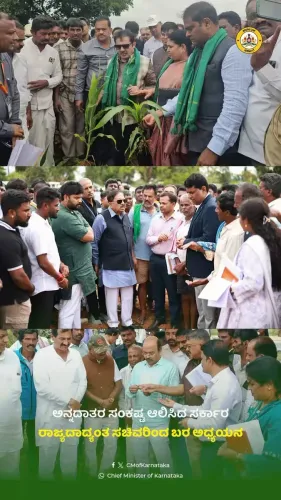
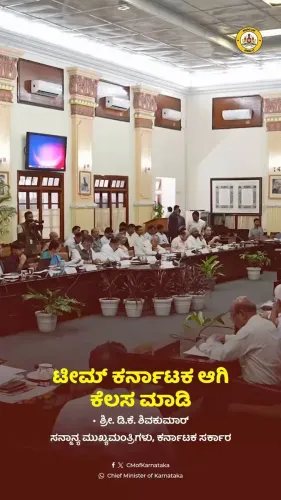
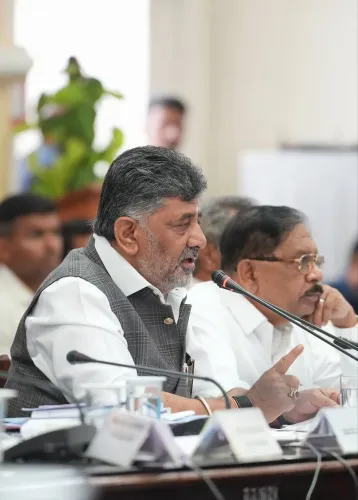
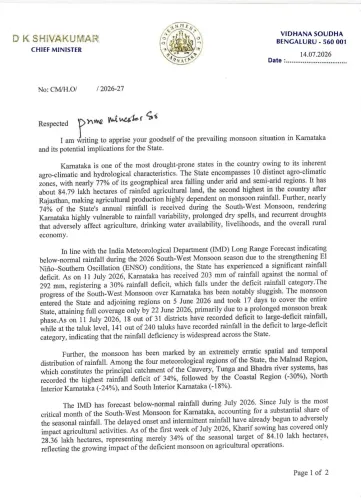
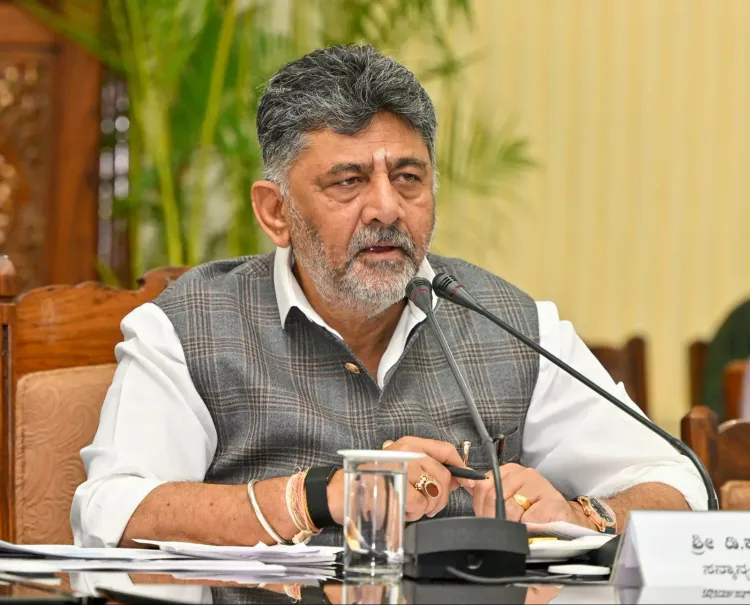
Karnataka Chief Minister D K Shivakumar on Sunday, 19 July 2026, chaired an emergency video conference with all district collectors and chief executive officers of district panchayats across the state to assess the worsening drought situation triggered by a severe southwest monsoon shortfall. The meeting covered drinking water availability, livestock fodder, agricultural activity, and employment generation in drought-affected districts.
Context
The Chief Minister's Office of Karnataka confirmed that the southwest monsoon has 'severely let us down' (ನೈಋತ್ಯ ಮುಂಗಾರು ನಮಗೆ ತೀವ್ರವಾಗಿ ಕೈಕೊಟ್ಟಿದೆ), with the current kharif sowing target achieved at only 34 per cent. Preliminary field reports indicate widespread crop damage across the state's rain-fed farming belts.
Water storage in the state's major reservoirs has also dropped to 34 per cent of capacity, while groundwater levels are described as declining sharply. Together, these indicators paint a picture of an agrarian crisis unfolding across multiple districts simultaneously.
Policy Backdrop
Karnataka has faced recurrent southwest monsoon shortfalls, with drought declarations issued in years such as 2015–16 and 2018–19 under established rainfall deficiency criteria. State governments have historically responded with district-level coordination on drinking water supply, fodder camps, and farm support, drawing on the State Disaster Response Fund and, where necessary, seeking central government assistance.
India's federal disaster management framework places the first line of response with state administrations, making the role of district collectors and district panchayat CEOs critical to on-ground relief delivery. The video conference format signals an attempt at rapid, simultaneous mobilisation across all districts rather than a phased response.
Stakeholders and Impact
The groups most immediately affected are rain-fed farmers who have been unable to complete sowing, rural households facing drinking water shortages, and livestock owners struggling to secure fodder. The Chief Minister's Office emphasised that ensuring no citizen or 'mute livestock' (ಮೂಕ ಜಾನುವಾರು) faces a shortage of drinking water or fodder is the government's 'supreme duty.'
Employment generation was also flagged as a priority agenda item at the meeting, reflecting concerns that crop failure will reduce farm-wage income for agricultural labourers in affected districts. The government's directive that 'the entire administrative machinery must work on a war footing' (ಇಡೀ ಆಡಳಿತ ಯಂತ್ರವು ಯುದ್ಧೋಪಾದಿಯಲ್ಲಿ ಕೆಲಸ ಮಾಡಬೇಕಿದೆ) underlines the scale of urgency conveyed to district officials.
What's Next
The performance of the northeast monsoon later in 2026 will be closely watched as a potential partial corrective for reservoir storage and groundwater recharge. A formal drought declaration, which triggers additional relief entitlements under national norms, remains a key decision point for the state government in the coming weeks.
The implementation of drinking water augmentation projects and employment guarantee schemes in deficit districts will determine how effectively the administrative mobilisation announced on 19 July translates into relief on the ground. Any proposal for central assistance would require a joint survey and formal request to New Delhi, adding another layer to the unfolding response.
Point of View
Adding pressure on state welfare spending at a time when reservoir storage is already constrained. How quickly the government moves from the war-footing directive to a formal drought declaration and, potentially, a central aid request will define the political and administrative narrative around this crisis in the months ahead.
NationPress
18 Oct 2026
Frequently Asked Questions
What is the current drought situation in Karnataka in 2026?
Karnataka is facing a severe southwest monsoon shortfall in 2026, with kharif sowing at only 34% of the seasonal target, major reservoir storage at 34% of capacity, and widespread crop damage reported in preliminary assessments.
What did CM D K Shivakumar do about the Karnataka drought?
CM D K Shivakumar chaired an emergency video conference on 19 July 2026 with all district collectors and district panchayat CEOs to review the drought situation and directed the entire administration to work on a war footing to ensure drinking water and fodder availability.
How much water is stored in Karnataka reservoirs right now?
As of the government's assessment shared on 19 July 2026, water storage in Karnataka's major reservoirs stands at approximately 34% of total capacity, with groundwater levels also declining sharply.
Will Karnataka declare a drought in 2026?
The state government has not yet made a formal drought declaration as of 19 July 2026, but the emergency administrative mobilisation and scale of the deficit make it a key decision point to watch in the coming weeks.
What relief measures is Karnataka taking for farmers affected by the monsoon failure?
The Karnataka government has directed district collectors to prioritise drinking water supply, livestock fodder, agricultural support, and employment generation, with the Chief Minister ordering all administrative machinery to operate on a war footing.