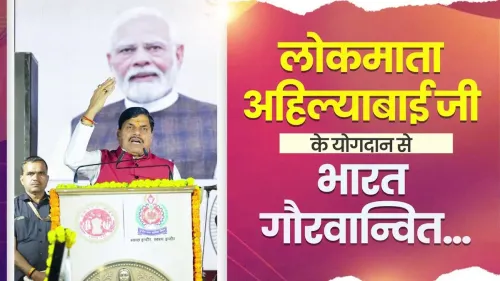
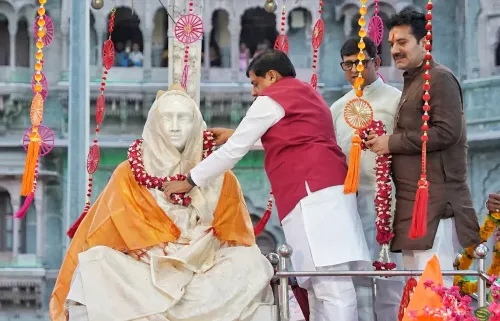
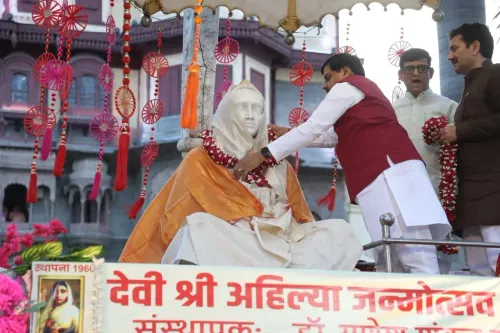
CM Mohan Yadav inspects Ahilyabai Holkar memorial in Indore
Synopsis
Madhya Pradesh CM Dr. Mohan Yadav inspected the Lokmata Devi Ahilyabai Holkar Smarak and Rampur Kothi restoration in Indore on 18 October 2026, directing officials to develop Lalbagh Palace, Rampur Kothi, Champa Bawdi, and a Shiv Temple as one integrated tourist circuit within a fixed deadline.
Key Takeaways
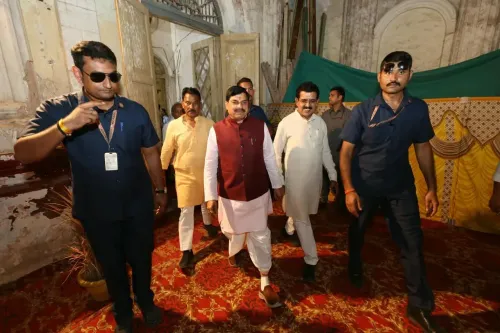
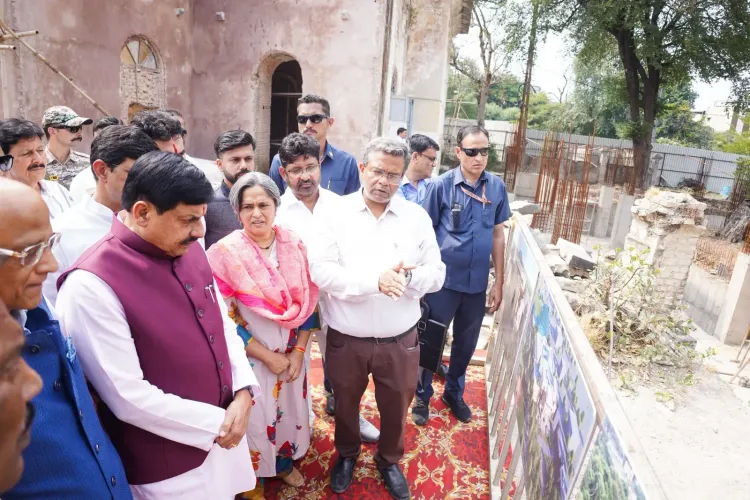
Mohan Yadav personally inspected the under-construction Lokmata Devi Ahilyabai Holkar Smarak in Indore on 18 October 2026 .
Restoration work at Rampur Kothi was also reviewed during the same visit.
Officials were directed to develop Lalbagh Palace , Rampur Kothi , Champa Bawdi , and the adjacent Shiv Temple as a single integrated heritage circuit.
The integrated circuit aims to allow tourists to experience all four historic landmarks in a single visit.
Yadav issued explicit instructions to complete all construction and restoration works within the stipulated timeline.
The project builds on Madhya Pradesh's established strategy of bundling heritage sites to boost domestic tourism revenue.
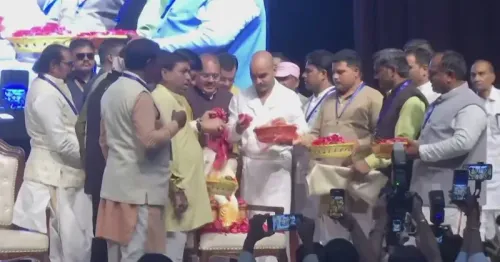
An eighteenth-century queen's legacy is getting a modern stage. Madhya Pradesh Chief Minister Dr. Mohan Yadav on Sunday, 18 October 2026, walked the construction site of the Lokmata Devi Ahilyabai Holkar Smarak in Indore and reviewed the parallel restoration work at Rampur Kothi, issuing on-the-spot directives to officials to complete every task within the stipulated deadline.
Posting on X, the Chief Minister stated: 'ऐतिहासिक धरोहरों के संरक्षण और पर्यटकों की सुविधा अनुसार स्मारक का समग्र विकास करने के निर्देश दिए' — 'instructions were given for the holistic development of the memorial in line with heritage conservation and tourist convenience.' He also directed that Lalbagh Palace, Rampur Kothi, Champa Bawdi (the historic stepwell), and the adjacent Shiv Temple be developed as a single integrated circuit so that visitors can experience all four landmarks in one visit.
Why Ahilyabai Holkar still commands this reverence
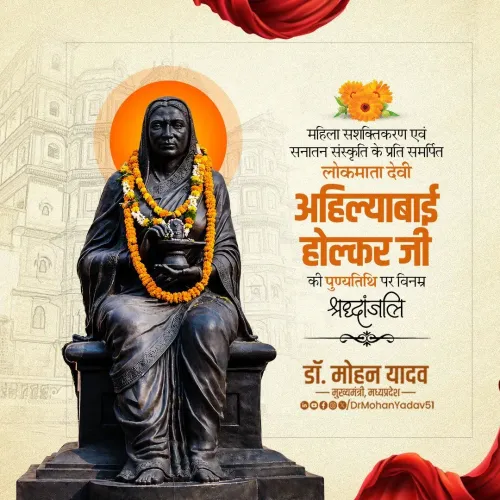
Devi Ahilyabai Holkar ruled the Holkar kingdom from Indore through the latter half of the eighteenth century and is celebrated across India for commissioning temples, dharamshalas, and public infrastructure from the Himalayan ghats to the tip of the peninsula. Her legacy gives any project bearing her name an outsized cultural weight — she is not merely a regional figure but a pan-Hindu icon, which explains the political and popular energy behind the memorial. Indore itself was the Holkar capital, meaning the cluster of palaces and stepwells that Dr. Yadav inspected today are the physical remnants of her administrative world.
Lalbagh Palace to Champa Bawdi: building a single tourist trail
The headline instruction from Sunday's inspection is integration. Rather than treating Lalbagh Palace — already a public museum — and the other sites as isolated stops, the Chief Minister has asked the state tourism and archaeology machinery to stitch them into a single walkable or shuttle-linked circuit. This is a model Madhya Pradesh has used before: bundling proximate heritage assets to raise average visitor dwell-time and per-capita spend. For Indore, already the state's most visited city and a perennial topper in the Swachh Survekshan cleanliness rankings, a polished heritage corridor could cement a dual identity as both India's cleanest city and one of its richest Holkar living-museums.
Deadline pressure and what comes next
Dr. Yadav's explicit instruction to complete 'all works within the designated timeline' signals that slippage has either occurred or is being pre-empted. The precise construction status of the Ahilyabai Holkar Smarak and the completion date have not been officially confirmed in public records, so the exact clock cannot be stated. What is clear is that the Chief Minister chose a personal site visit — with photographs — rather than a review meeting, a deliberate choice that puts visible accountability on contractors and officials. The real test will be whether the integrated circuit opens on schedule and whether visitor footfall data eventually vindicates the investment.
Indore's Holkar heritage is finally getting the unified showcase it has long deserved. Whether the construction timeline holds is the only question left unanswered.
Point of View
Positioning clean, urban Indore as a destination that can hold a visitor for two or three days. The deadline-compliance instruction delivered in person, on camera, is a classic accountability move that keeps bureaucratic momentum visible without requiring a legislative mechanism. Whether the Holkar circuit translates into measurable footfall gains will ultimately determine whether this becomes a replicable model for other Madhya Pradesh heritage clusters.
NationPress
18 Oct 2026
Frequently Asked Questions
What is the Lokmata Devi Ahilyabai Holkar Smarak in Indore?
It is a memorial under construction in Indore dedicated to the eighteenth-century Holkar queen Devi Ahilyabai Holkar , celebrated across India for her temple-building and public-works philanthropy. CM Dr. Mohan Yadav inspected the site on 18 October 2026 .
What is the integrated heritage circuit CM Yadav has ordered for Indore?
CM Dr. Yadav has directed authorities to develop Lalbagh Palace , Rampur Kothi , Champa Bawdi , and a nearby Shiv Temple as a single linked circuit so that tourists can visit all four Holkar-era landmarks in one trip.
What is Lalbagh Palace in Indore?
Lalbagh Palace is the principal Holkar-era palace complex in Indore , now maintained as a public museum and heritage site. It is one of the four landmarks being integrated into the new tourist circuit ordered by CM Dr. Yadav.
Who was Devi Ahilyabai Holkar?
Devi Ahilyabai Holkar was an eighteenth-century ruler of the Holkar kingdom based in Indore , renowned for commissioning temples, dharamshalas, and public infrastructure across India. She is considered a pan-Hindu cultural icon.
When will the Ahilyabai Holkar memorial in Indore be completed?
CM Dr. Yadav has instructed officials to complete all construction and restoration works within the 'designated timeline,' but the precise completion date has not been officially confirmed in public records as of October 2026 .