Pradhan Calls on NISER Graduates to Lead India's Research Push
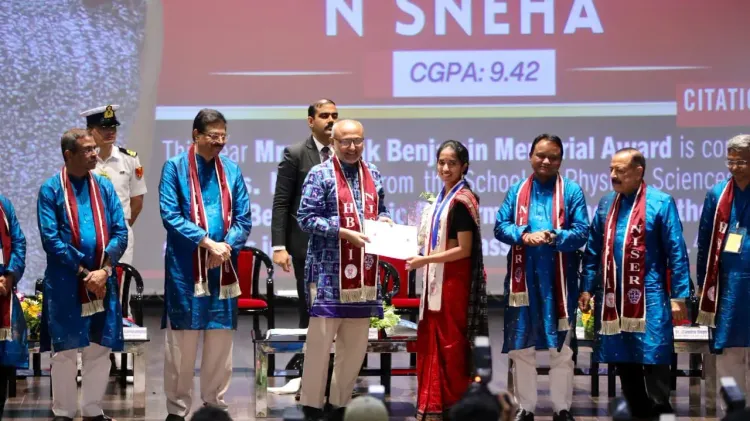
Synopsis
Union Education Minister Dharmendra Pradhan on 9 July 2026 called on NISER graduates to spearhead India's scientific agenda, pointing to the ANRF, the ₹1 lakh crore RDI initiative and the Rare Earth Mission as pillars of the government's push toward Viksit Bharat 2047.
Key Takeaways
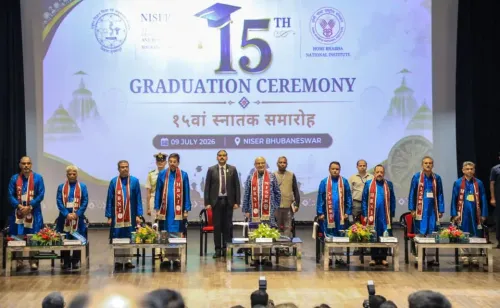
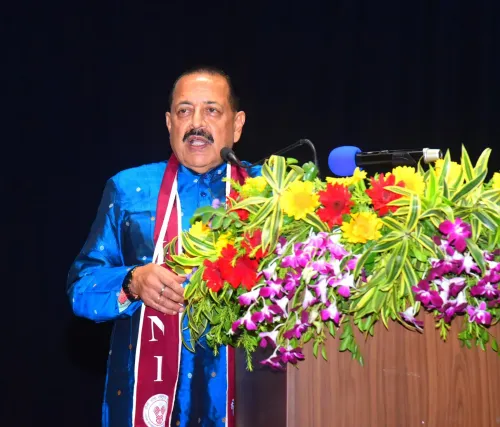
Dharmendra Pradhan addressed NISER Bhubaneswar's graduating class on 9 July 2026 , urging them to lead India's research and innovation drive.
The Minister cited three policy instruments: the Anusandhan National Research Foundation (ANRF) , the ₹1 lakh crore RDI initiative , and the newly announced Rare Earth Mission .
NISER is an autonomous institute under the Department of Atomic Energy , focused on integrated science education and research.
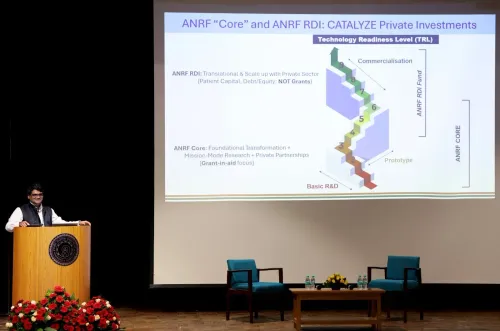
The ANRF was established under the Anusandhan National Research Foundation Act, 2023 , fulfilling a key mandate of the National Education Policy 2020 .
Pradhan called for 'a time-bound strategy, cutting-edge research and scalable innovation' to address national priorities, framing the push within the Viksit Bharat 2047 vision.
Budget allocations and first-year ANRF disbursement reports will be closely watched as tests of the government's research funding commitments.
Union Education Minister Dharmendra Pradhan on Thursday, 9 July 2026 called on graduating students of the National Institute of Science Education and Research (NISER), Bhubaneswar to lead India's scientific ambitions, citing the government's renewed research investments including the Anusandhan National Research Foundation (ANRF), the ₹1 lakh crore Research, Development and Innovation (RDI) initiative, and the recently announced Rare Earth Mission.
Context
Addressing the graduating class, the Minister framed their convocation as 'the beginning of a larger journey of discovery, innovation and nation-building.' He stated that 'a time-bound strategy, cutting-edge research and scalable innovation are essential to addressing national priorities and strengthening India's scientific capabilities.' The remarks were posted on X on the evening of 9 July 2026.
NISER, an autonomous institute under the Department of Atomic Energy, offers integrated science programmes and is among a cluster of premier research institutions increasingly being tasked with translating basic science into outcomes aligned with national priorities.
Policy Backdrop
The Minister's address drew together three distinct policy instruments. The ANRF, established under the Anusandhan National Research Foundation Act, 2023, was created to unify and scale up research funding across disciplines and institutions — a key mandate of the National Education Policy 2020. The ₹1 lakh crore RDI initiative is a central funding programme aimed at priority sectors, while the Rare Earth Mission targets the exploration, mining and processing of rare earth elements critical to technology and defence applications.
Taken together, these instruments reflect a policy shift from input-based science spending toward outcome-linked, time-bound deliverables. India has long sought to raise its gross expenditure on research and development as a share of GDP, and successive governments have pursued dedicated vehicles to close that gap and reduce dependence on imported critical minerals.
Stakeholders and Impact
The immediate audience was NISER's graduating cohort — scientists trained in integrated programmes spanning physics, chemistry, biology, mathematics and earth sciences. Pradhan told them: 'The nation looks to its young scientists to expand the frontiers of knowledge and innovation in the journey towards #ViksitBharat2047.'
Broader stakeholders include STEM researchers and higher education institutions across India, who stand to benefit from ANRF grants and RDI funding. The Rare Earth Mission, if implemented at scale, would also draw in public-sector mining enterprises and private technology manufacturers reliant on rare earth inputs for electronics, electric vehicles and defence systems.
What's Next
Attention will now turn to first-year disbursement reports under the ANRF and the RDI initiative, as well as parliamentary committee reviews tracking the Rare Earth Mission's progress on domestic refining capacity. Budget 2027-28 allocations for science and technology will serve as the next major indicator of whether the government's stated ambitions translate into sustained funding flows.
For institutions like NISER, the ministerial emphasis on 'time-bound strategy' signals that performance benchmarks and outcome metrics are likely to feature more prominently in institutional reviews and funding renewals going forward — a pattern consistent with the outcome-linked science policy direction visible across the sector since the early 2020s.
Point of View
Tying premier DAE institutions like NISER explicitly to deliverables under the ANRF, the RDI initiative and the Rare Earth Mission. The emphasis on 'time-bound strategy' signals a hardening of outcome expectations at institutions historically insulated from such pressures. Coming alongside the Rare Earth Mission, the remarks also underscore how India's science policy is increasingly shaped by strategic resource and technology competition, not just academic aspiration. The address fits a broader arc in which the government is using high-visibility platforms to signal to the research community that funding scale-up will come with accountability strings attached.
NationPress
9 Jul 2026
Frequently Asked Questions
What did Dharmendra Pradhan say at the NISER convocation?
Pradhan called on NISER's graduating scientists to lead India's research ambitions, citing the ANRF, the ₹1 lakh crore RDI initiative and the Rare Earth Mission, and urged a 'time-bound strategy' for cutting-edge, scalable innovation toward Viksit Bharat 2047.
What is the Anusandhan National Research Foundation (ANRF)?
The ANRF is a statutory body established under the Anusandhan National Research Foundation Act, 2023, created to coordinate and fund research across disciplines and institutions in India, fulfilling a mandate of the National Education Policy 2020.
What is the ₹1 lakh crore RDI initiative?
The ₹1 lakh crore Research, Development and Innovation initiative is a central government funding programme designed to support research and innovation in priority sectors across India.
What is India's Rare Earth Mission?
India's Rare Earth Mission is a government programme to accelerate the exploration, mining and processing of rare earth elements for strategic, technology and defence applications, reducing dependence on imports.
What is NISER and where is it located?
NISER, the National Institute of Science Education and Research, is located in Bhubaneswar, Odisha. It is an autonomous institute under the Department of Atomic Energy offering integrated science education and research programmes.