Pradhan Champions India's Innovation Push via #BharatInnovates
Synopsis
Union Education Minister Dharmendra Pradhan launched a rallying call on June 12, 2026, under #BharatInnovates, connecting India's campuses, labs, and startups to a vision of shared global innovation — backed by NEP 2020, Atal Innovation Mission, and Startup India frameworks.
Key Takeaways
Dharmendra Pradhan posted on June 12, 2026 under the #BharatInnovates hashtag, framing India's innovation journey as a global mission.
The post was accompanied by a video , indicating a structured campaign rather than an isolated statement.
The messaging builds on NEP 2020 , which mandated research and innovation cells in higher education institutions.
The Atal Innovation Mission (2016) and Startup India (2016) provide the institutional backbone the post implicitly celebrates.
The dual hashtags #InnovationForHumanity and #FutureReadyIndia signal both domestic mobilisation and international outreach.
Policy watchers anticipate possible follow-up announcements on deep-tech incubator funding or parliamentary movement on an R&D Bill.
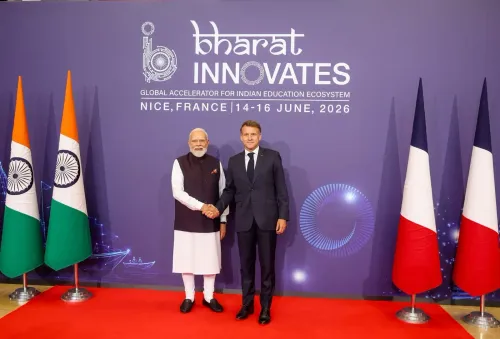
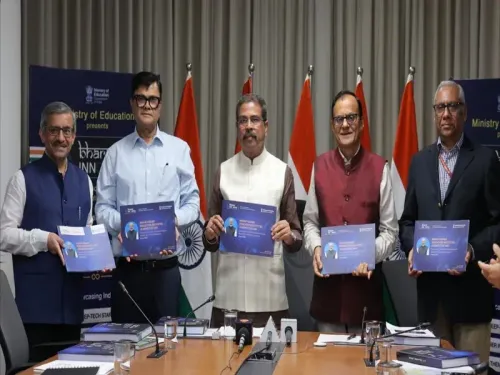
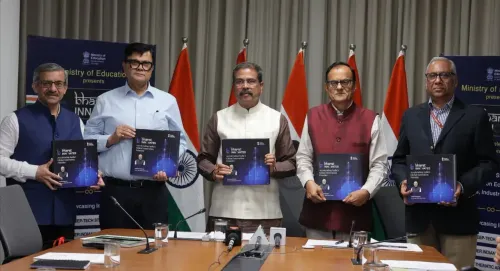
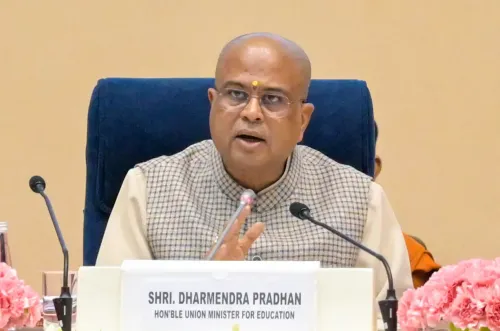
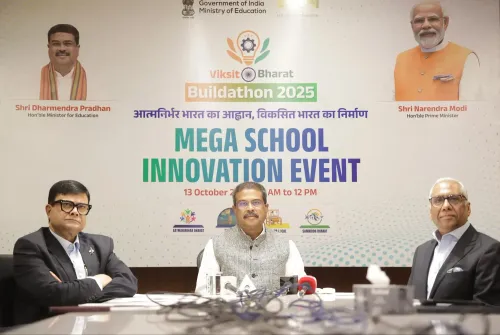
Union Education Minister Dharmendra Pradhan on Friday, June 12, 2026, invoked a vision of a billion dreams converging into a shared global future, rallying India's campuses, laboratories, and startups under the #BharatInnovates banner in a post that accompanied a video on his official X account.
Context
Pradhan's post declared, 'A billion dreams. Countless ideas. One shared future,' framing India's innovation journey as one that stretches 'from campuses to cutting-edge labs, from startups to deep-tech breakthroughs.' The message carried the hashtags #BharatInnovates, #InnovationForHumanity, and #FutureReadyIndia, signalling a deliberate effort to brand India's knowledge economy outreach both domestically and internationally.
The post was accompanied by a video, suggesting a curated campaign rather than a spontaneous remark. While specific details of the #BharatInnovates campaign as constituted in 2026 are still emerging, the language and framing align closely with the Ministry of Education's sustained push to position Indian institutions as engines of global innovation.
Policy Backdrop
The post draws directly from the policy architecture built over the past decade. The National Education Policy 2020 (NEP 2020) mandated the creation of research and innovation cells within higher education institutions and opened the door to foreign university collaborations, explicitly linking academic reform with the goal of making India a knowledge superpower.
The Atal Innovation Mission, launched by NITI Aayog in 2016, established tinkering labs and incubators across schools, colleges, and research bodies, seeding a pipeline of student innovators. Simultaneously, the Startup India initiative — also launched in 2016 — provided tax relief, easier regulatory compliance, and funding support to nurture early-stage ventures emerging from this ecosystem. Together, these programmes form the scaffolding Pradhan's post implicitly celebrates.
Pradhan, who previously served as Union Petroleum Minister before taking charge of Education, has consistently used his platform to bridge the gap between institutional learning and industry-ready skill development, a thread visible in his ministry's engagements with the G20 Education Working Group and bilateral academic partnerships.
Stakeholders and Impact
The primary audience for the #BharatInnovates messaging is India's vast student and young entrepreneur population — the demographic that NEP 2020 and the Startup India framework were designed to energise. University students, deep-tech researchers, and early-stage founders stand to benefit most directly from any policy or funding announcements that may follow such a public mobilisation.
The global framing — 'in Bharat and beyond' and #InnovationForHumanity — also signals outreach to the Indian diaspora in technology hubs and to international partners considering India as a research and development destination. This dual domestic-international pitch has become a hallmark of India's knowledge-economy diplomacy under the current government.
What's Next
Observers of education and technology policy will watch for follow-up announcements, including possible fresh funding calls for deep-tech incubators or movement on a dedicated Research and Development Bill in Parliament. Pradhan's post, timed on a Friday evening with a video asset, suggests a campaign with further rollout planned.
As India's higher education institutions continue their climb in global rankings and the startup ecosystem matures, the government's ability to convert aspirational messaging into measurable innovation output — patents, products, and global partnerships — will define the real legacy of the #BharatInnovates push.
Point of View
Mirroring how India has used its G20 presidency and technology diplomacy to court both investors and the diaspora. Coming with a video asset on a Friday evening, this reads as the opening salvo of a coordinated campaign, not a casual post. The real test will be whether the aspirational language translates into measurable policy deliverables — funding announcements, R&D legislation, or verifiable jumps in patent output from Indian institutions.
NationPress
27 Oct 2026
Frequently Asked Questions
What is the #BharatInnovates campaign by Dharmendra Pradhan?
#BharatInnovates is a campaign promoted by Union Education Minister Dharmendra Pradhan to spotlight India's innovation ecosystem, connecting university campuses, research labs, and tech startups under a shared vision of global progress.
What is the National Education Policy 2020 and how does it relate to innovation?
The National Education Policy 2020 is a landmark education reform approved by the Indian government that mandates research and innovation cells in higher education institutions and permits foreign university collaborations, directly linking academic reform to India's knowledge-economy goals.
What is the Atal Innovation Mission?
The Atal Innovation Mission is a NITI Aayog programme launched in 2016 that sets up tinkering labs and incubators in schools, colleges, and research institutions to build a pipeline of student innovators and entrepreneurs across India.
What has Dharmendra Pradhan done for education in India?
As Union Education Minister, Dharmendra Pradhan has overseen implementation of NEP 2020, pushed for greater industry-academia linkages, championed skill development, and represented India in multilateral education forums including the G20 Education Working Group.
What is Startup India and how does it support deep tech?
Startup India, launched in 2016, is a government initiative that provides tax benefits, simplified compliance, and funding support to early-stage ventures, including deep-tech startups emerging from academic and research institutions across the country.