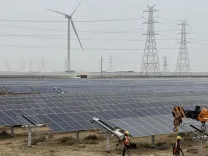
CM Samrat Choudhary, Union Min Joshi Review Bihar Renewable Energy Projects
Synopsis
Chief Minister Samrat Choudhary and Union Minister Prahlad Joshi held a detailed review of renewable energy projects in Bihar at Patna's Sankalp auditorium on 9 July 2026, reflecting coordinated Centre-state focus on Bihar's clean energy push ahead of India's 2030 targets.
Key Takeaways
CM Samrat Choudhary and Union Minister Prahlad Joshi jointly reviewed Bihar's renewable energy projects on 9 July 2026 .
The meeting was held at the 'Sankalp' auditorium at Lok Sewak Aawas , Patna.
Bihar has historically underutilised its solar potential, making this high-level review significant for the state's energy future.
The review aligns with India's national goal of 500 GW non-fossil fuel capacity by 2030 under the Panchamrit commitments.
The PM Surya Ghar Muft Bijli Yojana (launched 2024 ) is a key central scheme with state-level implementation that may have featured in discussions.
Follow-up project approvals or fund releases are expected to be watched closely by renewable energy developers and state discoms.
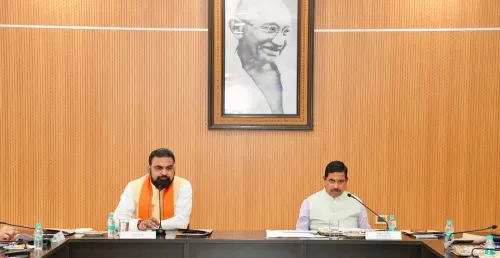
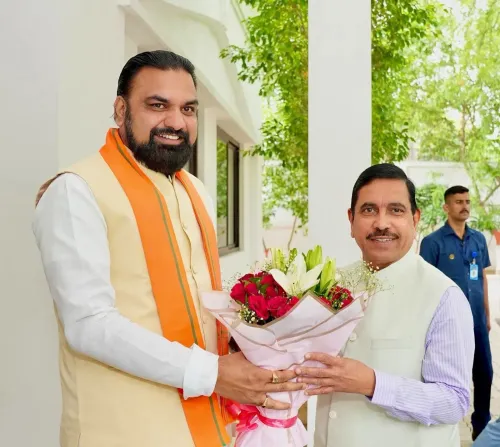
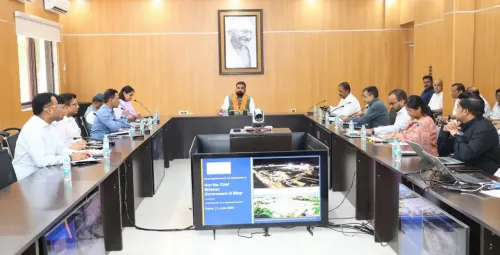
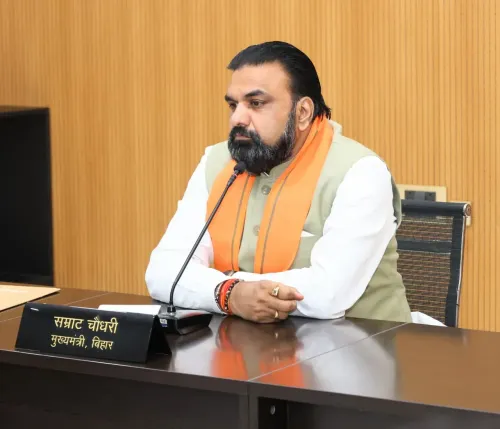
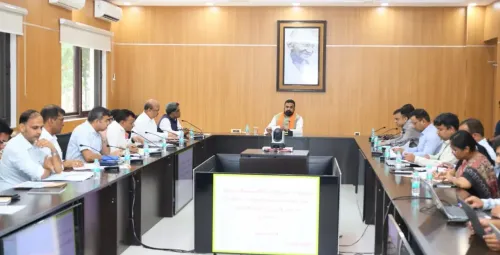
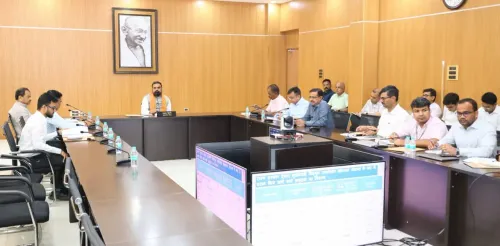
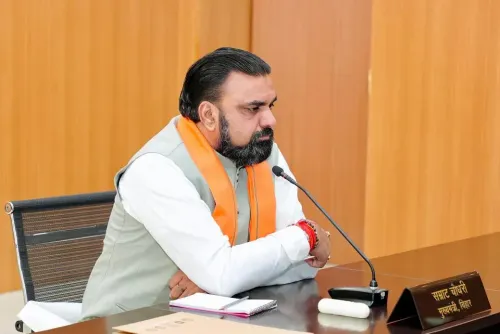
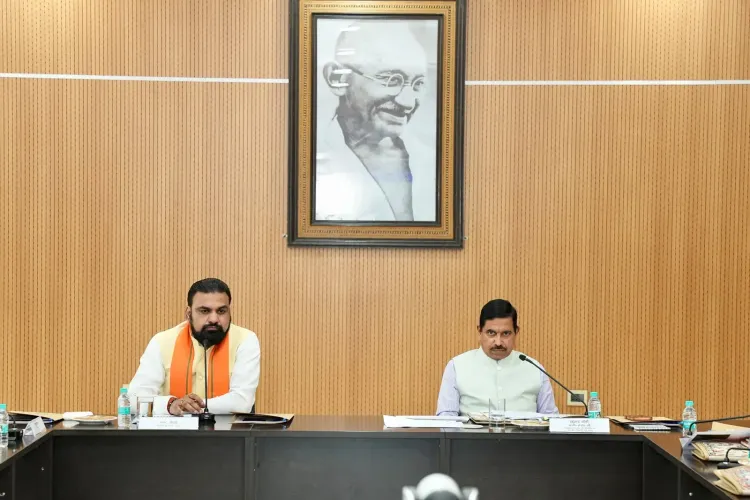
The Chief Minister's Office of Bihar announced on Thursday, 9 July 2026, that Chief Minister Samrat Choudhary and Union Minister for New and Renewable Energy Prahlad Joshi conducted a detailed review of renewable energy projects operating in Bihar at the 'Sankalp' auditorium of Lok Sewak Aawas in Patna.
The official post from the Chief Minister's Office read: 'Mananiya Mukhyamantri Shri Samrat Choudhary ji evam Kendriya Navin evam Navikaraniya Urja Mantri Shri Prahlad Joshi ji ne aaj Lok Sewak Aawas sthit 'Sankalp' Sabhagar mein Bihar mein sanchalit navikaraniya urja pariyojanaon ki vistrit samiksha ki' — meaning, the Chief Minister and the Union Minister jointly undertook a comprehensive review of renewable energy projects currently operational in Bihar.
Context
The joint review brings together the state's top executive and the central government's nodal minister for clean energy, signalling coordinated attention to Bihar's renewable energy trajectory. Bihar has historically maintained a relatively low share of renewable energy despite considerable solar potential, making such high-level reviews significant for the state's energy planning. The meeting at the designated 'Sankalp' — meaning 'resolve' — auditorium carries symbolic weight for the government's stated commitment to energy transition.
Policy Backdrop
The review sits within India's broader national target of achieving 500 GW of non-fossil fuel-based electricity capacity by 2030, part of the country's Panchamrit climate commitments. The central government's PM Surya Ghar Muft Bijli Yojana, launched in 2024, has been a key instrument for accelerating rooftop solar adoption, with states like Bihar responsible for ground-level implementation. Centre-state coordination meetings of this nature are a standard mechanism to assess progress, identify bottlenecks, and align fund flows under centrally sponsored schemes.
Stakeholders and Impact
The primary stakeholders in the outcome of this review include renewable energy developers active in Bihar, the state's electricity distribution companies (discoms), and households enrolled under or eligible for central rooftop solar schemes. A positive outcome from the review could translate into accelerated project approvals, faster fund releases, or revised capacity addition targets for the state. For Bihar's citizens, improved renewable energy infrastructure carries implications for power availability, cost, and long-term energy security.
What's Next
Observers will watch for follow-up announcements from either the state government or the Union Ministry of New and Renewable Energy regarding new project sanctions, capacity addition timelines, or fund disbursements linked to this review. Any formal agreement or directive emerging from the Sankalp meeting could set the pace for Bihar's renewable energy expansion in the near term. The review also sets the stage for Bihar to potentially increase its share in India's national renewable energy portfolio ahead of the 2030 deadline.
Point of View
A state that has lagged in renewable capacity relative to its geographical solar endowment, the political visibility of such a meeting can itself be a catalyst for administrative action. The choice of the 'Sankalp' venue — a name connoting resolve — is unlikely to be incidental, suggesting the state government is keen to project energy transition as a priority agenda. The real test, however, will be whether this review translates into measurable capacity additions or remains a high-profile check-in without downstream policy movement.
NationPress
10 Jul 2026
Frequently Asked Questions
What did CM Samrat Choudhary and Prahlad Joshi discuss in Patna?
CM Samrat Choudhary and Union Minister Prahlad Joshi conducted a detailed review of renewable energy projects currently operational in Bihar at the Sankalp auditorium , Lok Sewak Aawas, Patna, on 9 July 2026 .
What is Bihar's current status in renewable energy in India?
Bihar has historically maintained a low share of renewable energy relative to its solar potential, though it has been pursuing incremental capacity additions through central government schemes such as PM Surya Ghar Muft Bijli Yojana .
What is the PM Surya Ghar Muft Bijli Yojana?
PM Surya Ghar Muft Bijli Yojana is a central government scheme launched in 2024 to accelerate rooftop solar adoption across India, with states like Bihar responsible for ground-level implementation and beneficiary enrolment.
What is India's 2030 renewable energy target?
India has committed to achieving 500 GW of non-fossil fuel-based electricity capacity by 2030 as part of its Panchamrit climate pledges made at international forums.
What is the Sankalp auditorium in Patna?
The Sankalp auditorium is located at Lok Sewak Aawas in Patna and serves as an official venue for government meetings and reviews convened by Bihar's Chief Minister's Office.