Bihar CM Chairs Energy Dept Review, Pushes Green Energy Plan
Synopsis
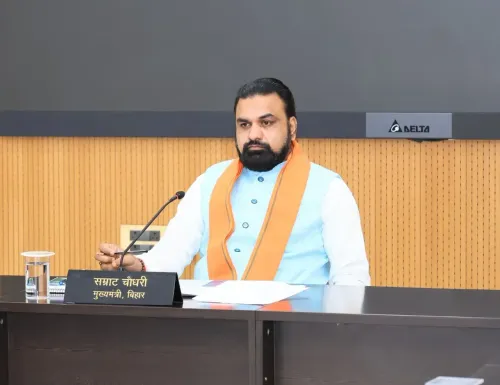
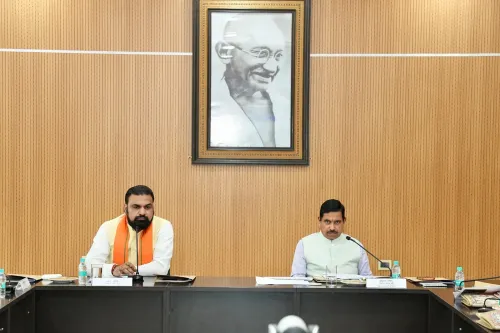
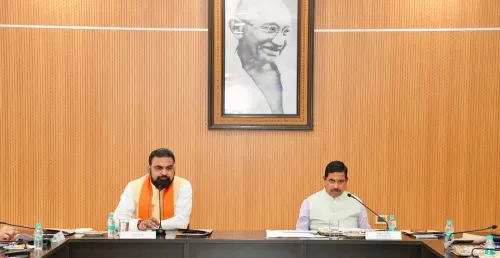
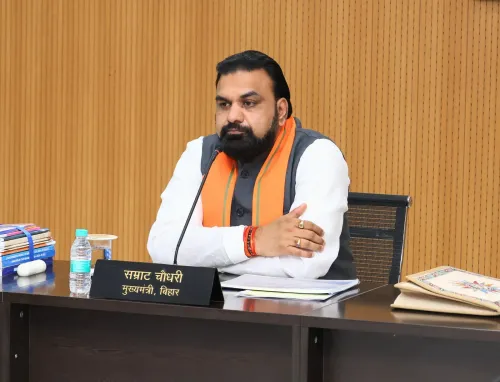
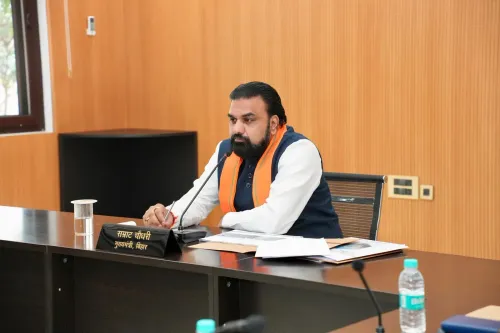
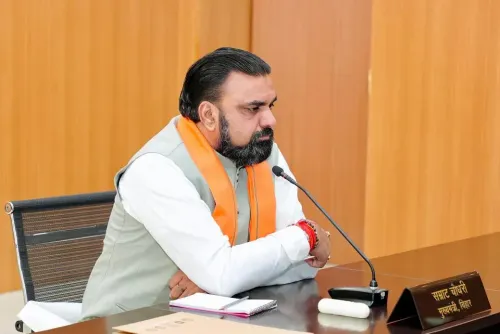
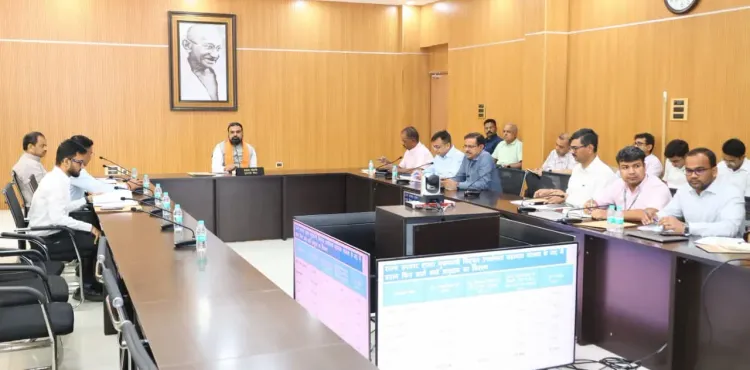
Chief Minister Samrat Choudhary chaired a Bihar Energy Department review at Sankalp Sabhagar, Patna on 25 May 2026, directing officials to formulate a comprehensive plan to promote green and clean energy in the state.
Key Takeaways
CM Samrat Choudhary chaired a Bihar Energy Department review meeting on 25 May 2026 .
The meeting was held at Sankalp Sabhagar , 1 Anne Marg, Patna .
The CM stated the government's objective is to promote green and clean energy .
He called for a holistic, comprehensive plan to be drawn up and implemented.
The review aligns with India's COP26 commitment of 500 GW non-fossil fuel capacity by 2030 .
State power utilities and renewable energy developers are the key actors expected to act on the directives.
The Chief Minister's Office of Bihar announced on Monday, 25 May 2026 that Chief Minister Samrat Choudhary chaired a review meeting of the Energy Department at Sankalp Sabhagar (Sankalp Conference Hall), located within the Lok Sevak Awas complex at 1 Anne Marg, Patna.
At the meeting, CM Choudhary stated: 'Hamara uddeshya harit evam swachh urja ko badhawa dena hai' ('Our objective is to promote green and clean energy'). He called for a comprehensive plan to be formulated and executed toward this goal.
Context
The review was held at Sankalp Sabhagar, the dedicated conference facility inside the Lok Sevak Awas complex on 1 Anne Marg — a key government precinct in Patna that houses official residences and hosts high-level administrative deliberations. The Chief Minister's direct involvement in an Energy Department review signals the state's intent to place clean energy at the centre of its governance agenda.
CM Choudhary emphasised that achieving green and clean energy goals requires holistic, integrated planning rather than piecemeal measures — a direction he communicated to department officials during the session.
Policy Backdrop
India committed at COP26 in 2021 to achieving 500 GW of non-fossil fuel energy capacity by 2030, creating a mandate for every state to align its energy roadmap with national climate targets. Bihar's Energy Department review fits squarely within this federal push for energy transition.
Central schemes such as the PM Surya Ghar Muft Bijli Yojana and the Green Hydrogen Mission have provided additional frameworks for states to anchor their renewable energy strategies. Bihar's call for a samagra yojana (comprehensive plan) reflects a desire to consolidate these threads into a coherent state-level action plan.
Eastern Indian states, including Bihar, have historically lagged in renewable energy capacity compared to western and southern counterparts, making such high-level review meetings a critical step toward closing the gap.
Stakeholders and Impact
State power utilities — including distribution companies responsible for last-mile electricity delivery — are the primary institutional actors who will be tasked with implementing any new directives emerging from the review. Renewable energy developers eyeing Bihar's solar and wind potential will closely watch subsequent policy announcements for project opportunities.
For electricity consumers across Bihar, a successful green energy transition could mean more reliable supply and, over time, lower tariff pressures as the cost of solar generation continues to fall. Rural households, many of which depend on government electrification schemes, stand to benefit most from expanded clean energy infrastructure.
What's Next
The immediate follow-up will depend on whether the Energy Department translates the Chief Minister's directive into a formal State Renewable Energy Action Plan or announces specific project approvals in subsequent meetings. Coordination with central missions will be a key test of how quickly Bihar can move from intent to implementation.
Observers will watch for concrete targets — installed capacity additions, district-level solar rollout timelines, or grid modernisation commitments — that give substance to the sankalp (resolve) signalled at today's review.
Point of View
And high-level political ownership of departmental reviews is often the first step toward breaking institutional inertia. The emphasis on a 'comprehensive plan' rather than project-by-project approvals suggests the administration is aiming for a structural shift, not incremental optics. Whether this translates into measurable capacity additions will be the real test of the state's resolve.
NationPress
19 Sept 2026
Frequently Asked Questions
What was the Bihar Energy Department review meeting about?
The meeting, chaired by CM Samrat Choudhary at Sankalp Sabhagar in Patna on 25 May 2026, focused on promoting green and clean energy in Bihar through a comprehensive state plan.
Where is Sankalp Sabhagar in Patna?
Sankalp Sabhagar is a conference facility inside the Lok Sevak Awas complex at 1 Anne Marg, Patna, used for high-level government review meetings.
What did Bihar CM Samrat Choudhary say about green energy?
CM Choudhary stated that the government's objective is to promote green and clean energy, and that a holistic, comprehensive plan must be formulated and implemented to achieve this.
How does Bihar's green energy push connect to India's national targets?
India committed at COP26 in 2021 to 500 GW of non-fossil fuel capacity by 2030, and Bihar's Energy Department review is part of the state-level alignment with this national climate commitment.
Which central schemes is Bihar expected to coordinate with for its clean energy goals?
Bihar is expected to coordinate with central missions such as the PM Surya Ghar Muft Bijli Yojana and the Green Hydrogen Mission as it develops its state-level renewable energy strategy.