CM Samrat Choudhary Reviews Bihar's ₹100 Cr+ Projects
Synopsis
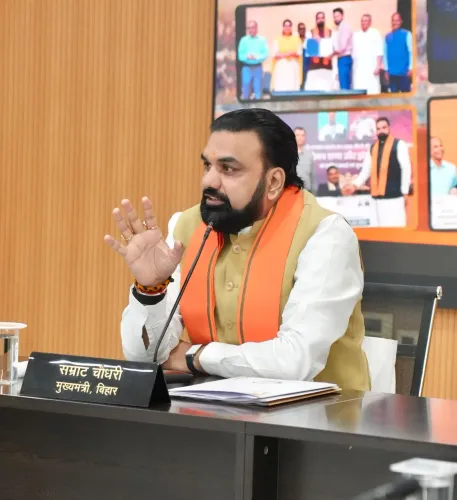
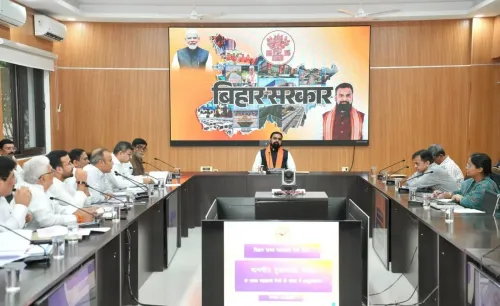
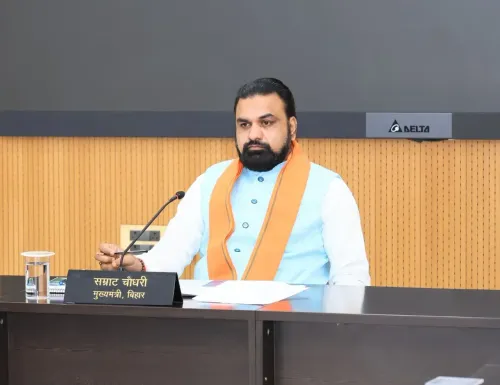
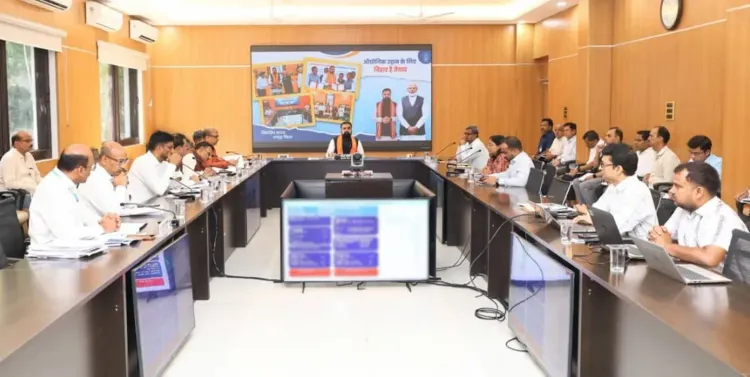
Bihar CM Samrat Choudhary on 27 October 2026 chaired a review of projects worth over ₹100 crore under the 'Bihar Gati' framework at Patna's Sankalp auditorium, stressing rapid and all-round development as his government's top priority.
Key Takeaways
Bihar CM Samrat Choudhary held a high-level project review on 27 October 2026 at Lok Sevak Awas, Patna.
The review covered projects worth over ₹100 crore being implemented under the 'Bihar Gati' framework.
Central government schemes running in Bihar were also assessed for progress at the same meeting.
The ₹100 crore threshold is used as the standard benchmark for intensive monitoring of high-value infrastructure works in Bihar.
Choudhary stated that 'rapid, comprehensive, and all-round development of Bihar' is the government's highest priority.
Quarterly progress reports and follow-up cabinet decisions on pending clearances will be the next indicators to watch.
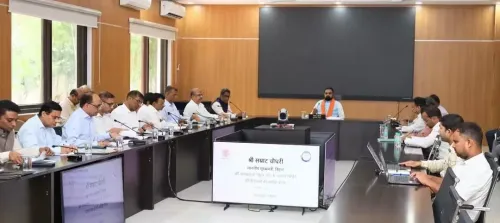
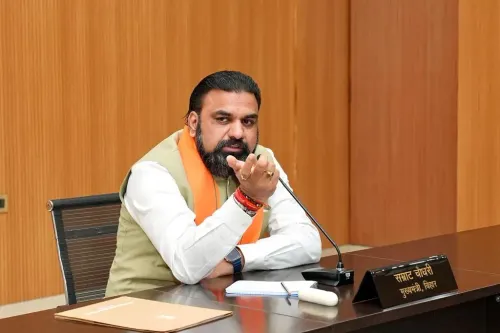
Bihar Chief Minister Samrat Choudhary chaired a high-level progress review of projects worth over ₹100 crore under the state's 'Bihar Gati' framework on Tuesday, 27 October 2026 — signalling that his administration is keeping close tabs on where the big money is actually moving on the ground.
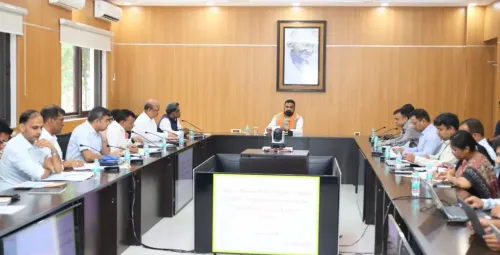
The meeting was held at the 'Sankalp' auditorium inside Lok Sevak Awas, the official complex in Patna. On the table: implementation status of large-ticket projects being executed across Bihar, alongside the progress of other centrally sponsored schemes. Choudhary posted directly after the session, stating — 'Bihar ka tivra, samagra evam sarvangeen vikas hamari sarvochch prathamikta hai' — 'Rapid, comprehensive, and all-round development of Bihar is our highest priority.'
What 'Bihar Gati' puts under the microscope
The ₹100 crore threshold is not arbitrary. Bihar administrations have for years used it as the baseline for intensive monitoring — projects at that scale and above are where fund utilisation delays and contractor bottlenecks tend to have the sharpest downstream consequences for roads, bridges, irrigation works, and urban infrastructure. Reviews under this bracket typically track both financial absorption and physical milestones side by side.
The 'Bihar Gati' framework itself mirrors the logic of PM Gati Shakti at the national level — a unified lens for multi-sectoral infrastructure delivery. While specifics of individual projects discussed on Tuesday were not disclosed, the pattern of such reviews in Bihar has historically covered National Highway linkages, flood-protection embankments, and urban water-supply schemes receiving central funds.
The Sankalp room and what it signals
Choosing the Sankalp — literally 'resolve' — auditorium as the venue carries its own quiet messaging. High-value project reviews held in this formal setting within Lok Sevak Awas are typically attended by senior secretaries and departmental heads, making them a mechanism of direct accountability from bureaucracy to the Chief Minister's office. The format compresses the distance between an order issued and a result expected.
Quarterly progress reports on the reviewed works and any follow-up cabinet decisions on pending clearances will be the next visible test of what Tuesday's session actually produced. In Bihar's infrastructure story, the real proof always comes in the next site photograph — not the review room.
Point of View
Moving beyond ceremonial optics toward structured accountability for high-value public spending. By anchoring the session in the 'Bihar Gati' framework — a state-level echo of PM Gati Shakti — his administration is signalling alignment with the BJP's national infrastructure narrative while simultaneously asserting local executive authority. The ₹100 crore threshold as a monitoring baseline reflects a continuity in Bihar's administrative practice but also reveals the pressure to demonstrate visible delivery ahead of any electoral cycle. How quickly these reviews translate into site-level outcomes will define whether 'Bihar Gati' becomes a genuine acceleration engine or another layer of governance choreography.
NationPress
27 Oct 2026
Frequently Asked Questions
What projects were reviewed by CM Samrat Choudhary on 27 October 2026?
CM Samrat Choudhary reviewed projects worth over ₹100 crore being implemented across Bihar under the Bihar Gati framework, along with the progress of various centrally sponsored schemes. Specific project details were not publicly disclosed.
Where was the Bihar project review meeting held?
The review meeting was held at the 'Sankalp' auditorium inside Lok Sevak Awas, the official government complex in Patna, Bihar.
Why does Bihar focus reviews on projects above ₹100 crore?
The ₹100 crore threshold is used as a standard administrative benchmark in Bihar to intensively monitor high-value works where delays in fund utilisation or physical targets have significant consequences for roads, bridges, irrigation, and urban infrastructure.
Who is Samrat Choudhary?
Samrat Choudhary is the Chief Minister of Bihar and a senior leader of the Bharatiya Janata Party (BJP).