CM Samrat Choudhary Reviews Bihar Solar Energy Push
Synopsis
Bihar Chief Minister Samrat Choudhary held a review meeting with the state Energy Department on 25 May 2026, directing officials to accelerate solar plant rollout under Kuteer Jyoti Yojana for 10 lakh consumers, expand PM Surya Ghar Muft Bijli Yojana enrolment, engage JEEVIKA women's groups, and solarise agricultural feeders.
Key Takeaways
CM Samrat Choudhary chaired a review meeting with the Bihar Energy Department on 25 May 2026 at Lok Sevak Avas.
Directives issued to expedite solar plant installations for 10 lakh consumers under Kuteer Jyoti Yojana .
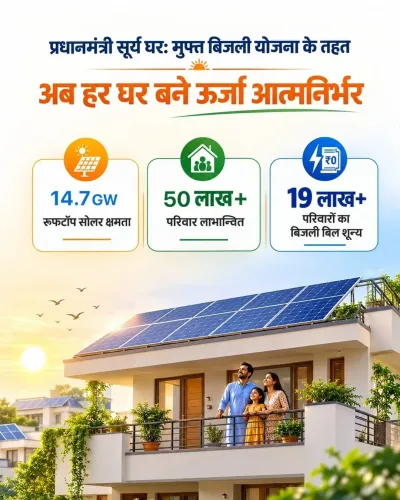
Officials instructed to maximise household enrolment under PM Surya Ghar Muft Bijli Yojana , which offers up to 300 units of free electricity monthly.
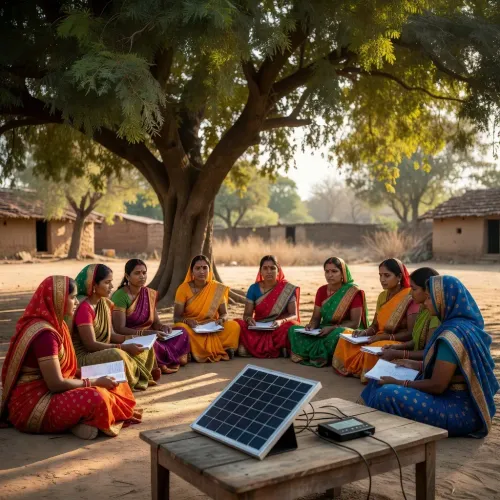
JEEVIKA Didis — rural women's self-help group members — to be encouraged as facilitators for solar installations in villages.
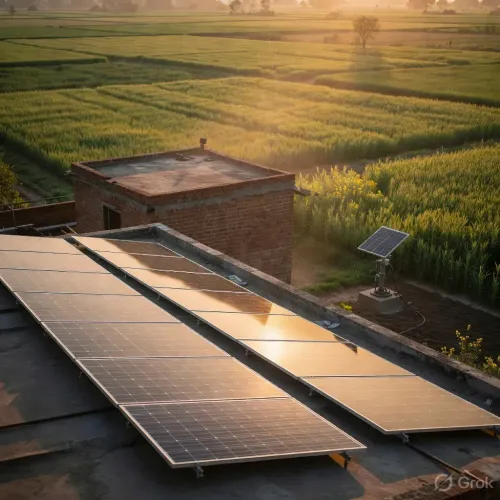
Special emphasis placed on solarisation of agricultural feeders to expand clean energy use in the farm sector.
Wide-scale awareness campaigns on solar energy benefits directed as part of the implementation push.
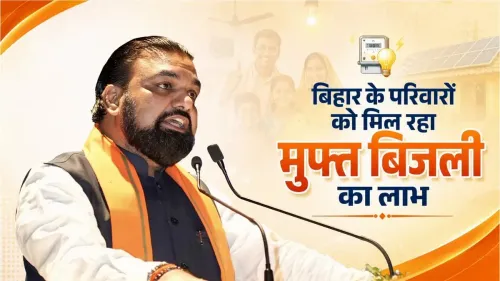
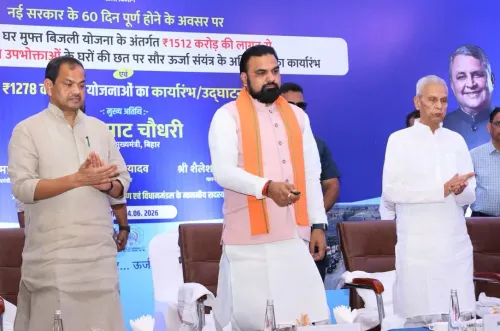
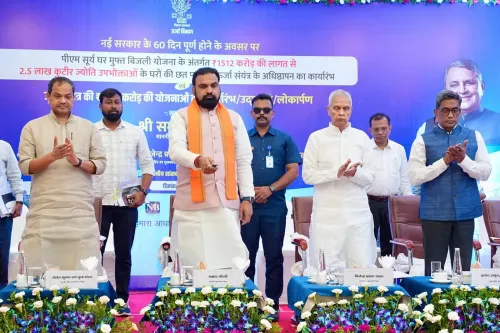
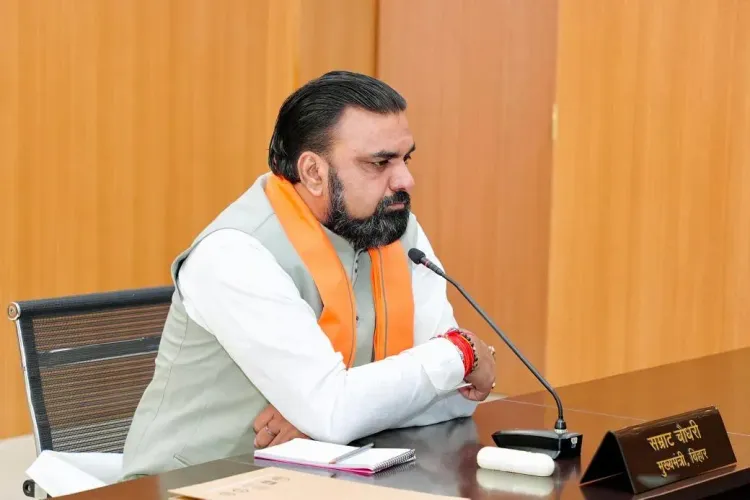
Bihar Chief Minister Samrat Choudhary chaired a review meeting with the state Energy Department at the Sankalp Karyalay of Lok Sevak Avas on Monday, 25 May 2026, issuing a series of directives aimed at accelerating clean, green and self-reliant energy infrastructure across the state.
Posting on X, CM Choudhary outlined five key priorities emerging from the meeting. In Hindi, he wrote: 'स्वच्छ, हरित एवं आत्मनिर्भर ऊर्जा व्यवस्था को सशक्त बनाने के उद्देश्य से कई महत्वपूर्ण निर्देश दिए गए' ['Several important directives were issued with the aim of strengthening a clean, green and self-reliant energy system']. The post was accompanied by four images from the meeting.
Context
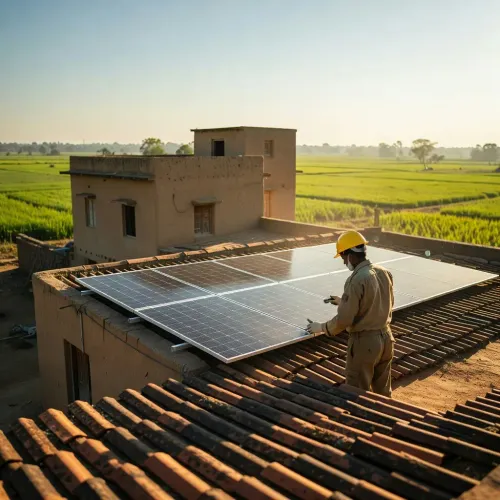
The most prominent directive calls for expediting solar plant installations under the Kuteer Jyoti Yojana, targeting 10 lakh consumers in the state. Alongside this, the Chief Minister directed officials to enrol the maximum number of households under the PM Surya Ghar Muft Bijli Yojana, the central government's flagship rooftop solar scheme launched in 2024 that offers beneficiaries up to 300 units of free electricity per month.
A third directive focused on encouraging Jeevika Didis — women members of self-help groups under the JEEVIKA (Bihar Rural Livelihoods Mission) network — to actively participate in solar plant installations in rural areas. The instruction positions these women as last-mile facilitators for clean energy adoption, extending an existing livelihood programme into the renewable energy space.
Policy Backdrop
The meeting reflects Bihar's effort to align state machinery with India's broader renewable energy ambitions. The central government's PM-KUSUM scheme, introduced in 2019, laid the groundwork for solarisation of agricultural feeders and deployment of solar pumps in the farm sector — a thread that CM Choudhary's latest directives explicitly continue, with a 'special emphasis' placed on expanding solar energy use in agriculture through feeder solarisation.
The fifth directive mandates wide-scale awareness campaigns on the benefits and utility of solar energy, signalling that the administration views public outreach as integral to achieving adoption targets. The JEEVIKA programme, operational since 2007, organises rural women into self-help groups and has historically been deployed for health, finance and livelihood interventions; its proposed role in solar rollout marks a newer application of the network.
Stakeholders and Impact
Rural households, farmers and women's self-help groups are the primary beneficiaries identified in the directives. For farming communities, solarisation of agricultural feeders could reduce dependence on grid power and lower input costs, a significant consideration in an agrarian state like Bihar. For rural women under JEEVIKA, the solar installation mandate could open new income streams as community mobilisers or micro-entrepreneurs.
At the national level, India is pursuing a target of 500 GW of non-fossil fuel capacity by 2030 and net-zero emissions by 2070. State-level review meetings of this kind are part of the administrative machinery through which central scheme targets are translated into ground-level action, with Bihar — one of India's most populous and agrarian states — representing a significant share of the potential beneficiary base.
What's Next
Progress on solar connections under both the Kuteer Jyoti Yojana and PM Surya Ghar Muft Bijli Yojana will be a key metric to watch in the coming months. The directives issued at this review meeting are expected to be followed by implementation timelines from the Bihar Energy Department.
Should the state succeed in mobilising JEEVIKA's extensive rural network for solar outreach, it could serve as a replicable model for other states seeking last-mile delivery mechanisms for household clean energy schemes — a development that would carry implications well beyond Bihar's own renewable energy targets.
Point of View
The government is attempting to solve the last-mile problem that has historically slowed central scheme adoption in low-income rural states. The twin focus on household rooftop solar and agricultural feeder solarisation also reflects a calculated political economy: benefits flow simultaneously to domestic consumers and the farming vote bank. Watched against India's 500 GW non-fossil target for 2030, Bihar's administrative mobilisation represents the kind of state-level execution without which national renewable goals remain aspirational.
NationPress
10 Oct 2026
Frequently Asked Questions
What is Kuteer Jyoti Yojana in Bihar?
Kuteer Jyoti Yojana is a Bihar state scheme that provides solar plant installations to rural households, targeting decentralised clean power access. CM Samrat Choudhary directed officials on 25 May 2026 to accelerate installations to reach 10 lakh consumers under the programme.
What is PM Surya Ghar Muft Bijli Yojana?
PM Surya Ghar Muft Bijli Yojana is a central government rooftop solar scheme launched in 2024 that offers eligible households up to 300 units of free electricity per month. Bihar has been directed to enrol the maximum number of families under the scheme.
What is JEEVIKA and what is its role in Bihar's solar push?
JEEVIKA is the Bihar Rural Livelihoods Mission, operational since 2007, that organises rural women into self-help groups. CM Choudhary has directed that these 'Jeevika Didis' be encouraged to facilitate solar plant installations in rural areas, extending the network's role into clean energy delivery.
What did Bihar CM Samrat Choudhary announce about solar energy?
On 25 May 2026, CM Samrat Choudhary issued five key directives after a review meeting with the Bihar Energy Department: speeding up solar installations for 10 lakh consumers, expanding PM Surya Ghar enrolment, engaging JEEVIKA women's groups, running awareness campaigns, and solarising agricultural feeders.
What is agricultural feeder solarisation and why does it matter for Bihar?
Agricultural feeder solarisation refers to powering the electricity feeders that supply farms with solar energy, reducing dependence on the conventional grid. For an agrarian state like Bihar, this can lower farming input costs and improve power reliability for irrigation and other agricultural needs.