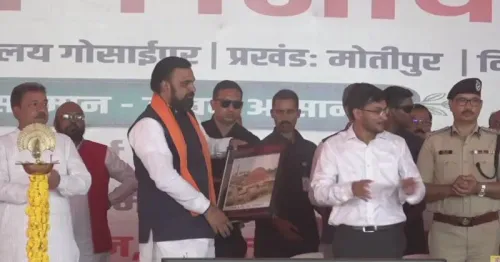
CM Samrat Choudhary Reviews Welfare Schemes at Siwan Sahyog Shivir
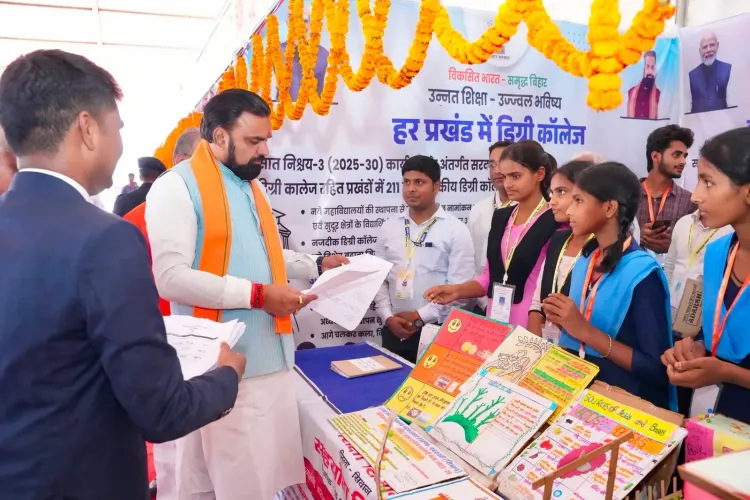
Synopsis
Bihar Chief Minister Samrat Choudhary chaired the Sahyog Shivir in Siwan on June 16, 2026, reviewing welfare scheme progress with 90% application disposal, inaugurating 38 projects worth ₹180 crore, and announcing solar power for 25 lakh Dalit families, a Siwan sugar mill, and 1 crore jobs by 2030.
Key Takeaways
90% disposal rate : Of 3.03 lakh applications received, 2.61 lakh have been resolved at the Siwan Sahyog Shivir. ₹180 crore worth of 38 development projects were inaugurated and foundation-laid remotely by CM Choudhary in Siwan.
The state government announced solar electricity connections for 25 lakh Dalit families across Bihar.
A target of 1 crore employment and livelihood opportunities by 2030 was reiterated for Bihar's youth.
A sugar mill is to be established in Siwan to boost the district's agro-industrial base.
Strengthening of health services in Siwan was also announced as a key priority.
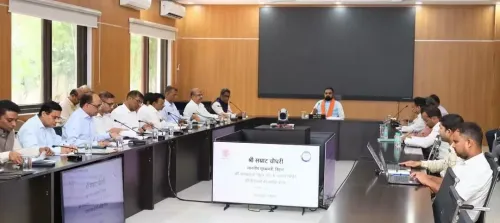
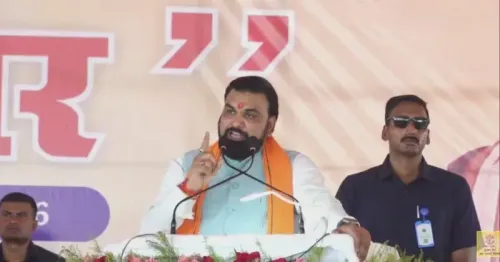
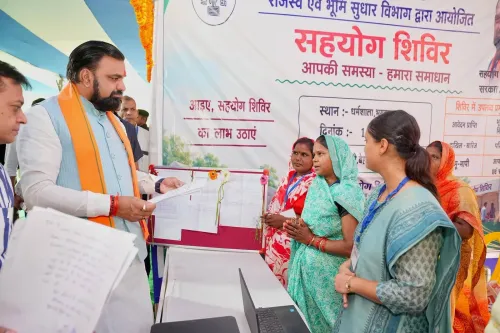
Bihar Chief Minister Samrat Choudhary on Tuesday, June 16, 2026, chaired the Sahyog Shivir in Siwan, reviewing the progress of welfare schemes, addressing a large public gathering, and remotely inaugurating and laying the foundation stones of 38 projects worth ₹180 crore to accelerate development in the district.
Context
At the shivir, CM Choudhary reviewed the disposal of public applications received under various state welfare schemes. He noted that out of 3.03 lakh applications received, 2.61 lakh — nearly 90 per cent — had been resolved. He directed officials to ensure swift redressal of remaining grievances, describing the camp as a direct interface between the administration and ordinary citizens.
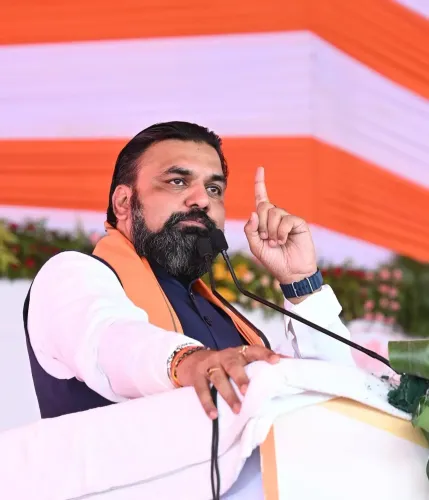
The Chief Minister addressed the assembled public, reiterating the state government's commitment to the empowerment of the poor, Dalits, farmers, youth, and marginalised communities. 'विकसित भारत और समृद्ध बिहार के संकल्प को जनभागीदारी एवं सुशासन के माध्यम से साकार किया जाएगा' — ('The resolve of a Developed India and Prosperous Bihar will be realised through public participation and good governance'), he said.
Policy Backdrop
Bihar has organised district-level Sahyog Shivirs periodically since the mid-2010s as a mechanism to bring scheme review and grievance redressal closer to citizens. The format — combining public addressing, application disposal review, and remote project inaugurations — has become a recurring feature of the state's governance model. The Siwan edition follows this established pattern while layering in several fresh policy announcements.
The broader framing of the event sits within the national 'Viksit Bharat' (Developed India) narrative, which the BJP-led Bihar government has sought to translate into district-level execution through public participation and infrastructure investment.
Key Announcements and Stakeholder Impact
Among the significant decisions shared at the shivir was a state initiative to provide solar electricity connections to the homes of 25 lakh Dalit families — a move that directly targets energy access for some of Bihar's most economically vulnerable households. The government also reiterated its target of providing employment and livelihood opportunities to 1 crore people by 2030, signalling a long-term jobs commitment to the state's youth.
For Siwan specifically, the Chief Minister announced plans to establish a sugar mill in the district, a significant step for an agrarian region with a strong sugarcane cultivation base. Strengthening of health services in the district was also flagged as a priority. The 38 projects worth ₹180 crore inaugurated and foundation-laid remotely span multiple sectors and are intended to give fresh momentum to local infrastructure.
What's Next
Attention will now turn to the implementation timelines for the newly announced Siwan sugar mill, the rollout of solar connections to 25 lakh Dalit households, and the health infrastructure upgrades. The 2030 employment target of 1 crore jobs will require sustained policy follow-through and remains a key benchmark against which the state government's performance will be measured. The pace of disposal of the remaining roughly 42,000 pending applications from the Siwan shivir will also be watched as a near-term governance indicator.
Point of View
Targeting Bihar's two most electorally consequential groups ahead of future state polls. The sugar mill announcement for Siwan, an agrarian district, follows a pattern of agro-industrial promises that have historically faced long gestation periods, making implementation tracking essential. Overall, the event reinforces the 'Viksit Bharat, Samridh Bihar' narrative as the BJP's primary governance brand in the state.
NationPress
15 Sept 2026
Frequently Asked Questions
What is the Sahyog Shivir held in Siwan by Bihar CM Samrat Choudhary?
The Sahyog Shivir is a district-level public camp organised by the Bihar government where welfare scheme progress is reviewed, citizen grievances are addressed, and officials are directed to resolve pending applications. The Siwan edition on June 16, 2026 saw CM Samrat Choudhary chair the event and make several development announcements.
How many projects were inaugurated in Siwan by CM Samrat Choudhary?
Bihar Chief Minister Samrat Choudhary remotely inaugurated and laid the foundation stones of 38 development projects worth ₹180 crore in Siwan at the Sahyog Shivir on June 16, 2026.
What is Bihar's solar power scheme for Dalit families?
The Bihar government has announced a scheme to provide solar electricity connections to the homes of 25 lakh Dalit families across the state. The initiative aims to improve energy access for economically vulnerable Scheduled Caste households.
What is Bihar's employment target for 2030?
The Bihar government has set a target of providing employment and livelihood opportunities to 1 crore people by the year 2030. CM Samrat Choudhary reiterated this commitment at the Siwan Sahyog Shivir on June 16, 2026.
Is a sugar mill being set up in Siwan, Bihar?
Yes, Bihar Chief Minister Samrat Choudhary announced at the Siwan Sahyog Shivir on June 16, 2026 that a sugar mill will be established in Siwan district, which is expected to benefit the region's sugarcane farming community.