CM Samrat Choudhary Launches Bihar Solar Push Worth ₹2,790 Cr
Synopsis
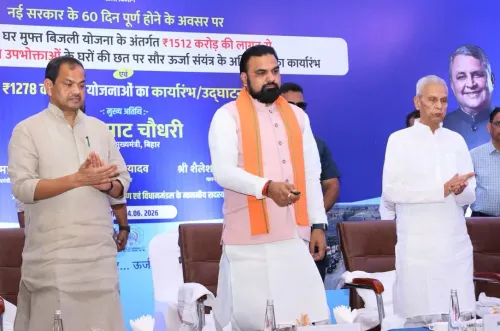
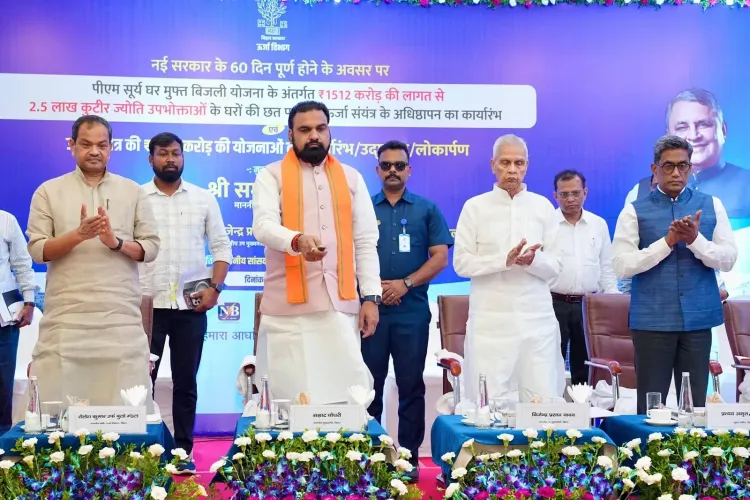
Bihar CM Samrat Choudhary on June 14, 2026, launched rooftop solar installations for 2.5 lakh Kutir Jyoti consumers under the PM Surya Ghar scheme at ₹1,512 crore, alongside ₹1,278 crore in energy projects, targeting 25 lakh solar homes by November 2027.
Key Takeaways
Bihar CM Samrat Choudhary launched rooftop solar plant installations for 2.5 lakh Kutir Jyoti consumers under the PM Surya Ghar Muft Bijli Yojana on June 14, 2026 .
The solar installation work carries an outlay of ₹1,512 crore ; additional energy-sector projects worth ₹1,278 crore were also inaugurated, totalling ₹2,790 crore in a single day.
The state government has set a target of connecting 2.5 lakh homes by November 2026 and scaling to 25 lakh homes by November 2027 .
The drive integrates the Kutir Jyoti rural electrification programme — which serves below-poverty-line households — with rooftop solar systems.
Bihar has historically faced high distribution losses and low solar penetration; this push aims to address both energy reliability and climate goals simultaneously.
The initiative aligns with India's national target of 500 GW of non-fossil energy capacity by 2030 .
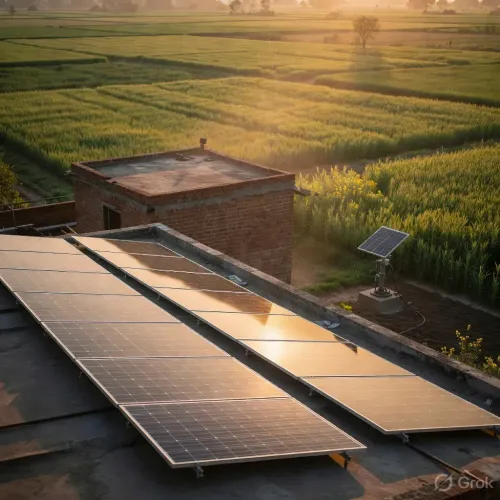
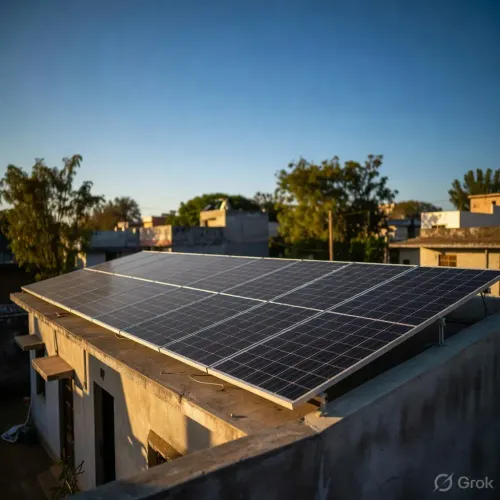
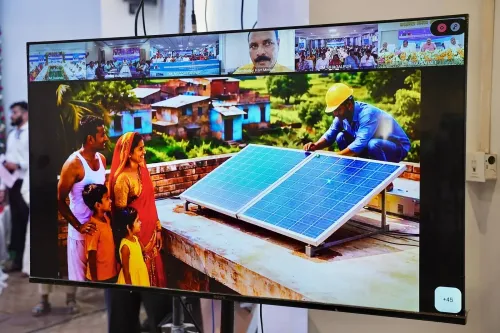
Bihar Chief Minister Samrat Choudhary on Sunday, June 14, 2026, launched the installation of rooftop solar plants for 2.5 lakh Kutir Jyoti consumers under the PM Surya Ghar Muft Bijli Yojana (PM Surya Ghar Free Electricity Scheme), at an outlay of ₹1,512 crore. Alongside, he inaugurated, dedicated, and laid the foundation stones for various energy-sector development projects worth ₹1,278 crore, bringing the total investment announced on the day to ₹2,790 crore.
Context
Posting on X, CM Choudhary stated: 'Aaj PM Surya Ghar Muft Bijli Yojana ke antargat ₹1512 crore ki lagat se 2.5 lakh Kutir Jyoti upbhoktaon ke gharon par saur urja sanyantra sthapna karya ka shubharambh kiya' — ('Today, under the PM Surya Ghar Free Electricity Scheme, the work of installing solar energy plants on the homes of 2.5 lakh Kutir Jyoti consumers at a cost of ₹1,512 crore was inaugurated.'). He also set out a clear timeline: connecting 2.5 lakh homes by November 2026 and scaling to 25 lakh homes by November 2027.
The Kutir Jyoti programme has historically provided single-point electricity connections to below-poverty-line rural households. Integrating these connections with rooftop solar systems marks a significant shift from basic electrification to clean, self-sustaining energy supply for Bihar's most economically vulnerable residents.
Policy Backdrop
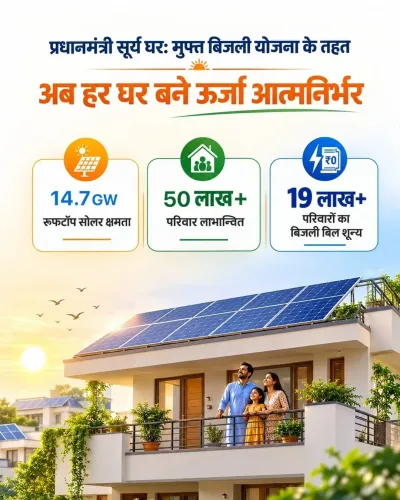
The PM Surya Ghar Muft Bijli Yojana was launched by the Government of India in 2024 to provide up to 300 units of free electricity per month to one crore households through rooftop solar systems of 1–3 kW capacity. Bihar has historically recorded high aggregate technical and commercial losses in its power distribution network and low solar penetration, making it one of the states with the most to gain from the scheme.
The current drive fits into a broader national policy arc that began with the National Solar Mission in 2010 and continued through the Pradhan Mantri Sahaj Bijli Har Ghar Yojana (Saubhagya) in 2017, which targeted universal household electrification. India's overarching goal of 500 GW of non-fossil energy capacity by 2030 has pushed both central and state governments to converge renewable schemes with distribution reforms. Similar rooftop and distributed solar drives are active in Maharashtra, Gujarat, and Uttar Pradesh.
Stakeholders and Impact
CM Choudhary underlined the state government's commitment to making Bihar energy self-reliant through solar promotion, strengthening environmental protection, and ensuring 'affordable, sustainable, and accessible electricity to every household.' The primary beneficiaries of today's launch are 2.5 lakh Kutir Jyoti consumers — rural, low-income families who previously had only basic grid connections and now stand to receive subsidised rooftop solar installations.
At scale, the November 2027 target of 25 lakh homes would represent one of the largest state-level rooftop solar rollouts in eastern India, with implications for reducing peak-load pressure on the state grid, cutting household electricity bills, and contributing to Bihar's carbon footprint reduction. The broader energy-sector projects worth ₹1,278 crore inaugurated alongside are expected to bolster transmission and distribution infrastructure to support the expanded solar load.
What's Next
The immediate milestone to watch is the November 2026 deadline for connecting the first 2.5 lakh homes — a target the state government has publicly committed to. Progress will depend on supply-chain readiness for solar panels, installer capacity, and the pace of subsidy disbursement under the central scheme. State-level regulatory orders on net-metering policy and beneficiary verification processes will also shape how quickly installations translate into actual electricity generation for households.
If Bihar meets its 2027 target of 25 lakh solar homes, it would signal a structural transformation in the state's energy profile — from a chronic power-deficit state to a model for decentralised renewable adoption in eastern India.
Point of View
The government targets a constituency that has historically been on the margins of energy access, giving the scheme both welfare and optics value. The twin timelines — November 2026 and November 2027 — create measurable, public accountability benchmarks that will be closely tracked. Broader success hinges on whether Bihar's distribution utilities can resolve longstanding infrastructure and financial weaknesses fast enough to absorb a 25-lakh-home solar load.
NationPress
13 Sept 2026
Frequently Asked Questions
What is the PM Surya Ghar Muft Bijli Yojana?
The PM Surya Ghar Muft Bijli Yojana is a central government scheme launched in 2024 to provide up to 300 units of free electricity per month to one crore Indian households by installing 1–3 kW rooftop solar systems, with central subsidies covering a significant portion of the installation cost.
Who are Kutir Jyoti consumers in Bihar?
Kutir Jyoti consumers are below-poverty-line rural households that received single-point electricity connections under the Kutir Jyoti rural electrification programme. Bihar CM Samrat Choudhary's June 2026 launch targets 2.5 lakh such households for rooftop solar installations.
What is Bihar's solar home target under PM Surya Ghar?
Bihar has set a target of connecting 2.5 lakh homes to the PM Surya Ghar scheme by November 2026 and scaling up to 25 lakh homes by November 2027, as announced by CM Samrat Choudhary on June 14, 2026.
How much is Bihar investing in solar and energy projects in 2026?
Bihar announced a combined investment of ₹2,790 crore on June 14, 2026 — ₹1,512 crore for rooftop solar installations under PM Surya Ghar and ₹1,278 crore for various other energy-sector development projects inaugurated on the same day.
How does Bihar's solar push fit into India's renewable energy goals?
India aims to achieve 500 GW of non-fossil energy capacity by 2030. Bihar's large-scale rooftop solar rollout, combined with distribution infrastructure upgrades, is part of a national pattern where states are converging central renewable schemes with local grid reforms to meet this target.