CM Samrat Choudhary Highlights Solar Milestones Under PM Modi
Synopsis
Bihar CM Samrat Choudhary on 13 August 2026 cited over 51.27 lakh households benefiting from PM Surya Ghar and 28.39 lakh irrigation pumps solarised under PM-KUSUM, framing both milestones as pillars of India's green and self-reliant energy future under PM Modi.
Key Takeaways
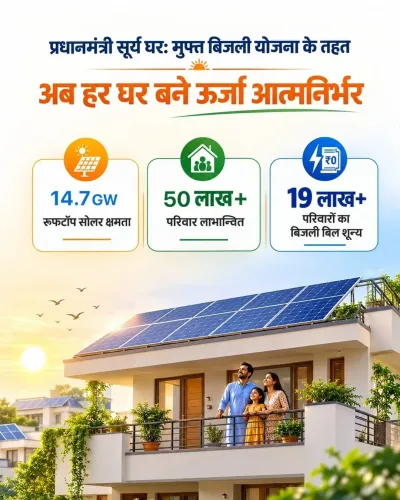
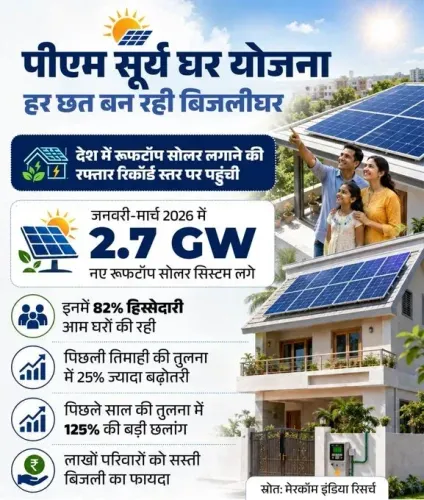
51.27 lakh households have benefited under the PM Surya Ghar: Muft Bijli Yojana , which offers up to 300 units of free monthly electricity via rooftop solar.
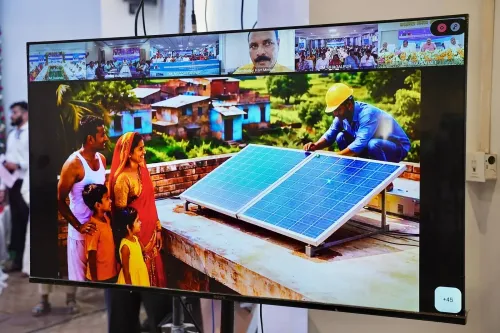
28.39 lakh irrigation pumps have been solarised under PM-KUSUM , reducing farmers' dependence on costly diesel.
PM Surya Ghar was launched in February 2024 with a target of one crore households; PM-KUSUM was launched in 2019 .
Both schemes are part of India's broader push to achieve 500 GW of non-fossil fuel capacity by 2030 , committed at COP26 in Glasgow.
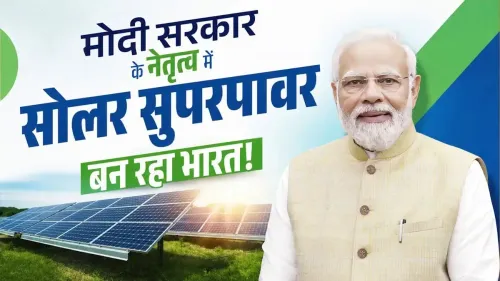
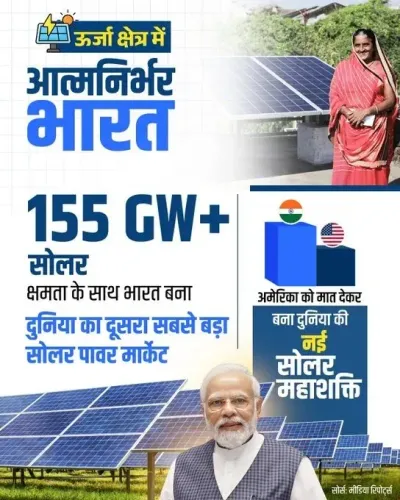
Bihar CM Samrat Choudhary credited Prime Minister Narendra Modi's leadership for the milestones, linking solar expansion to the Atmanirbhar Bharat vision.
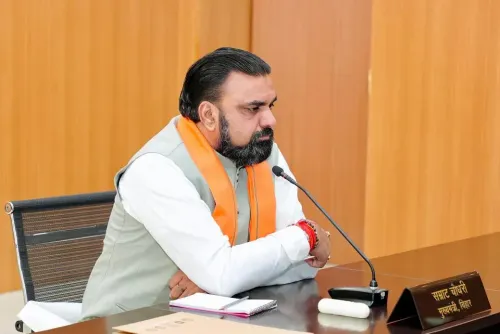
More than 51 lakh Indian families now draw free electricity from rooftop solar panels — and Bihar Chief Minister Samrat Choudhary wants the country to sit with that number for a moment. On Thursday, 13 August 2026, Choudhary took to X to amplify two of the central government's flagship green-energy achievements, framing solar expansion as the structural backbone of a self-reliant India.
Posting in Hindi, Choudhary wrote: 'सौर ऊर्जा की बढ़ती ताकत, विकसित भारत के हरित भविष्य की मजबूत नींव है' — 'The growing strength of solar energy is the strong foundation of a developed India's green future.' He cited two specific milestones: 51.27 lakh households benefiting under the PM Surya Ghar: Muft Bijli Yojana, and 28.39 lakh irrigation pumps solarised under the PM-KUSUM scheme.
What PM Surya Ghar Is Actually Delivering
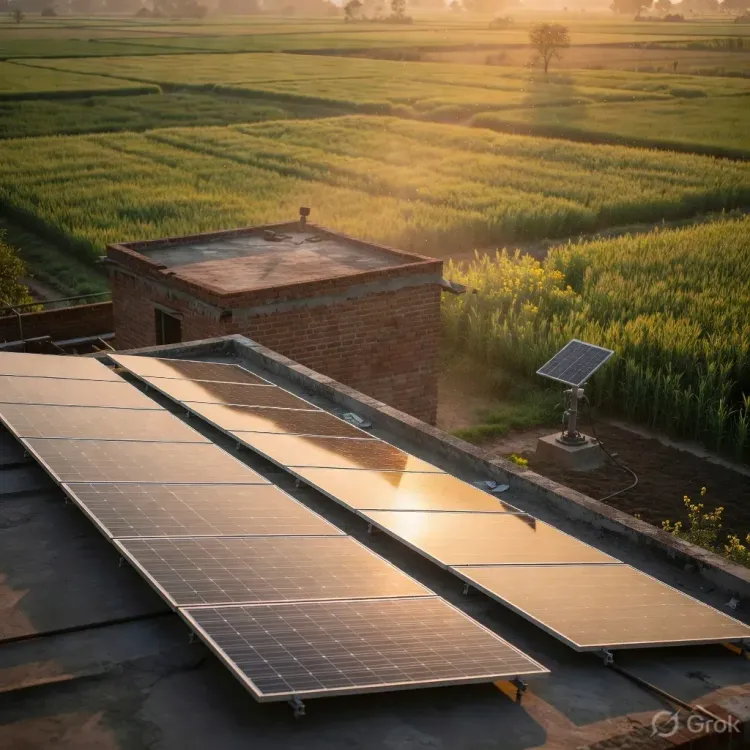
Launched in February 2024, PM Surya Ghar: Muft Bijli Yojana set out to install rooftop solar systems across one crore households, providing up to 300 units of free electricity per month to each. The scheme combines central financial assistance with state-level rollout — making the 51.27 lakh beneficiary figure, if it holds, a significant fraction of that original one-crore target cleared in roughly two years.
For urban and semi-urban families long burdened by rising power bills, the arithmetic is straightforward: a functioning rooftop system cuts the monthly bill to near zero for moderate consumers. The scheme's design deliberately targets the middle and lower-middle household — the segment most sensitive to electricity costs.
PM-KUSUM and the Farmer's Energy Problem
Agriculture runs on water, and water in rural India runs on diesel pumps — expensive, polluting, and hostage to fuel price swings. PM-KUSUM (Pradhan Mantri Kisan Urja Suraksha evam Utthaan Mahabhiyan), launched in 2019, was designed to break that dependency by solarising irrigation infrastructure. The 28.39 lakh pumps figure Choudhary cited represents diesel displaced, input costs reduced, and farmers insulated from fuel-price volatility in a single stroke.
The scheme also allows farmers to sell surplus solar power back to the grid — converting a cost centre into a potential income source. That dual benefit is what makes PM-KUSUM structurally different from a simple subsidy.
Bihar's Stake in India's 500 GW Green Target
India committed at COP26 in Glasgow in 2021 to achieving 500 GW of non-fossil fuel energy capacity by 2030. Both schemes Choudhary highlighted sit within the National Solar Mission framework built to reach that number. Bihar — predominantly rural, agriculturally dependent, and historically energy-deficient — has an outsized stake in how fast distributed solar scales at the village level.
Choudhary's post, framed around Prime Minister Narendra Modi's leadership, signals the BJP's intent to keep green energy achievements visible as a political and developmental credential heading into the second half of the decade. 'हरित ऊर्जा का विस्तार, आत्मनिर्भर भारत की मजबूत पहचान बन रहा है' — 'The expansion of green energy is becoming a strong identity of self-reliant India,' he concluded.
Half a crore households lit by the sun, millions of diesel pumps running silent. The scoreboard is filling up — and India's 2030 deadline is still four years away.
Point of View
Reinforcing the party's development-first narrative ahead of ongoing electoral cycles. The pairing of PM Surya Ghar and PM-KUSUM is politically shrewd: it speaks simultaneously to urban households and rural farmers, the two largest voter blocs. Bihar's own energy deficit makes the solar push locally resonant, not just nationally symbolic. More broadly, the post reflects the BJP's strategy of converting climate-aligned policy into grassroots political capital — framing green energy as Atmanirbhar Bharat rather than environmentalism.
NationPress
27 Sept 2026
Frequently Asked Questions
What is PM Surya Ghar Muft Bijli Yojana?
PM Surya Ghar: Muft Bijli Yojana is a central government scheme launched in February 2024 to install rooftop solar systems across one crore Indian households, providing up to 300 units of free electricity per month to each beneficiary.
How many families have benefited from PM Surya Ghar so far?
According to Bihar CM Samrat Choudhary's post on 13 August 2026, over 51.27 lakh families have benefited from the PM Surya Ghar: Muft Bijli Yojana.
What is PM-KUSUM and how does it help farmers?
PM-KUSUM (Pradhan Mantri Kisan Urja Suraksha evam Utthaan Mahabhiyan), launched in 2019, solarises agricultural irrigation pumps to reduce farmers' reliance on expensive diesel, cutting input costs and allowing surplus solar power to be sold back to the grid.
How many pumps have been solarised under PM-KUSUM?
As cited by Bihar CM Samrat Choudhary, 28.39 lakh irrigation pumps have been solarised under the PM-KUSUM scheme across India.
What is India's solar energy target by 2030?
India committed at the COP26 summit in Glasgow in 2021 to achieving 500 GW of non-fossil fuel energy capacity by 2030, with schemes like PM Surya Ghar and PM-KUSUM forming key components of that roadmap.