Bihar CM Office Pushes Faster Rollout of PM Surya Ghar Scheme
Synopsis
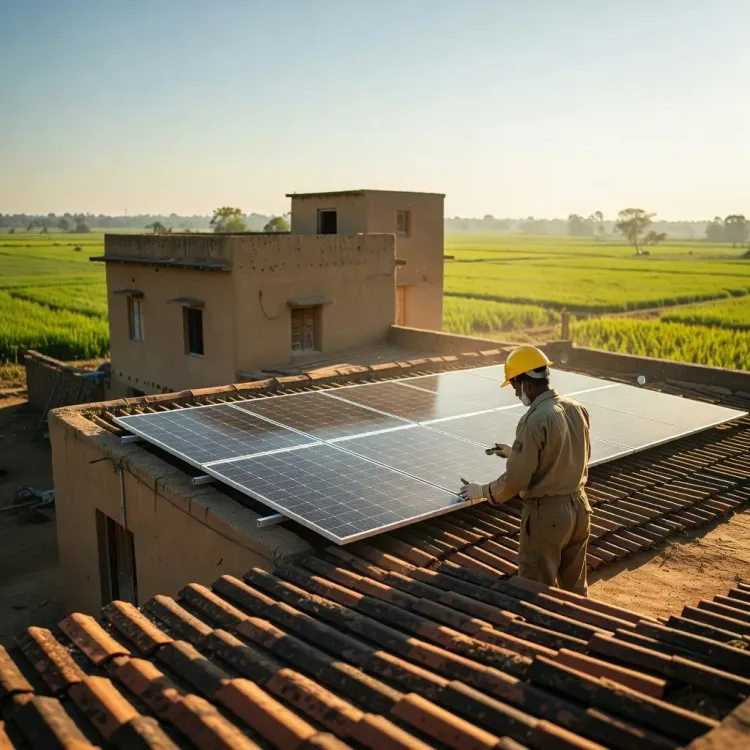
Bihar's Chief Minister's Office on 25 May 2026 ordered faster implementation of the PM Surya Ghar Muft Bijli Yojana, directing that more households be covered and consumers be encouraged to adopt rooftop solar installations under the central free-electricity scheme.
Key Takeaways
The Chief Minister's Office of Bihar issued a directive on 25 May 2026 to accelerate the PM Surya Ghar Muft Bijli Yojana .
Officials were instructed to maximise household coverage under the scheme across Bihar.
Consumers are to be actively motivated to install solar panels on their rooftops.
The central scheme, launched in 2024 , targets one crore households nationally and offers up to 300 units of free electricity per month .
State discoms are the primary implementation agencies responsible for registrations, installations, and subsidy disbursement.
The directive reflects a wider national pattern of state governments pushing administrative momentum to meet central renewable energy targets.
The Chief Minister's Office of Bihar on Monday, 25 May 2026 directed state officials to accelerate the implementation of the PM Surya Ghar Muft Bijli Yojana, instructing that the scheme be extended to the maximum number of households and that consumers be actively encouraged to install solar panels.
Context
The directive, shared via the official CMO Bihar account, states in Hindi: 'अधिक से अधिक घरों को इस योजना से आच्छादित किया जाए तथा उपभोक्ताओं को सोलर प्लेट स्थापना हेतु प्रेरित किया जाए' — meaning, 'the maximum number of households should be covered under this scheme and consumers should be motivated to install solar panels.' The instruction also calls for speeding up the scheme's on-ground execution across Bihar.Policy Backdrop
The PM Surya Ghar Muft Bijli Yojana was launched by the Government of India in 2024 with the goal of installing rooftop solar systems in one crore households nationwide. The scheme provides eligible beneficiaries up to 300 units of free electricity per month through subsidised solar installations, positioning distributed rooftop generation as a core pillar of India's renewable energy strategy. Bihar, as a state discom-governed territory, is responsible for translating this central scheme into household-level coverage through local implementation machinery.Stakeholders and Impact
The primary beneficiaries are residential households across Bihar, particularly those in lower and middle-income segments who stand to reduce or eliminate monthly electricity bills. State electricity distribution companies (discoms) are the key operational actors, tasked with registering applicants, coordinating installations, and disbursing subsidies in coordination with the Union Ministry of New and Renewable Energy. Consumer awareness and outreach remain identified bottlenecks in scheme uptake across multiple states, making the CMO's explicit instruction to 'motivate consumers' a pointed administrative signal. The directive reflects a broader national pattern: several states have issued similar push-orders to their discoms since the scheme's launch, underlining that administrative momentum, not just policy design, determines on-ground outcomes.What's Next
Attention will now turn to whether Bihar's discoms translate this directive into measurable increases in household registrations and completed solar installations. State-level progress reports on coverage numbers will be a key indicator of how effectively the push from the CMO converts into rooftop solar capacity on the ground. A sustained consumer outreach campaign, as implied by the directive, would be the next visible step in Bihar's execution of the scheme.Point of View
Not just subsidy availability, remain the real execution gaps. This fits a broader pattern visible across Indian states where centrally funded renewable schemes stall at the discom level due to capacity and outreach deficits. The Bihar government's public articulation of urgency adds political accountability to what is otherwise a routine administrative push.
NationPress
9 Oct 2026
Frequently Asked Questions
What is the PM Surya Ghar Muft Bijli Yojana?
The PM Surya Ghar Muft Bijli Yojana is a central government scheme launched in 2024 to install rooftop solar systems in one crore Indian households and provide up to 300 units of free electricity per month to beneficiaries.
What did the Bihar CM Office direct regarding the solar scheme?
On 25 May 2026, the Chief Minister's Office of Bihar directed officials to speed up implementation of the PM Surya Ghar Muft Bijli Yojana, ensure maximum household coverage, and actively motivate consumers to install solar panels.
How can Bihar residents benefit from the PM Surya Ghar scheme?
Eligible Bihar residents can register under the scheme to receive subsidised rooftop solar panel installations and avail up to 300 units of free electricity per month, coordinated through state discoms.
Which agency implements the PM Surya Ghar scheme in Bihar?
State electricity distribution companies, known as discoms, are the primary agencies responsible for registering applicants, coordinating solar installations, and disbursing subsidies in Bihar under the scheme.
Why is Bihar pushing faster rollout of the solar scheme in 2026?
The CMO Bihar's directive suggests that household coverage and consumer adoption have been slower than targeted, prompting the state administration to issue an explicit instruction for accelerated implementation and consumer outreach.