CM Bihar Sets 25-Lakh Solar Home Target by Nov 2027
Synopsis
Bihar's Chief Minister has directed officials to craft an action plan to cover 25 lakh households under the PM Surya Ghar Muft Bijli Yojana by 20 November 2027, the two-year mark of the current government's tenure, signalling an ambitious state-level push for rooftop solar adoption.
Key Takeaways
Bihar's Chief Minister has set a target of enrolling 25 lakh households under the PM Surya Ghar Muft Bijli Yojana .
The deadline is 20 November 2027 , marking two years of the current Bihar state government's tenure.
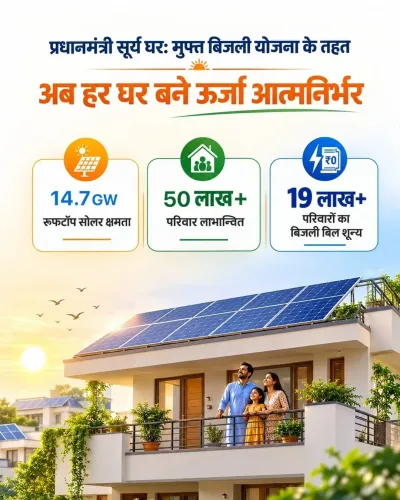
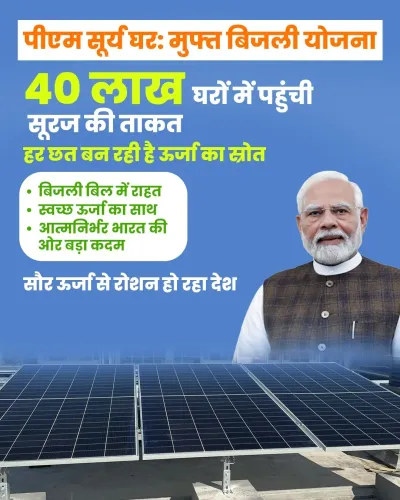
The PM Surya Ghar Muft Bijli Yojana is a central government scheme launched in 2024 offering up to 300 units of free electricity per month via rooftop solar installations.
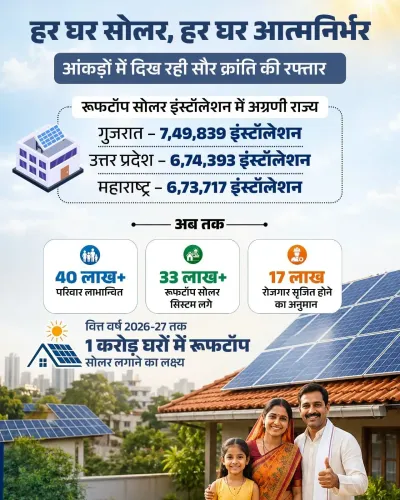
The national target under the scheme is one crore households across India; Bihar's directive carves out a specific state-level milestone.
Bihar's energy department officials have been tasked with preparing a detailed action plan to achieve the target.
Implementation will require coordination between state agencies, central bodies, solar vendors, and electricity distribution companies.
The Chief Minister's Office of Bihar announced on Sunday, 14 June 2026 that the state's Chief Minister has directed officials to prepare an action plan ensuring that 25 lakh households in Bihar benefit from the PM Surya Ghar Muft Bijli Yojana by 20 November 2027 — the two-year mark of the current state government's tenure.
The directive, shared via the official X account of the Chief Minister's Office, states: 'ऐसी कार्ययोजना तैयार की जाए कि राज्य सरकार के वर्तमान कार्यकाल के दो वर्ष पूर्ण होने तक, अर्थात 20 नवंबर 2027 तक, 25 लाख घरों को प्रधानमंत्री सूर्य घर मुफ्त बिजली योजना का लाभ मिल सके' — meaning, 'an action plan must be prepared so that by the completion of two years of the current state government's tenure, that is by 20 November 2027, 25 lakh homes can benefit from the PM Surya Ghar Muft Bijli Yojana.'
Context
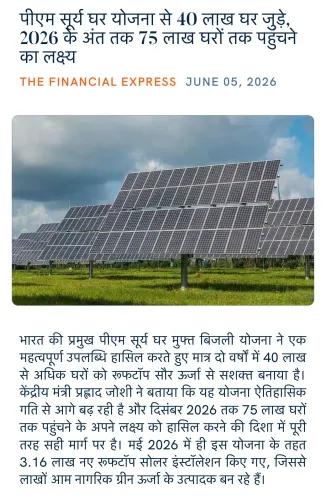
The PM Surya Ghar Muft Bijli Yojana is a Government of India scheme launched in 2024 that provides central financial assistance for rooftop solar panel installations. Eligible households can receive up to 300 units of free electricity per month once the panels are operational. The scheme carries a national target of reaching one crore households across India.
Bihar's Chief Minister has now set a state-specific milestone within that national framework, tying the target explicitly to the political calendar of the current government's term. The deadline of 20 November 2027 represents exactly two years from when the present administration assumed office.
Policy Backdrop
Bihar, an eastern Indian state with a large rural population, has historically been among the states that coordinate closely with the Centre on electrification and renewable energy programmes. Rooftop solar adoption in rural and semi-urban Bihar has been a focus area given the state's ongoing efforts to improve electricity access and reduce dependence on the conventional grid.
India's broader push for distributed solar generation is also tied to its national climate commitments, including targets under international agreements to expand renewable energy capacity. Centrally sponsored schemes such as PM Surya Ghar serve as the primary instrument for translating these commitments into household-level impact, with states responsible for on-ground implementation, registration drives, and subsidy disbursement coordination.
Stakeholders and Impact
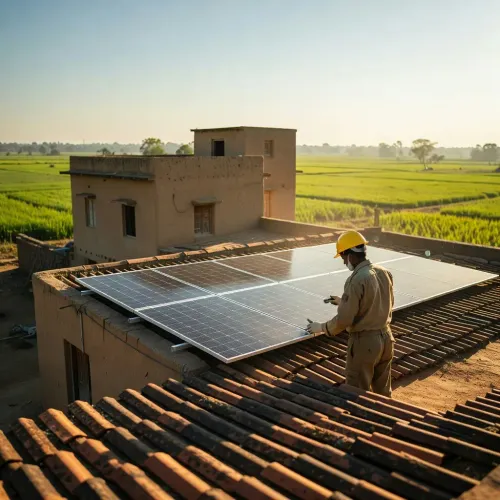
The primary beneficiaries of this directive are 25 lakh Bihar households — particularly those in rural and peri-urban areas — who stand to gain access to subsidised rooftop solar installations and the resulting reduction in electricity bills. For many families, the prospect of up to 300 units of free electricity monthly represents a significant economic relief.
The directive also places accountability on Bihar's energy department officials, who have been tasked with designing the specific action plan. Implementation will require coordination between state agencies, central nodal bodies, empanelled solar vendors, and distribution companies to ensure registrations, installations, and subsidy claims are processed at scale within the stipulated timeframe.
What's Next
The immediate next step is the preparation and release of a detailed action plan by Bihar's energy department, outlining registration targets, installation timelines, district-wise allocations, and monitoring mechanisms. Progress will likely be tracked against quarterly milestones leading up to the November 2027 deadline.
The scale of the ambition — 25 lakh homes in roughly 17 months from the date of the directive — will test the state's administrative capacity and the readiness of the central scheme's subsidy pipeline. How swiftly the action plan is formalised and communicated to district-level officials will be a key early indicator of the initiative's momentum.
Point of View
Bihar's Chief Minister is making rooftop solar adoption a visible political deliverable — not merely an administrative exercise. This mirrors a broader pattern among state governments of converting centrally sponsored schemes into locally owned milestones with clear accountability timelines. For Bihar, a state that has historically lagged in per-capita electricity consumption, the ambition is significant and will test both administrative bandwidth and the central scheme's subsidy disbursement machinery. The directive's success or failure by November 2027 will likely become a key data point in the state's electoral narrative.
NationPress
13 Sept 2026
Frequently Asked Questions
What is the PM Surya Ghar Muft Bijli Yojana?
The PM Surya Ghar Muft Bijli Yojana is a Government of India scheme launched in 2024 that subsidises rooftop solar panel installations for households, enabling them to receive up to 300 units of free electricity per month.
What is Bihar's target under PM Surya Ghar Muft Bijli Yojana?
Bihar's Chief Minister has directed officials to ensure that 25 lakh households in the state benefit from the PM Surya Ghar Muft Bijli Yojana by 20 November 2027.
Why is 20 November 2027 significant for Bihar's solar target?
20 November 2027 marks the completion of two years of the current Bihar state government's tenure, which the Chief Minister has set as the deadline for covering 25 lakh homes under the rooftop solar scheme.
Who will benefit from Bihar's PM Surya Ghar scheme push?
The primary beneficiaries are 25 lakh Bihar households, particularly in rural and peri-urban areas, who will gain access to subsidised rooftop solar installations and reduced electricity bills.
What happens next after Bihar CM's solar directive?
Bihar's energy department officials are expected to prepare and release a detailed action plan with district-wise targets, registration drives, installation timelines, and monitoring mechanisms to meet the November 2027 deadline.