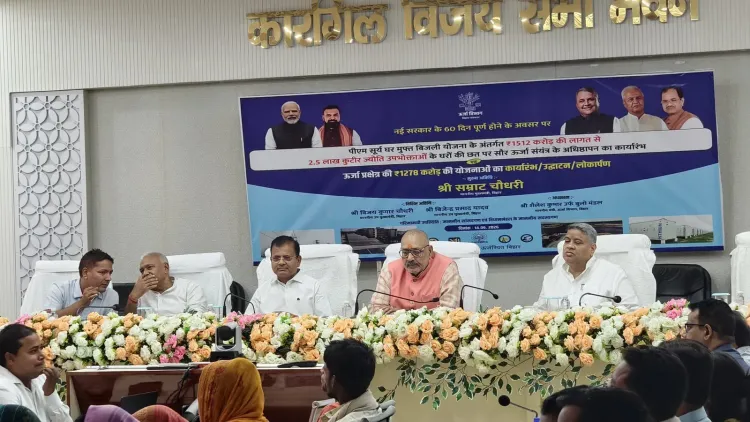
Giriraj Singh joins Bihar energy event for rooftop solar push
Synopsis
Union Textiles Minister Giriraj Singh joined Bihar's Energy Department on 14 June 2026 to commission rooftop solar plants for over 2.5 lakh households under PM Surya Ghar Muft Bijli Yojana and inaugurate multiple state energy projects, reinforcing the BJP's 'double engine government' model.
Key Takeaways
Union Textiles Minister Giriraj Singh participated in a Bihar Energy Department event on 14 June 2026 .
Rooftop solar plants were commissioned for more than 2.5 lakh households under the PM Surya Ghar Muft Bijli Yojana .
Multiple energy-sector development projects were also inaugurated and dedicated to the public at the same event.
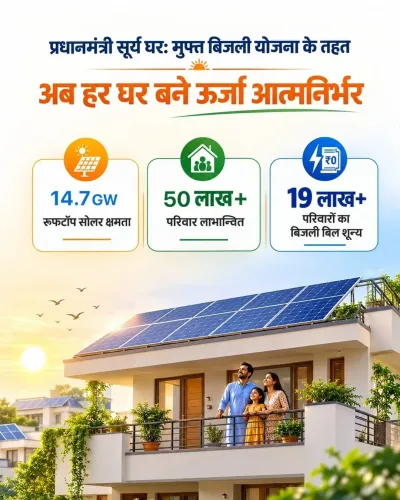
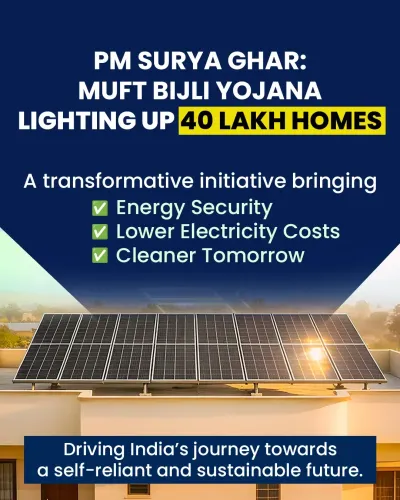
The scheme, launched in 2024 , aims to provide up to 300 units of free electricity per month to one crore households nationwide.
Singh attributed the initiative to PM Narendra Modi's leadership and the 'double engine government' model in Bihar .
India targets 500 GW of non-fossil fuel energy capacity by 2030 , with rooftop solar as a key component.
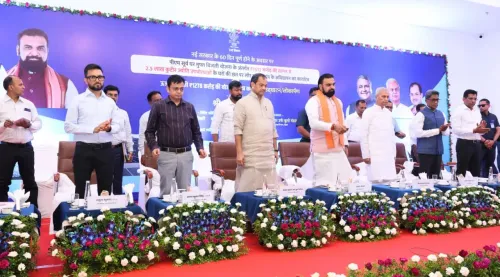
Union Textiles Minister Giriraj Singh participated in a programme organised by Bihar's Energy Department on Sunday, 14 June 2026, where rooftop solar plants were commissioned for more than 2.5 lakh households under the PM Surya Ghar Muft Bijli Yojana, alongside the inauguration and launch of multiple energy-sector development projects across the state.
Context
Singh, a Lok Sabha MP from Begusarai, Bihar, posted about his participation in the state-level event, describing the occasion as one involving 'karyarambh, udghaatan evam lokarpan' — commencement, inauguration, and public dedication — of energy projects. He noted that the initiative would play an important role in providing affordable and clean electricity to residents while strengthening Bihar's overall energy infrastructure.
In the post, Singh credited the progress to the leadership of Prime Minister Narendra Modi and what he called the 'double engine government' — a term the BJP uses to describe the simultaneous functioning of its governments at the Centre and in a state, in this case Bihar.
Policy Backdrop
The PM Surya Ghar Muft Bijli Yojana is a central government scheme designed to install rooftop solar panels on one crore households nationwide, offering beneficiaries up to 300 units of free electricity per month. The scheme was launched in 2024 as part of India's broader push to expand renewable energy access at the household level.
India has set an ambitious target of achieving 500 GW of non-fossil fuel energy capacity by 2030, with rooftop solar forming a critical pillar of that strategy under the National Solar Mission. Events like the one in Bihar reflect the Centre's approach of channelling centrally sponsored schemes through state machinery to accelerate on-ground implementation.
Stakeholders and Impact
The primary beneficiaries are Bihar households whose rooftops are being fitted with solar panels, reducing their dependence on the conventional grid and lowering monthly electricity costs. For a state that has historically faced power supply challenges, the scale of installations — covering more than 2.5 lakh consumers — represents a significant expansion of clean energy access.
State energy consumers and local contractors involved in the installation supply chain are also direct stakeholders. The event's framing around multiple project inaugurations suggests the programme extends beyond rooftop solar to wider energy infrastructure upgrades in Bihar.
What's Next
Attention will now turn to the pace at which the remaining phases of rooftop solar installations are rolled out across Bihar, and whether the state government announces fresh budget allocations or tenders to sustain momentum. The Bihar Energy Department's ability to connect installed panels to the grid and process subsidy disbursements will be a key operational milestone to watch.
More broadly, Bihar's progress under the scheme is likely to be cited as a benchmark in the BJP's political messaging ahead of any upcoming electoral cycles, reinforcing the 'double engine' narrative that coordinated central and state governance delivers faster development outcomes.
Point of View
Reinforcing party ownership of development outcomes. The 'double engine government' framing is a deliberate electoral asset, tying scheme delivery directly to having the same party in power at both levels. With Bihar's energy infrastructure historically lagging, a visible milestone like 2.5 lakh rooftop solar commissions allows the BJP to project tangible governance gains. The event fits a broader pattern of pre-emptive credit-claiming around centrally sponsored schemes ahead of electoral cycles.
NationPress
13 Sept 2026
Frequently Asked Questions
What is PM Surya Ghar Muft Bijli Yojana?
PM Surya Ghar Muft Bijli Yojana is a central government scheme launched in 2024 to install rooftop solar panels on one crore households across India, providing beneficiaries up to 300 units of free electricity per month to reduce household electricity bills.
What happened at the Bihar energy event on 14 June 2026?
Bihar's Energy Department organised an event where rooftop solar plants were commissioned for more than 2.5 lakh households under PM Surya Ghar Muft Bijli Yojana, and several other energy-sector development projects were inaugurated and dedicated to the public.
Why was Giriraj Singh at a Bihar energy event if he is the Textiles Minister?
Giriraj Singh is a senior BJP leader and Lok Sabha MP from Begusarai, Bihar. Senior central ministers frequently attend state-level scheme events in their home constituencies to reinforce political connect and the party's 'double engine government' narrative.
What is the 'double engine government' the BJP refers to in Bihar?
'Double engine government' is a term the BJP uses when the same party governs both at the Centre and in a state, arguing this alignment accelerates infrastructure delivery and scheme implementation, as seen in Bihar where both governments are BJP-led.
What is India's renewable energy target by 2030?
India has set a target of achieving 500 GW of non-fossil fuel energy capacity by 2030 under its updated climate commitments, with rooftop solar forming a significant part of that goal through schemes like PM Surya Ghar Muft Bijli Yojana.