Gujarat leads India's renewable energy with 50.39 GW, 18% of national capacity
Synopsis
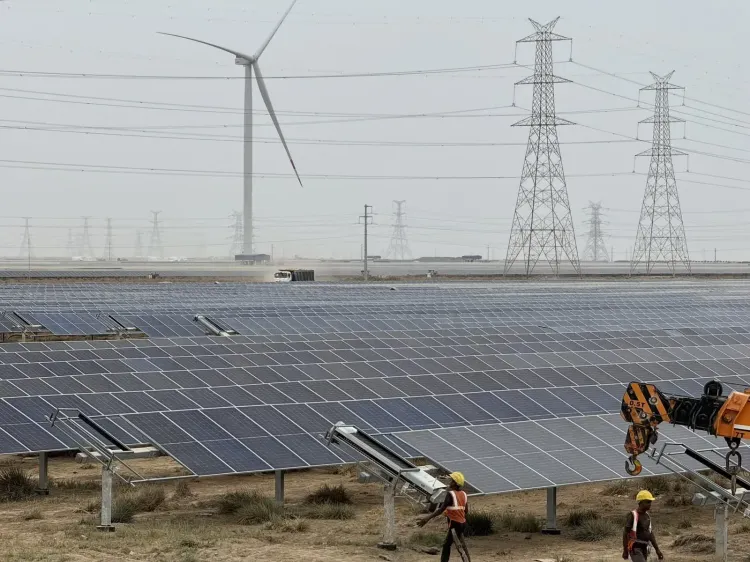
Gujarat now holds nearly 18% of India's entire renewable energy capacity at 50.386 GW — leading the country in wind power and rooftop solar. The Khavda park in Kutch alone is planned at 37.35 GW, making it the world's largest green energy project. With a 105 GW target for 2030, Gujarat is effectively acting as India's clean energy engine.
Key Takeaways
Gujarat contributes 17.82 per cent of India's total installed renewable energy capacity, with a cumulative 50.386 GW as of May 2025 .
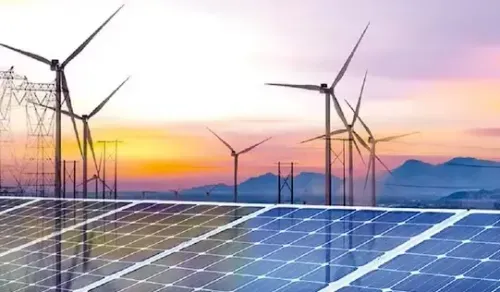
The state holds India's highest installed wind capacity at 15,850.56 MW , with Kutch alone contributing 8,191.42 MW .
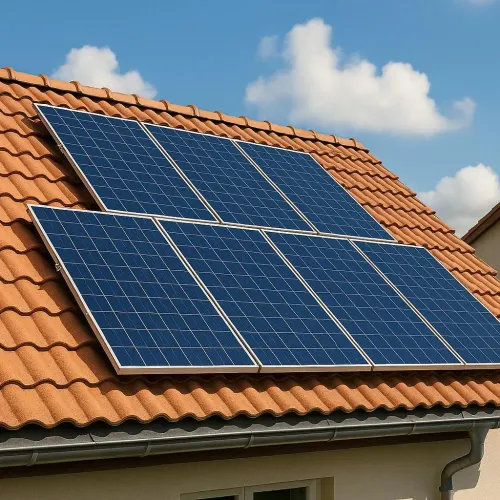
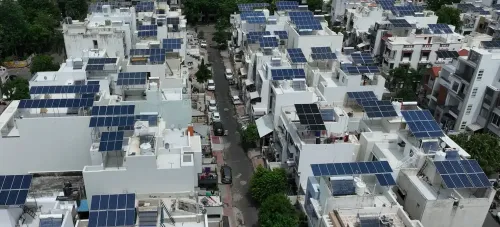
Gujarat leads India in rooftop solar with over 13 lakh installations ( 7,408.10 MW ), accounting for more than 21 per cent of national rooftop solar.
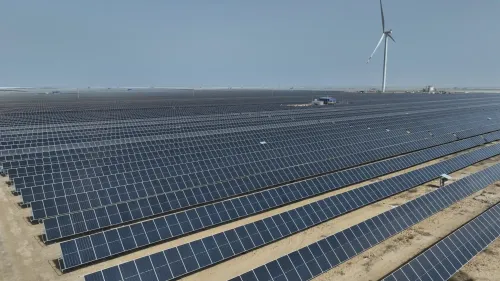
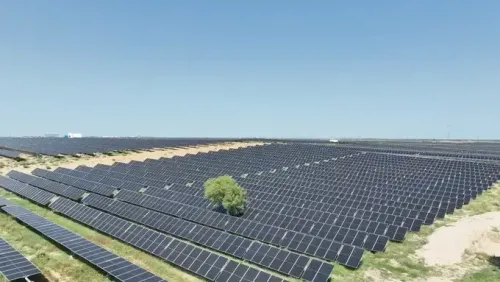
The Khavda Renewable Energy Park in Kutch, planned at 37.35 GW , is described as the world's largest green energy project; 15.54 GW commissioned by May.
The renewable energy sector has generated an estimated 2.37 lakh direct and indirect jobs in Gujarat.
Gujarat has set a target of 105 GW of renewable capacity by 2030 , which would represent roughly one-fifth of India's 500 GW national goal.
Gujarat has emerged as India's top renewable energy state, accounting for 17.82 per cent of the country's total installed renewable capacity, with its cumulative figure reaching 50.386 GW, according to data released on 9 July 2025 ahead of Global Energy Independence Day, observed annually on 10 July. The figures underscore the western state's outsized role in India's clean energy transition.
Gujarat's Renewable Energy Footprint
The state holds the highest installed wind power capacity in India at 15,850.56 MW and ranks second in solar power with 32,302.7 MW of installed capacity as of May 2025. Gujarat also leads the country in rooftop solar deployment, with more than 13 lakh installations carrying a combined capacity of 7,408.10 MW — representing over 21 per cent of all rooftop solar installations nationally.
The state's total solar capacity breaks down as follows: 23,259.27 MW from ground-mounted projects, 7,408.10 MW from rooftop systems, 1,434.66 MW from hybrid projects, and 200.48 MW from off-grid systems including installations under the PM-KUSUM scheme.
Khavda and Major Solar Parks
The Khavda Renewable Energy Park in Kutch, planned at a total capacity of 37.35 GW, is described by the state government as the world's largest green energy project. By May 2025, projects with a combined capacity of 15.54 GW had been commissioned at the site. Among Gujarat's other notable solar parks are Charanka (749 MW), Radhanesda (700 MW), and Dholera (300 MW).
Wind Energy: Kutch Leads the Charge
Gujarat's wind energy dominance is concentrated in Kutch, which alone contributes 8,191.42 MW of the state's 15,850.56 MW total installed wind capacity. Other districts with significant wind installations include Jamnagar (1,986.15 MW), Devbhumi Dwarka (1,343.24 MW), Amreli (992.90 MW), Rajkot (869.60 MW), Bhavnagar (626.20 MW), Morbi (612.10 MW), Surendranagar (500.60 MW), and Patan (208.20 MW). The state has also commissioned 2,838.07 MW of wind-solar hybrid projects under its 2018 Hybrid Policy and the Gujarat Renewable Energy Policy 2023.
Policy Framework and Job Creation
Gujarat's renewable energy journey traces back to 1993, when it became the first Indian state to introduce a Wind Power Policy. Successive solar energy policies followed in 2009, 2015, and 2021, alongside a Wind-Solar Hybrid Policy in 2018. The most recent framework, the Gujarat Integrated Renewable Energy Policy 2025, came into effect on 24 December 2025 and will remain in force until 31 December 2030. It provides a unified framework covering solar, wind, hybrid, decentralised projects, and battery energy storage systems, while also promoting grid connectivity simplification, repowering of ageing wind assets, and green skills development.
The state government estimates that renewable energy sector growth has generated approximately 2.37 lakh direct and indirect jobs across Gujarat. Rooftop solar adoption has accelerated since residential incentive schemes were introduced in 2016 and gained further momentum following the launch of the PM Surya Ghar scheme. In agriculture, 22,792 standalone off-grid solar water pumps with a combined capacity of 162.62 MW had been installed under Component B of PM-KUSUM by May.
Target: 105 GW by 2030
As of May 2025, Gujarat had 1,531 renewable energy projects under implementation — including 1,320 solar projects (combined 3.377 GW), 115 wind projects (3.913 GW), and 96 hybrid projects (4.869 GW). At the RE-INVEST 2024 event in Gandhinagar, the state set a target of achieving 105 GW of renewable energy capacity by 2030 — a figure the government says would contribute roughly one-fifth of India's national goal of 500 GW of non-fossil fuel capacity by the end of the decade. With India committed to net-zero carbon emissions by 2070 and 50 per cent of electricity from renewables by 2030, Gujarat's trajectory will be closely watched as a national benchmark.
Point of View
But the more telling metric is execution quality — and on that front, the Khavda park's 15.54 GW commissioned against a 37.35 GW plan signals both ambition and the scale of work still ahead. The state's 30-year policy continuity, from the 1993 Wind Policy through the 2025 Integrated Policy, is genuinely rare in Indian governance and deserves credit as a structural advantage. Yet the 105 GW target by 2030 — against a current base of 50.386 GW — implies more than doubling capacity in under five years, a pace that will test grid absorption, land acquisition, and storage infrastructure simultaneously. The jobs figure of 2.37 lakh, while significant, remains a government estimate without independent verification; as the sector scales, the quality and permanence of those jobs will matter as much as the count.
NationPress
10 Jul 2026
Frequently Asked Questions
What is Gujarat's total installed renewable energy capacity in 2025?
Gujarat's cumulative installed renewable energy capacity stood at 50.386 GW as of May 2025 , making it the largest contributor to India's renewable energy mix at 17.82 per cent of the national total.
Why does Gujarat lead India in wind power?
Gujarat leads India in installed wind power capacity at 15,850.56 MW , driven by its coastline and the high wind potential of districts such as Kutch , which alone accounts for 8,191.42 MW . Three decades of uninterrupted wind policy, beginning with India's first state-level Wind Power Policy in 1993 , have also provided a stable investment environment.
What is the Khavda Renewable Energy Park?
The Khavda Renewable Energy Park in Kutch, Gujarat is a planned 37.35 GW green energy project described by the state government as the world's largest of its kind. By May 2025 , projects totalling 15.54 GW had been commissioned at the site.
What is Gujarat's renewable energy target for 2030?
Gujarat has set a target of 105 GW of installed renewable energy capacity by 2030 , as announced at the RE-INVEST 2024 event in Gandhinagar . This would account for roughly one-fifth of India's national goal of 500 GW of non-fossil fuel capacity by the end of the decade.
How has rooftop solar grown in Gujarat?
Gujarat leads India in rooftop solar with more than 13 lakh installations totalling 7,408.10 MW , representing over 21 per cent of all rooftop solar capacity in the country. Adoption accelerated after residential incentive schemes were introduced in 2016 and gained further momentum with the launch of the PM Surya Ghar scheme.