How has Gujarat become India’s leading renewable energy contributor?
Synopsis
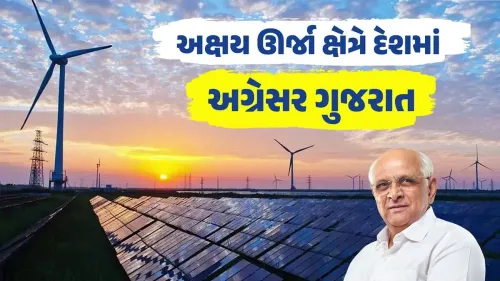
Gujarat has stepped up as the prime contributor to India's renewable energy sector, achieving a remarkable 16.5% share of the nation's total capacity. With a commitment to substantially increase this figure by 2030, the state is paving the way for a sustainable energy future.
Key Takeaways
Gujarat is India's largest renewable energy contributor .
16.50% share of national total .
42.583 GW installed capacity .
Leading in rooftop solar installations .
Ambitious targets for 2030 .
Gandhinagar, Jan 31 (NationPress) Gujarat has solidified its position as India’s leading contributor to renewable energy capacity, representing 16.50 percent of the national total, with the state’s renewable power installations reaching 42.583 GW as of December 2025, according to official data.
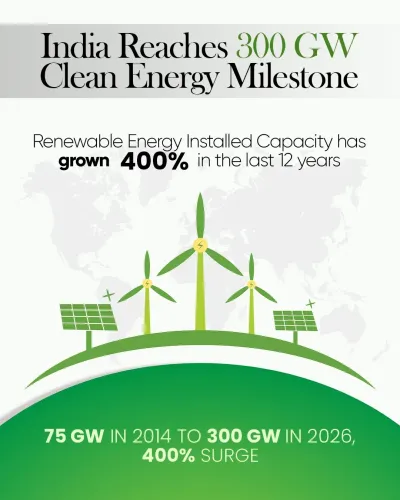
This advancement positions Gujarat at the helm of India’s shift towards clean energy, as the nation aims to achieve 50 percent of its electricity from renewable sources by 2030 and attain net-zero emissions by 2070.
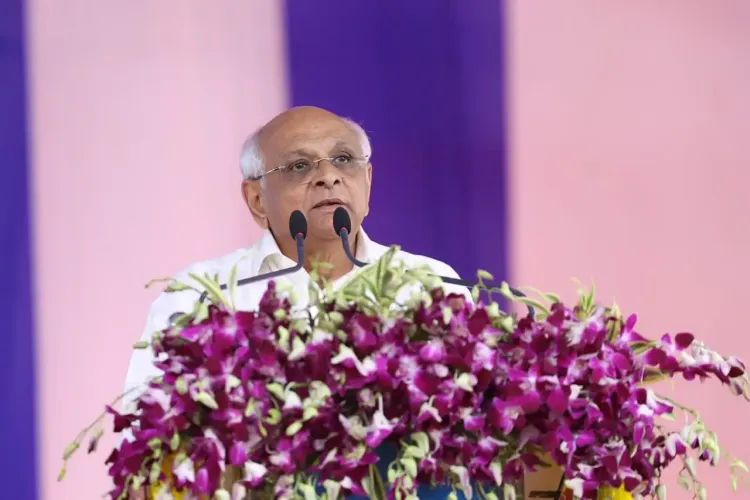
Under the leadership of Chief Minister Bhupendra Patel, Gujarat stands first among Indian states for both total installed renewable energy capacity and wind power capacity, and second in solar power capacity.
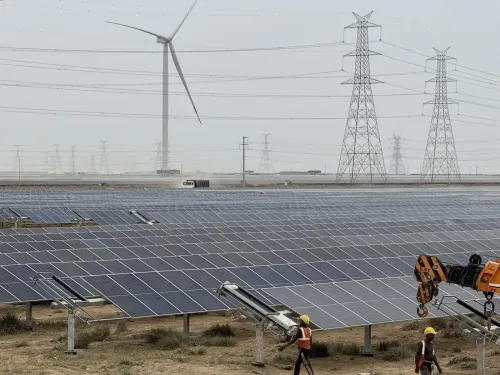
Out of the total renewable capacity, wind energy contributes 14,820.94 MW, while solar power accounts for 25,529.40 MW.
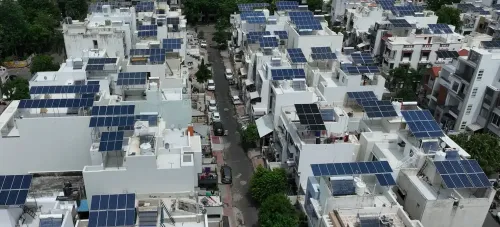
The remaining capacity is derived from hybrid and off-grid renewable sources. Additionally, Gujarat is the national leader in rooftop solar installations, boasting over 1.1 million systems across residential, commercial, and industrial sectors, generating 6,412.80 MW.
Officials noted that the state contributes more than 25 percent of India’s total rooftop solar installations.
The rooftop solar capacity includes 2,073.65 MW under the Surya Gujarat scheme, 1,913 MW under the PM Surya Ghar Yojana, and 2,267.04 MW from various other programs.
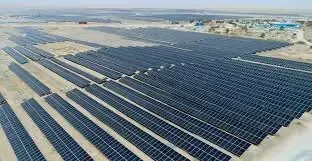
In the solar domain, Gujarat boasts an installed capacity of 25,529.40 MW, comprised of 17,771.21 MW from ground-mounted projects, 6,412.80 MW from rooftop systems, 1,172.38 MW from wind-solar hybrid projects, and 173.01 MW from off-grid systems, including those under the PM KUSUM scheme.
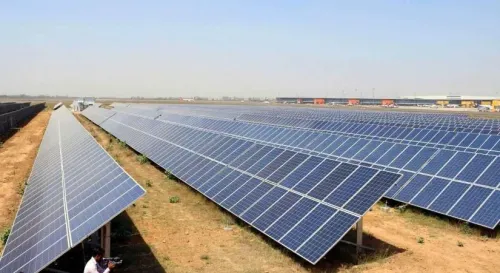
Solar parks are operational at Charanka (749 MW), Radhanesda (700 MW), and Dholera (300 MW). The renewable energy park at Khavda in Kutch, designed for a capacity of 37.35 GW, has already commissioned 11.33 GW, making it the largest renewable energy park under development worldwide.
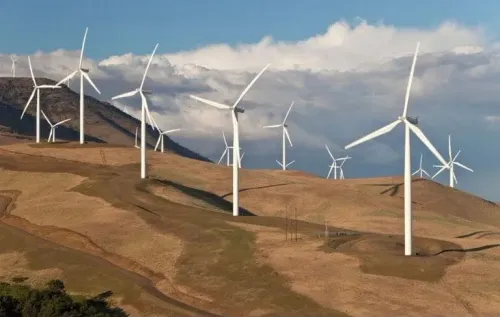
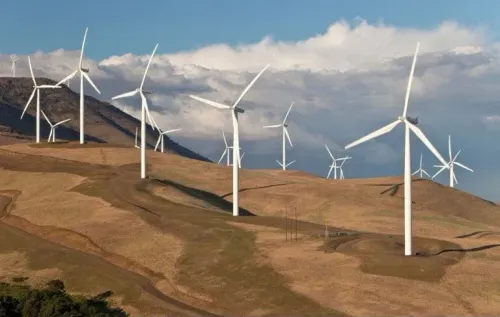
Wind energy installations total 14,820.64 MW, with Kutch contributing 7,476.73 MW. Other significant wind power districts include Jamnagar (1,867.65 MW), Devbhumi Dwarka (1,281.26 MW), Amreli (973.85 MW), Rajkot (874.90 MW), Bhavnagar (618.80 MW), Morbi (568.60 MW), Surendranagar (456.60 MW), and Patan (208.20 MW).
Wind-solar hybrid projects, developed under the 2018 Hybrid Policy and the Renewable Energy Policy 2023, have contributed 2,398.77 MW.
Chief Minister Patel stated that Gujarat’s renewable energy growth demonstrates “consistent policy support and effective implementation in line with national climate objectives.”
Officials estimate that renewable energy initiatives in the state have created approximately 2.37 lakh direct and indirect jobs.
Currently, Gujarat has 5,203 renewable energy projects under development, including 4,992 solar projects with a total capacity of 32.22 GW, 72 wind projects with 15 GW, and 139 hybrid projects with a combined capacity of 21.15 GW.
The state aims to reach 105 GW of renewable energy capacity by 2030, contributing around 20 percent to India’s planned 500 GW non-fossil fuel energy capacity.
Point of View
It is crucial to highlight the significance of Gujarat's achievements in renewable energy. This progress not only reflects effective policies but also aligns with India's broader climate goals. The state's leadership in clean energy can serve as a model for others, promoting sustainable development and job creation across the nation.
NationPress
20 Sept 2026
Frequently Asked Questions
What percentage of India's renewable energy capacity does Gujarat contribute?
Gujarat contributes 16.50% of India's total renewable energy capacity.
What is the total installed renewable energy capacity of Gujarat?
As of December 2025, Gujarat's installed renewable energy capacity is 42.583 GW.
What are the major sources of renewable energy in Gujarat?
The major sources include wind energy (14,820.94 MW) and solar energy (25,529.40 MW).
How many renewable energy projects are currently in development in Gujarat?
Gujarat has 5,203 renewable energy projects under implementation.
What target has Gujarat set for renewable energy capacity by 2030?
Gujarat aims to achieve 105 GW of renewable energy capacity by 2030.