Nadda marks 12 years of Modi govt, cites shift from vote-bank politics
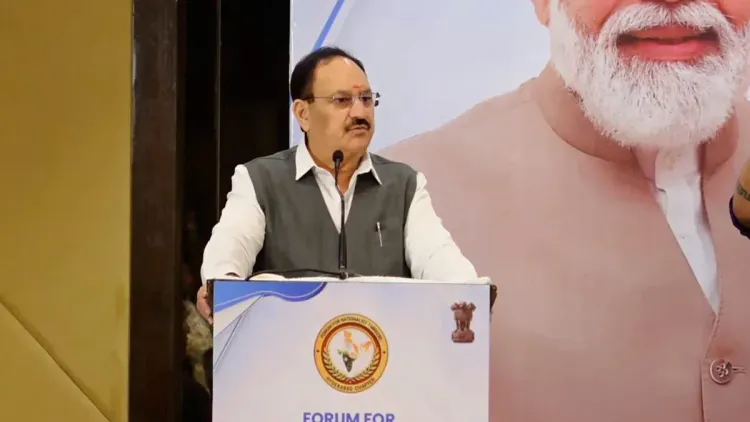
Synopsis
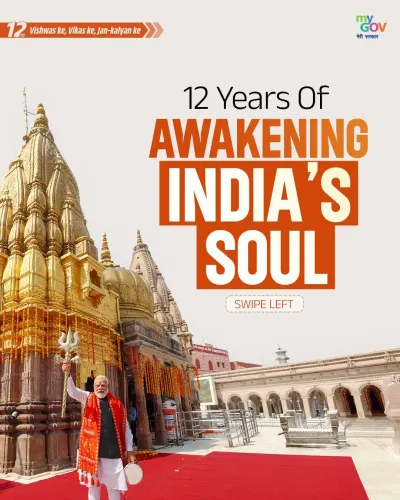
Union Health Minister and BJP National President J. P. Nadda on 9 July 2026 marked 12 years of the Modi government, saying PM Modi has replaced caste- and region-based patronage with universal development guided by 'Sabka Saath, Sabka Vikas, Sabka Vishwas, Sabka Prayas'.
Key Takeaways
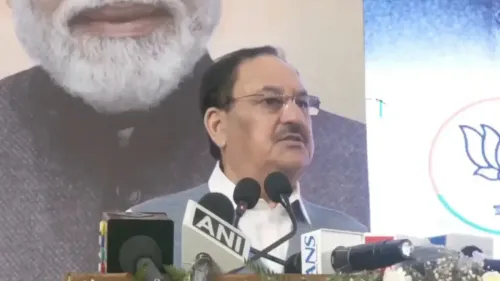
Nadda , Union Health Minister and BJP National President, posted on X on 9 July 2026 marking 12 years of the Modi government.
He credited PM Narendra Modi with a 'paradigm shift' in politics, democracy, diplomacy, and development.
Nadda contrasted earlier governance — described as centred on caste, region, and vote-bank politics — with what he called a democracy 'truly for every citizen'.
The four-part slogan 'Sabka Saath, Sabka Vikas, Sabka Vishwas, Sabka Prayas' was cited as the guiding vision of the current dispensation.
The slogan evolved across three phases: 2014 (Saath-Vikas), 2019 (adding Vishwas), and post- 2020 (adding Prayas).
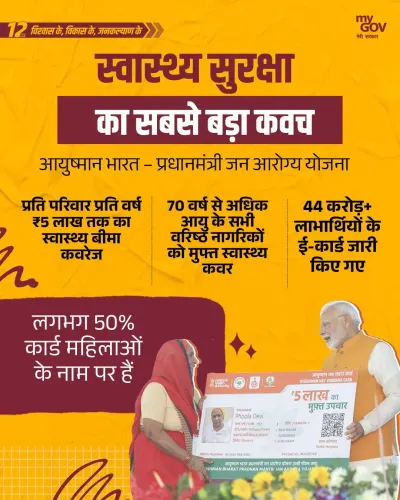
Flagship schemes such as PM Awas Yojana , Ujjwala , and Ayushman Bharat are cited by the government as evidence of universal, non-clientelist delivery.
Union Health Minister and BJP National President J. P. Nadda on Thursday, 9 July 2026 credited Prime Minister Narendra Modi with transforming India's political culture over 12 years in power, arguing that governance has moved away from caste- and region-based patronage toward universal development under the slogan 'Sabka Saath, Sabka Vikas, Sabka Vishwas, Sabka Prayas' (Together with all, development for all, trust of all, effort of all).
Context
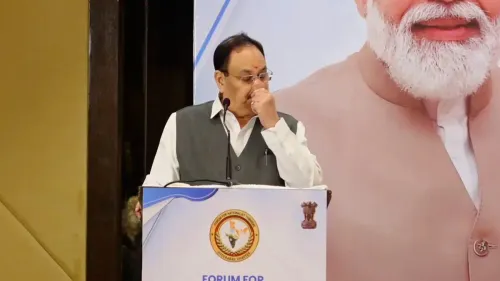
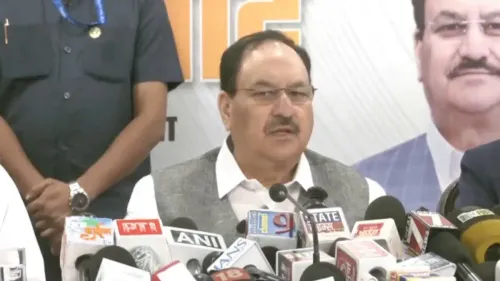
Posting on X, Nadda wrote: 'Over the last 12 years, under the dynamic leadership of Prime Minister Shri Narendra Modi ji, India has witnessed a paradigm shift in politics, democracy, diplomacy, and development.' He added that earlier, 'politics was often centred around caste, region, and vote-bank considerations, with governments serving only select sections,' contrasting that with what he described as a democracy 'truly for every citizen' today.
The post, which carried a video, marks a symbolic milestone as the BJP-led National Democratic Alliance completes its twelfth consecutive year at the Centre, having first assumed office in May 2014.
Policy backdrop
The four-part slogan Nadda cited has evolved across successive terms of the Modi government. 'Sabka Saath, Sabka Vikas' was introduced during the 2014 general election campaign to signal a departure from identity-based mobilisation. 'Sabka Vishwas' was added around 2019 after a second consecutive electoral majority, emphasising trust-building across communities. 'Sabka Prayas' entered official communications after 2020 to underscore collective effort in welfare delivery, including the pandemic response.
Flagship welfare programmes launched since 2014 — including PM Awas Yojana (housing), Pradhan Mantri Ujjwala Yojana (cooking gas for below-poverty-line households), and Ayushman Bharat (health cover for economically vulnerable families) — have been framed by the government using explicit 'universal targeting' language, positioning them as evidence of the shift Nadda describes.
Stakeholders and impact
Nadda's statement is directed at a broad audience: Indian voters, marginalised and rural communities who are the stated beneficiaries of these schemes, and the BJP's own cadre as the party consolidates its cross-caste support base. The contrast he draws with earlier political models is a recurring rhetorical device in BJP communications at both national and state levels.
As BJP National President, Nadda also holds a key organisational role in shaping the party's electoral messaging ahead of upcoming state assembly elections, lending the post a dual function — ministerial commentary and party positioning.
What's next
Parliamentary discussions on the next Union Budget and potential expansions of centrally sponsored welfare schemes are expected to serve as the next major test of whether the 'universal development' framing translates into new policy commitments. How the government responds to criticism that welfare delivery remains uneven across states and communities will shape the credibility of the narrative Nadda has reinforced.
Point of View
Arriving at the symbolic twelve-year mark and serving both a ministerial and organisational purpose given his dual role. The invocation of the four-part slogan is not incidental — its incremental expansion from 2014 to post-2020 tracks each phase of the BJP's electoral consolidation and reflects an attempt to broaden the party's coalition beyond its traditional base. By framing the contrast with earlier governments in terms of vote-bank patronage rather than ideological difference, the BJP is deploying a governance-performance argument that is harder to rebut on purely partisan grounds. With state assembly elections on the horizon, such messaging is likely to intensify as the party seeks to anchor its identity in development delivery rather than identity mobilisation.
NationPress
8 Oct 2026
Frequently Asked Questions
What did JP Nadda say about 12 years of Modi government?
J. P. Nadda said that over the last 12 years, PM Modi has brought a paradigm shift in politics, democracy, diplomacy, and development, moving governance away from caste- and vote-bank-based politics toward inclusive development for every citizen.
What does 'Sabka Saath, Sabka Vikas, Sabka Vishwas, Sabka Prayas' mean?
The phrase translates as 'Together with all, development for all, trust of all, effort of all.' It is the BJP-led government's core governance slogan, built up in stages since 2014 to signal inclusive, performance-oriented governance.
When did the Modi government complete 12 years in power?
The BJP-led National Democratic Alliance first came to power in May 2014, making July 2026 the occasion for marking approximately 12 years of continuous governance at the Centre.
What is JP Nadda's current role in the government and BJP?
J. P. Nadda serves as Union Minister of Health and Family Welfare and Minister of Chemicals and Fertilizers in the Modi cabinet, and also holds the position of BJP National President.
What are the flagship schemes the Modi government cites as examples of inclusive development?
Key schemes include PM Awas Yojana for housing, Pradhan Mantri Ujjwala Yojana providing cooking gas to below-poverty-line households, and Ayushman Bharat offering health coverage to economically vulnerable families — all framed with universal targeting language.