Nadda contrasts pre-2014 governance with Modi era reforms
Synopsis
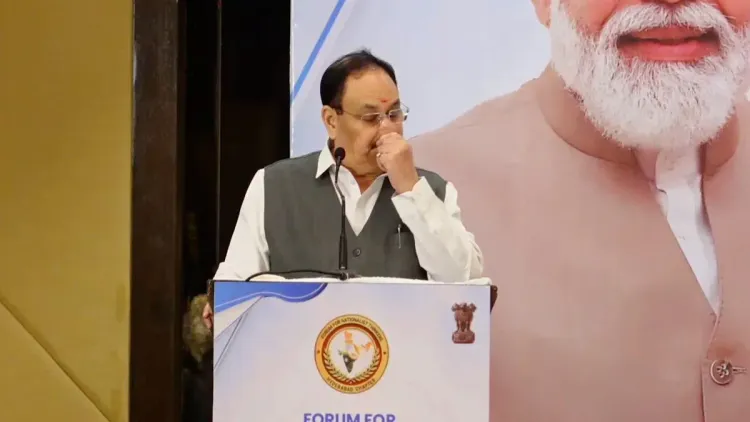
Union Health Minister J. P. Nadda on 9 July 2026 posted on X arguing that PM Modi's leadership since 2014 replaced caste politics, dynastic rule and announcement-driven governance with merit, accountability and performance-oriented delivery — framing the contrast as a paradigm shift in Indian democracy.
Key Takeaways
Union Health Minister J.
Nadda posted on 9 July 2026 contrasting pre-2014 governance with the present BJP-led model.
Nadda described pre-2014 democracy as marked by 'caste politics, dynastic rule, appeasement, corruption, and non-performance.' He credited PM Narendra Modi with making governance 'implementation-driven, accountable, deadline-oriented, and focused on performance and results.' The post invokes a 'Justice for All' principle as the BJP's stated replacement for what it characterises as selective appeasement politics.
The message aligns with BJP's decade-long electoral narrative contrasting its record with the preceding Congress-led UPA era.
State assembly elections through 2026-2027 provide the immediate political context for this kind of high-profile party communication.
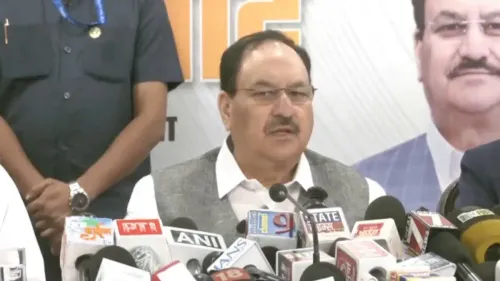
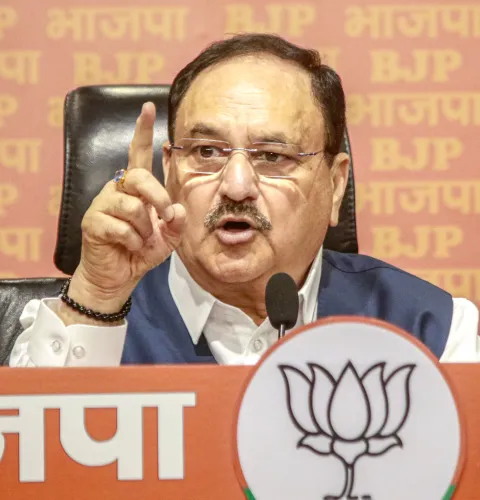
Union Health Minister J. P. Nadda on Thursday, 9 July 2026 took to X to argue that Indian democracy has undergone a fundamental transformation since 2014, crediting Prime Minister Narendra Modi with replacing what he described as dynastic, caste-driven and announcement-heavy governance with a model anchored in merit, accountability and measurable delivery.
Context
In his post, Nadda drew a sharp contrast between the political culture he associated with the pre-2014 era and the present. He wrote that before 2014, 'democracy was often associated with caste politics, dynastic rule, appeasement, corruption, and non-performance,' and that 'governance was driven more by announcements than implementation, with limited accountability.'
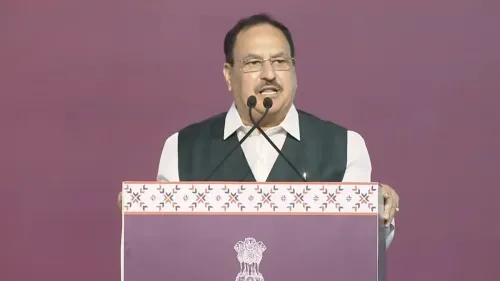
He argued that under PM Modi's leadership, 'merit has replaced dynastic politics, appeasement has given way to 'Justice for All,' and governance has become implementation-driven, accountable, deadline-oriented, and focused on performance and results.' The post accompanied a video, suggesting it may be part of a broader party communication campaign.
Policy Backdrop
The 2014 Lok Sabha elections delivered the Bharatiya Janata Party (BJP) its first outright single-party majority in three decades, ending a decade of Congress-led coalition government. The transition was subsequently framed by the ruling party as a shift from welfare promises to verifiable welfare delivery.
Flagship programmes launched after 2014 — including the Swachh Bharat Mission in 2014 and Ayushman Bharat in 2018 — were explicitly designed with time-bound targets and saturation goals, a structural departure from open-ended scheme frameworks of earlier decades. The BJP has consistently used this contrast in election campaigns, budget debates and party communications over the past decade.
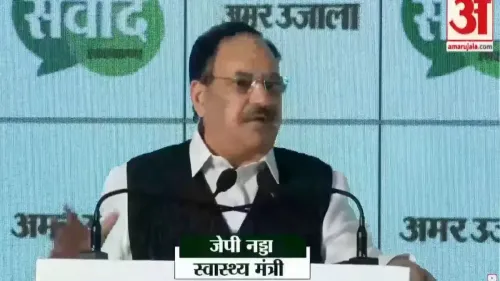
Nadda himself has served as BJP national president since 2019 (with a renewed term from 2024) and simultaneously holds the portfolios of Health and Family Welfare and Chemicals and Fertilizers, making him one of the most prominent voices in articulating the party's governance narrative.
Stakeholders and Impact
The post is directed at the broadest possible audience — Indian voters — and its language mirrors the anti-dynasty, pro-performance messaging that has anchored BJP electoral strategy since 2014. Opposition parties, particularly the Indian National Congress, are the implied target of references to dynastic rule and appeasement, though no party or leader is named directly.
Civil society observers and policy analysts note that the governance-versus-announcements framing resonates with first-time voters and aspirational middle-income households who have been the BJP's core constituency in successive electoral cycles. The video attached to the post suggests the message is calibrated for wider social-media amplification ahead of state assembly elections scheduled through 2026-2027.
What's Next
With several state assembly elections on the horizon through 2026 and 2027, the BJP's central leadership is expected to intensify its performance-versus-promises narrative. Parliamentary scrutiny of health-budget utilisation and scheme-saturation reports will provide the opposition with data points to challenge or validate the claims embedded in communications like Nadda's post.
The framing of 'Justice for All' as a successor philosophy to what the party characterises as selective appeasement is likely to remain a centrepiece of BJP messaging as the electoral calendar fills up, with senior ministers across portfolios expected to amplify similar themes in the weeks ahead.
Point of View
With a video attachment and state elections approaching, signals a deliberate ramp-up in the party's performance-versus-promises messaging cycle. The framing is shrewd: by keeping the critique structural rather than naming opponents, it avoids the optics of personal attack while landing the same political punch. Whether the opposition can counter with granular data on scheme delivery and budget utilisation will determine how much traction this narrative gains with swing voters in the coming electoral season.
NationPress
8 Oct 2026
Frequently Asked Questions
What did JP Nadda say about Indian governance before 2014?
Nadda stated that before 2014, Indian democracy was 'often associated with caste politics, dynastic rule, appeasement, corruption, and non-performance,' with governance driven more by announcements than actual implementation.
What change did JP Nadda attribute to PM Modi's leadership?
Nadda credited PM Modi with replacing dynastic politics with merit, substituting appeasement with a 'Justice for All' approach, and making governance implementation-driven, accountable, deadline-oriented and results-focused.
Why did JP Nadda post this message in July 2026?
While no specific trigger was cited in the post, the message aligns with BJP's broader political communications strategy ahead of state assembly elections scheduled through 2026-2027.
What is JP Nadda's current role in government and the BJP?
J. P. Nadda is currently Union Minister of Health and Family Welfare and Minister of Chemicals and Fertilizers, and serves as BJP national president — a position he has held since 2019 with a renewed term from 2024.
What major schemes did the Modi government launch to demonstrate implementation-driven governance?
The Swachh Bharat Mission launched in 2014 and Ayushman Bharat launched in 2018 are among the flagship programmes cited as examples of time-bound, target-driven welfare delivery under the BJP government.