Nadda Marks 12 Years of Modi's Heritage-Development Vision
Synopsis
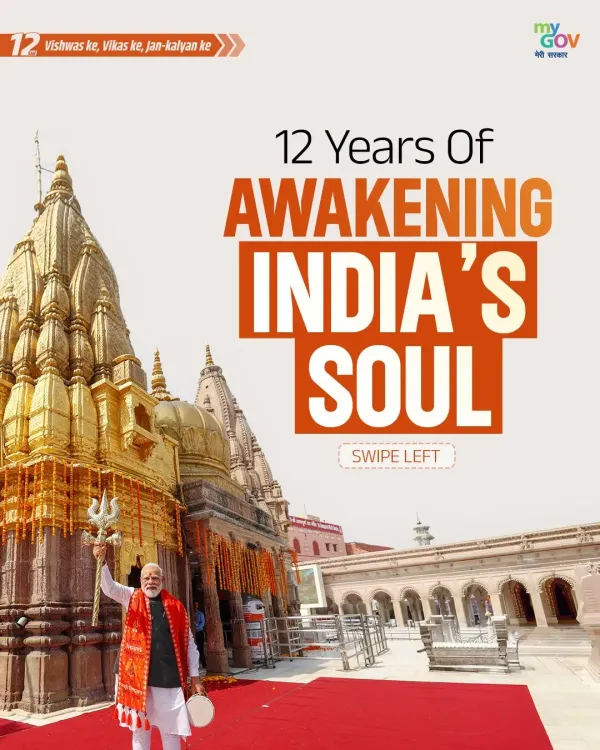
Union Health Minister J. P. Nadda marked twelve years of PM Modi's 'Virasat Bhi, Vikas Bhi' vision on June 18, 2026, citing artefact repatriation, UNESCO recognitions, and the transformation of Ayodhya, Kedarnath, and Maha Kumbh 2025 as proof that faith and development reinforce each other.
Key Takeaways
Union Health Minister J.
Nadda posted on June 18, 2026 to mark 12 years of the Modi government's 'Virasat Bhi, Vikas Bhi' heritage-development approach.
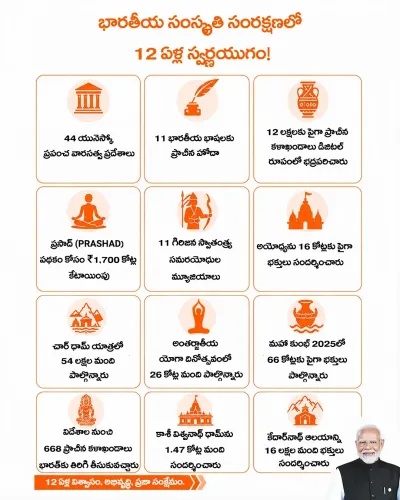
Key achievements cited include the return of stolen artefacts, preservation of Bhagwan Buddha 's sacred relics, and recognition of additional UNESCO World Heritage Sites.
The PRASAD scheme , launched in 2014–15 , has been the central policy vehicle for upgrading infrastructure at major pilgrimage sites.
Redevelopment of Ayodhya and Kedarnath , and the conduct of Maha Kumbh 2025 in Prayagraj , are highlighted as flagship examples of faith-aligned development.
The initiatives have generated economic opportunities for local communities in hospitality, transport, and handicrafts near heritage and pilgrimage sites.
Further UNESCO nominations and antiquity repatriation efforts are expected in the coming period.
Union Health Minister and BJP national president J. P. Nadda on Thursday, June 18, 2026, hailed twelve years of the central government's dual approach to culture and progress, invoking Prime Minister Narendra Modi's guiding principle of 'Virasat Bhi, Vikas Bhi' (Heritage Too, Development Too) and citing landmark achievements in heritage preservation, pilgrimage infrastructure, and spiritual tourism.
Context
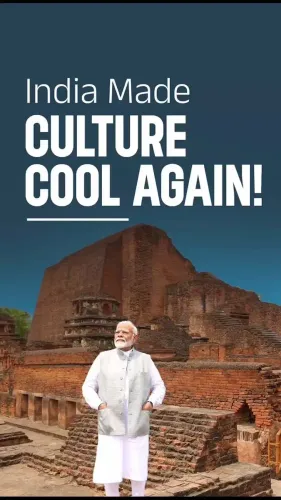
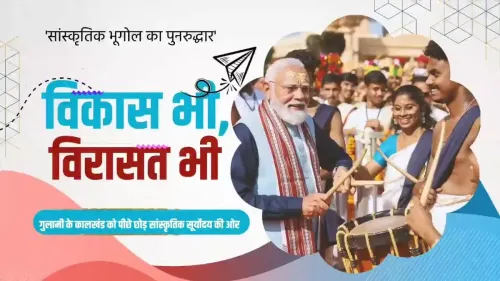
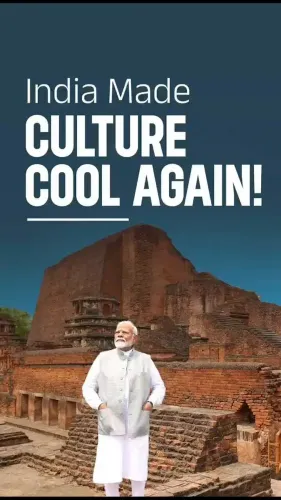
Marking the occasion under the hashtag #12YearsOfVikasBhiVirasatBhi, Nadda stated that 'India's heritage is a source of strength and inspiration for the future.' He pointed to three concrete pillars of this effort: the return of stolen artefacts to India, the preservation of the sacred relics of Bhagwan Buddha, and the recognition of additional UNESCO World Heritage Sites. The post was accompanied by four images underscoring the visual scale of the initiatives.
Nadda also highlighted the 'grand transformation of Ayodhya, redevelopment of Kedarnath, and the successful organisation of Maha Kumbh 2025' as evidence that 'faith and development go hand in hand.'
Policy Backdrop
The PRASAD scheme (Pilgrimage Rejuvenation and Spiritual Augmentation Drive), launched in 2014–15, laid the programmatic foundation for upgrading infrastructure at identified religious centres across the country. The scheme channelled central funds toward amenities for pilgrims at sites ranging from coastal temples to Himalayan shrines.
The Kedarnath reconstruction and master plan were initiated following the catastrophic 2013 floods with sustained central government support, resulting in widened pathways, new ghats, and improved lodging for pilgrims. The Ayodhya redevelopment gained momentum after the 2019 Supreme Court verdict and reached a symbolic milestone with events in 2024 surrounding the Ram Temple complex. Between 2014 and 2024, the Ministry of Culture facilitated the repatriation of multiple antiquities from foreign collections, a process Nadda referenced as a marker of renewed cultural assertiveness.
Stakeholders and Impact
The direct beneficiaries of these initiatives include tens of millions of pilgrims and devotees who visit major religious sites each year. Improved infrastructure — wider access roads, sanitation facilities, digital ticketing, and accommodation — has reduced friction for first-time and elderly visitors alike.
The hospitality, transport, and handicraft sectors in towns surrounding heritage sites have registered expanded economic activity as footfall has grown. Maha Kumbh 2025 in Prayagraj, one of the largest religious gatherings in recorded history, served as a test case for large-scale logistics management alongside faith-based programming, and is being studied for its downstream employment and revenue effects on the host region.
Nadda's post underscores that these efforts have 'strengthened the bond of millions with India's spiritual and cultural roots,' framing heritage policy as a social-cohesion instrument in addition to an economic one.
What's Next
The government is expected to pursue further UNESCO nominations for Indian sites currently on the tentative list, as well as additional rounds of antiquity repatriation negotiations with foreign museums and private collectors. Economic assessments of post-Kumbh employment and revenue generation in Prayagraj and surrounding districts are anticipated, which could inform the scale of investment in future large religious events.
As the BJP enters its thirteenth year in government at the Centre, the 'Virasat Bhi, Vikas Bhi' framework appears set to remain a defining narrative thread — one that ties civilisational pride to measurable development outcomes and positions cultural heritage as an engine of both identity and economic growth.
Point of View
And it reinforces the BJP's ownership of the 'civilisational nationalism' narrative. By linking tangible outputs — artefact returns, UNESCO listings, Kumbh logistics — to the broader 'Virasat Bhi, Vikas Bhi' slogan, the party attempts to move the heritage debate from symbolism to governance metrics. The framing is also notable for its economic register: positioning pilgrimage infrastructure as a job-creation and tourism driver addresses secular development concerns while retaining the cultural core. Whether the opposition can credibly contest this record on either the cultural or the economic dimension remains the central political question this communication implicitly poses.
NationPress
20 Sept 2026
Frequently Asked Questions
What is 'Virasat Bhi, Vikas Bhi' and who coined it?
'Virasat Bhi, Vikas Bhi' — meaning 'Heritage Too, Development Too' — is a governing philosophy articulated by Prime Minister Narendra Modi that seeks to integrate the preservation of India's cultural and spiritual heritage with large-scale infrastructure and economic development.
What is the PRASAD scheme in India?
The PRASAD scheme (Pilgrimage Rejuvenation and Spiritual Augmentation Drive) was launched in 2014–15 by the central government to develop and upgrade infrastructure — roads, sanitation, accommodation, and amenities — at identified pilgrimage and religious sites across India.
What happened at Maha Kumbh 2025?
Maha Kumbh 2025 was a large-scale Hindu religious gathering held in Prayagraj , Uttar Pradesh, combining massive logistical planning with faith-based programming. It is regarded as one of the largest human gatherings in recorded history and is being assessed for its economic impact on the host region.
How many artefacts has India recovered from abroad under the Modi government?
The Ministry of Culture facilitated the repatriation of multiple antiquities from foreign collections between 2014 and 2024 ; however, the exact number and provenance of all returned objects — particularly those repatriated after 2024 — have not been independently verified from established public records.
Why was Kedarnath redeveloped and what was done?
Kedarnath was devastated by catastrophic floods in 2013 . The central government subsequently initiated a reconstruction and master plan that included widened pilgrimage pathways, new ghats, improved lodging, and enhanced facilities for the millions of devotees who visit the Himalayan shrine each year.