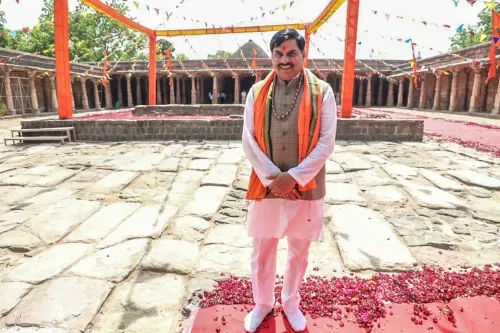
CM Mohan Yadav Hails 12 Years of Culture-Led Development
Synopsis
MP Chief Minister Dr. Mohan Yadav marked twelve years of Modi governance by highlighting temple corridor projects and artefact repatriations as proof of India's cultural renaissance, framing heritage restoration and development as twin pillars of the BJP's governing vision.
Key Takeaways
Mohan Yadav posted on June 18, 2026 praising 12 years of PM Modi's cultural and development agenda under the slogan 'Vikas bhi, Virasat bhi.' The Ram Janmabhoomi Temple in Ayodhya was inaugurated in January 2024 after a landmark 2019 Supreme Court verdict ending a 500-year dispute.
The Kashi Vishwanath Corridor in Varanasi was inaugurated in 2021 , and the Mahakal Lok corridor in Ujjain opened in October 2022 .
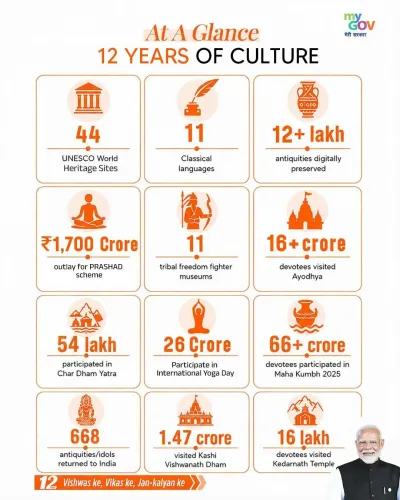
The post references the repatriation of 668 ancient artefacts to India as part of the government's heritage-restoration drive.
Yadav became Chief Minister of Madhya Pradesh in December 2023 and has continued the state's focus on religious and cultural tourism.
The BJP's messaging frames cultural revival and infrastructure development as complementary, not competing, national priorities.
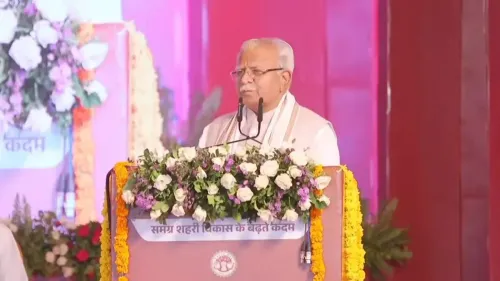
Madhya Pradesh Chief Minister Dr. Mohan Yadav on Thursday, June 18, 2026, credited Prime Minister Narendra Modi's twelve years in office with sparking a civilisational renaissance in India, citing landmark temple corridor projects and the repatriation of ancient artefacts as proof that development and heritage can advance together.
Context
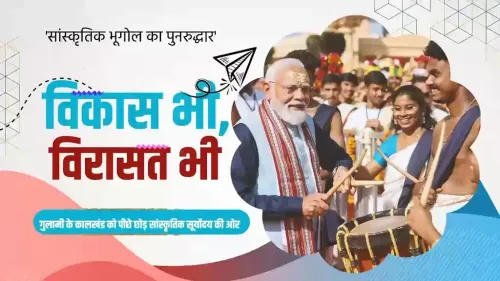
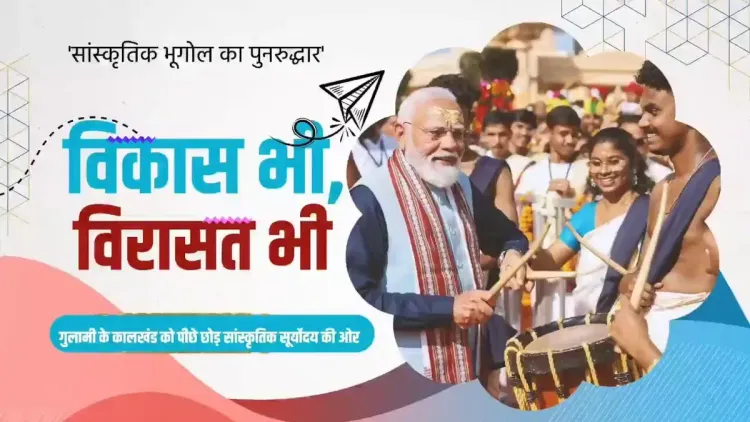
Posting under the hashtag #12YearsOfVikasBhiVirasatBhi ('Development too, Heritage too'), Dr. Yadav wrote that India has 'restored its civilisational identity and written a new chapter of cultural renaissance' under Modi's 'visionary leadership.' The phrase 'Vikas bhi, Virasat bhi' — 'Development as well as Heritage' — has become a recurring BJP formulation to describe a governing philosophy that frames religious and cultural restoration as inseparable from economic progress.
The post comes as the BJP marks what it describes as twelve years of Modi-led governance, with party leaders across states amplifying a coordinated messaging campaign around cultural achievements.
Policy Backdrop
Dr. Yadav's post highlights four flagship projects as emblems of this agenda. The Ram Janmabhoomi Temple in Ayodhya was inaugurated in January 2024 following a 2019 Supreme Court verdict that ended a centuries-long legal dispute; the foundation ceremony was conducted by PM Modi in August 2020. The Kashi Vishwanath Corridor in Varanasi, which links the ancient temple to the ghats through a redeveloped precinct, was inaugurated in 2021 after work began in 2018.
Closer to Dr. Yadav's home state, the Mahakal Lok corridor in Ujjain — built around the Mahakaleshwar Temple — was opened in October 2022 as a joint effort between the Madhya Pradesh government and the Centre. The post also references the return of 668 ancient artefacts to India; the broader repatriation drive has seen the central government negotiate the return of antiquities from museums and private collections abroad, though the precise cumulative figure cited in the post could not be independently verified from available records.
Stakeholders and Impact
The corridors at Ayodhya, Varanasi, and Ujjain have significantly expanded pilgrim infrastructure, drawing millions of visitors annually and generating employment in hospitality, retail, and transport in surrounding districts. Heritage tourism has emerged as a stated priority for BJP-governed states, with state archaeology departments and the Archaeological Survey of India playing central roles in restoration and site management.
For Madhya Pradesh in particular, the Mahakal Lok project has boosted Ujjain's profile as a pilgrimage and tourism destination. Dr. Yadav, who assumed office in December 2023, has continued to position the state's religious sites — including Omkareshwar and the Orchha heritage zone — as anchors of a broader cultural-tourism economy.
What's Next
The BJP's coordinated anniversary messaging signals that cultural heritage will remain a central electoral and governance theme in the run-up to upcoming state cycles. Further corridor projects at prominent religious sites in BJP-ruled states are expected to be announced, and additional artefact repatriation agreements with foreign institutions remain a stated diplomatic objective of the central government.
As India positions its civilisational legacy as both a soft-power asset and a domestic development driver, the 'Vikas bhi, Virasat bhi' framework is likely to deepen — with state governments like Madhya Pradesh serving as key implementation partners for a model that blends temple tourism with large-scale infrastructure investment.
Point of View
Virasat bhi' as a durable governing brand — one that repositions religious infrastructure spending not as sectarian politics but as mainstream development policy. By anchoring the narrative in concrete, visible projects like the Ram Temple and Mahakal Lok, the party aims to translate cultural sentiment into tangible governance credentials ahead of future electoral cycles. For Madhya Pradesh, where religious tourism is an economic pillar, this messaging also serves a local purpose: validating the state's own corridor investments as part of a nationally coherent vision. The broader arc points to a sustained BJP strategy of using heritage diplomacy — from temple corridors to artefact repatriation — as both soft power and domestic political capital.
NationPress
20 Sept 2026
Frequently Asked Questions
What is 'Vikas bhi, Virasat bhi' and what does it mean?
'Vikas bhi, Virasat bhi' is a Hindi phrase meaning 'Development too, Heritage too.' It is a BJP slogan describing a governing philosophy that presents cultural and religious heritage restoration as integral to India's overall development, not separate from it.
When was the Ram Janmabhoomi Temple in Ayodhya inaugurated?
The Ram Janmabhoomi Temple in Ayodhya was inaugurated in January 2024. The foundation ceremony was conducted by PM Narendra Modi in August 2020, following the Supreme Court's verdict in November 2019 that cleared the way for its construction.
What is Mahakal Lok and where is it located?
Mahakal Lok is a large corridor and pilgrim precinct built around the Mahakaleshwar Temple in Ujjain, Madhya Pradesh. It was inaugurated in October 2022 as part of a joint project between the Madhya Pradesh government and the central government.
How many artefacts has India repatriated under PM Modi's government?
MP CM Dr. Mohan Yadav's post cites the return of 668 ancient artefacts to India. The central government has pursued repatriation agreements with foreign museums and collections as part of its heritage policy, though the precise cumulative figure is difficult to independently verify.
Who is Dr. Mohan Yadav and when did he become Chief Minister of Madhya Pradesh?
Dr. Mohan Yadav is a BJP leader who became Chief Minister of Madhya Pradesh in December 2023. He has continued the state's emphasis on religious tourism and heritage infrastructure, including projects connected to the Mahakaleshwar Temple in Ujjain.