Gadkari Hails Modi's 'Virasat Bhi Vikas Bhi' at 12-Year Mark
Synopsis
Union Minister Nitin Gadkari marked 12 years of PM Modi's 'Virasat Bhi Vikas Bhi' vision on 18 June 2026, citing Ayodhya, Kedarnath, Buddhist relics, and UNESCO gains as proof that India's heritage revival and economic development are now inseparable policy goals.
Key Takeaways
Union Minister Nitin Gadkari posted on 18 June 2026 marking 12 years of the Virasat Bhi Vikas Bhi initiative under PM Narendra Modi .
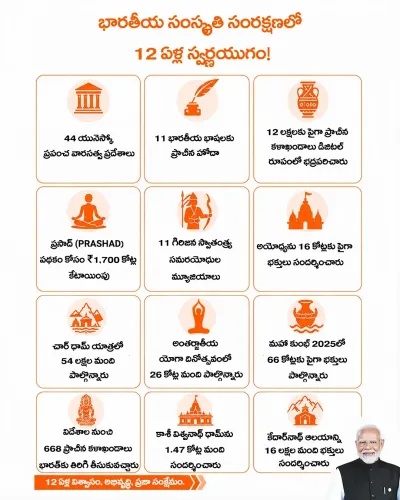
The post cited revival of Ayodhya and Kedarnath , repatriation of stolen artefacts, safeguarding of Buddha relics , and expanded UNESCO recognition as key achievements.
The PRASAD scheme , launched in 2014-15 , underpins government investment in pilgrimage and heritage infrastructure across India.
Reconstruction of Kedarnath township began after the 2013 floods ; the Ayodhya Ram Temple project followed the 2019 Supreme Court verdict .
India has pursued artefact repatriation from the United States , United Kingdom , and other countries since 2014 .
Pending UNESCO nominations and tourism-employment data from heritage corridors will serve as measurable benchmarks for the policy's impact.
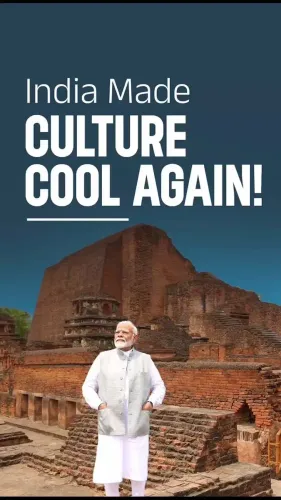
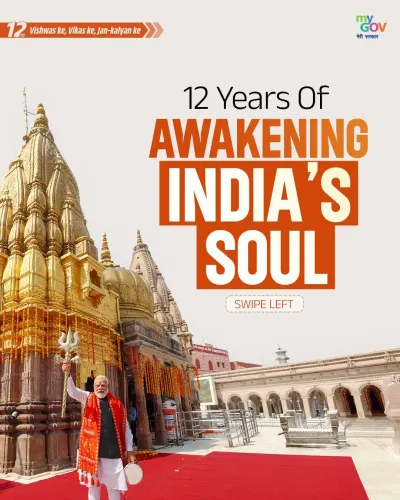
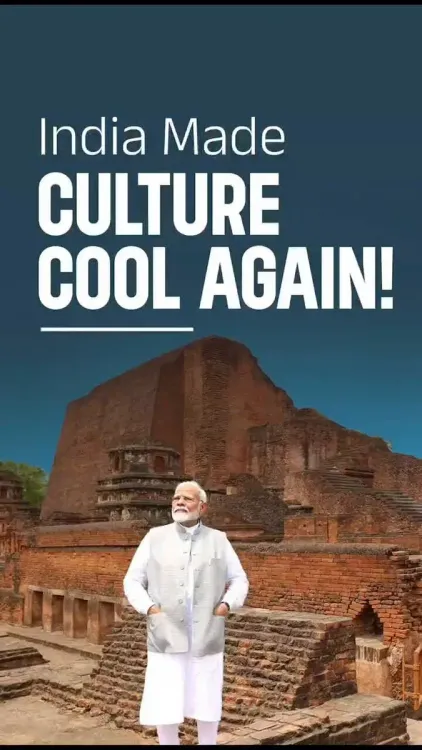
Union Road Transport and Highways Minister Nitin Gadkari on Thursday, 18 June 2026, invoked Prime Minister Narendra Modi's cultural-development philosophy, saying the #VirasatBhiVikasBhi vision has 'redefined India's growth story' by treating heritage not as a relic to be silenced but as a living force to be celebrated. The post, marking 12 years of the initiative, cited the revival of Ayodhya, Kedarnath, Buddhist relics, and expanded UNESCO recognition as evidence of a civilisational reset under the current government.
Context
Gadkari's post arrives as the ruling Bharatiya Janata Party marks over a decade of the Modi government's cultural and infrastructure agenda. The hashtag #12YearsOfVikasBhiVirasatBhi signals a coordinated party-wide communication exercise, with senior leaders across ministries amplifying the government's record on heritage and development simultaneously. Gadkari, a senior BJP leader and former national president of the party, carries particular weight in such messaging given his long organisational history.
The phrase 'faith, culture, and development now move together' encapsulates the government's stated position that religious and historical sites are engines of employment and tourism, not merely objects of reverence. The minister underlined that 'India's civilisational pride is being restored with purpose.'
Policy Backdrop
The policy lineage stretches to 2014-15, when the PRASAD scheme (Pilgrimage Rejuvenation and Spiritual Augmentation Drive) was launched to upgrade infrastructure at major pilgrimage centres. Reconstruction of the Kedarnath temple township — devastated in the 2013 Uttarakhand floods — became an early flagship project, combining spiritual restoration with road and accommodation infrastructure.
The 2019 Supreme Court verdict on the Ayodhya title dispute cleared the path for construction of the Ram Temple and an associated urban redevelopment programme, which the government has since positioned as a model for heritage-led economic growth. Separately, India stepped up artefact repatriation negotiations with the United States, the United Kingdom, and other countries from 2014 onward, recovering stolen antiquities and returning them to museums and temples.
On the international stage, the government has actively pursued additional UNESCO World Heritage inscriptions, seeking to raise India's profile in global cultural diplomacy alongside bilateral Buddhist-relic exchanges with neighbouring countries.
Stakeholders and Impact
The primary beneficiaries of the Virasat Bhi Vikas Bhi approach are pilgrims and domestic tourists, local communities near heritage sites, and craftspeople and hospitality workers whose livelihoods depend on footfall at religious destinations. Heritage conservation experts have noted that the coupling of spiritual tourism with modern infrastructure can expand access but also raises questions about the pace and scale of construction near sensitive archaeological zones.
For the broader electorate, the messaging serves to consolidate the government's identity as a custodian of India's civilisational continuity — a theme that has featured prominently in successive election campaigns. The emphasis on 'strengthening identity, creating livelihoods, and shaping a future rooted deeply in our timeless past' frames cultural policy as inseparable from economic aspiration.
What's Next
Attention will now turn to the outcomes of pending UNESCO nominations and to official tourism and employment data from completed projects in Ayodhya and Kedarnath, which will provide measurable benchmarks for the government's claims. As the BJP's communication machine continues its 12-year retrospective, ministers across portfolios are expected to link their sectoral achievements to the overarching Virasat Bhi Vikas Bhi narrative in the weeks ahead. Whether the data from heritage-tourism corridors substantiates the livelihood promises will shape how the policy is assessed beyond the political messaging cycle.
Point of View
Designed to consolidate the party's cultural-nationalist credentials ahead of future electoral cycles. By tying together disparate achievements — temple reconstruction, artefact diplomacy, UNESCO listings — under a single hashtag, the messaging attempts to present a coherent civilisational arc rather than a list of discrete projects. The 'Virasat Bhi Vikas Bhi' frame is politically significant because it pre-empts the critique that religious focus comes at the cost of development, instead asserting their equivalence. Whether opposition parties contest the data behind these claims or cede the cultural terrain entirely will be a telling indicator of the broader political conversation in the months ahead.
NationPress
20 Sept 2026
Frequently Asked Questions
What is 'Virasat Bhi Vikas Bhi'?
'Virasat Bhi Vikas Bhi' is the Modi government's policy philosophy asserting that heritage preservation and economic development are complementary goals, pursued simultaneously through projects like the Kedarnath reconstruction, Ayodhya development, and the PRASAD pilgrimage-infrastructure scheme launched in 2014-15.
Why is Nitin Gadkari posting about culture when he is the Road Transport Minister?
As a senior BJP leader and former national president of the party, Gadkari participates in coordinated party-wide communication campaigns. The 12-year anniversary of the Modi government's cultural agenda prompted senior ministers across portfolios to amplify the 'Virasat Bhi Vikas Bhi' messaging on social media.
What is the PRASAD scheme?
PRASAD — Pilgrimage Rejuvenation and Spiritual Augmentation Drive — is a central government scheme launched in 2014-15 to develop roads, accommodation, sanitation, and visitor infrastructure at major religious and pilgrimage sites across India.
How has India reclaimed stolen artefacts under the Modi government?
India stepped up bilateral repatriation negotiations with the United States, United Kingdom, and other countries from 2014 onward, securing the return of antiquities that had been illegally exported. These recovered artefacts have been returned to museums and temples as part of the broader cultural diplomacy agenda.
What is the significance of Kedarnath and Ayodhya in this policy?
Kedarnath in Uttarakhand was rebuilt after devastating 2013 floods, with the central government funding temple and township infrastructure as a model of heritage-linked development. Ayodhya in Uttar Pradesh became a major redevelopment project following the 2019 Supreme Court verdict that enabled Ram Temple construction, and is now cited as a flagship example of faith-driven economic growth.