Shekhawat Marks 12 Years of Vikas Bhi Virasat Bhi
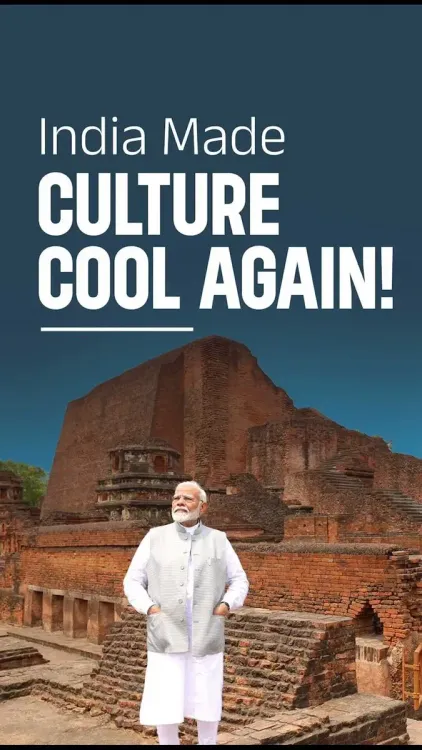
Synopsis
Union Culture and Tourism Minister Gajendra Singh Shekhawat marked twelve years of the NDA government's Vikas Bhi Virasat Bhi policy on 18 June 2026, crediting PM Modi with giving India's culture, heritage, and traditions a renewed national identity.
Key Takeaways
Union Culture and Tourism Minister Gajendra Singh Shekhawat posted on X on 18 June 2026 under #12YearsOfVikasBhiVirasatBhi .
He credited PM Narendra Modi with giving India's culture, heritage, and traditions a new identity over the past twelve years.
The Vikas Bhi Virasat Bhi slogan frames cultural preservation as inseparable from economic development — a core NDA policy position since 2014 .
Key institutional pillars include the Swadesh Darshan and PRASAD schemes, both launched in 2014-15 , covering heritage circuits and pilgrimage infrastructure.
Upcoming Union Budget 2026-27 allocations for the Ministry of Culture will indicate how the government plans to build on this twelve-year record.
Union Culture and Tourism Minister Gajendra Singh Shekhawat on Thursday, 18 June 2026 hailed twelve years of the NDA government's cultural policy, asserting that under Prime Minister Narendra Modi, India has given its civilisation, heritage, and traditions a renewed identity.
Posting on X under the hashtag #12YearsOfVikasBhiVirasatBhi, Shekhawat wrote: 'प्रधानमंत्री श्री @narendramodi जी के नेतृत्व में भारत ने अपनी संस्कृति, विरासत और परंपराओं को नई पहचान दिलाई है' — 'Under the leadership of Prime Minister Shri Narendra Modi, India has given a new identity to its culture, heritage, and traditions.' He added: 'This is the new India — an India proud of its heritage, an India connected to faith.'
Context
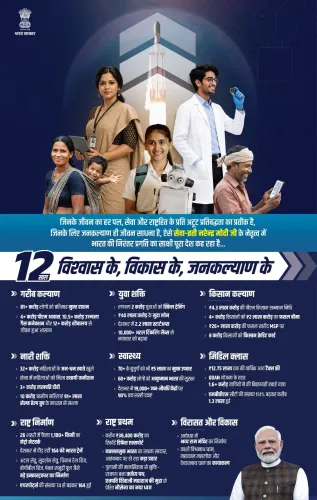
The hashtag Vikas Bhi Virasat Bhi — meaning 'Development as well as Heritage' — has served as a defining campaign slogan for the NDA government since 2014, framing cultural preservation not as separate from economic progress but as integral to it. The phrase encapsulates a dual mandate that the ruling coalition has consistently invoked across elections and policy announcements.
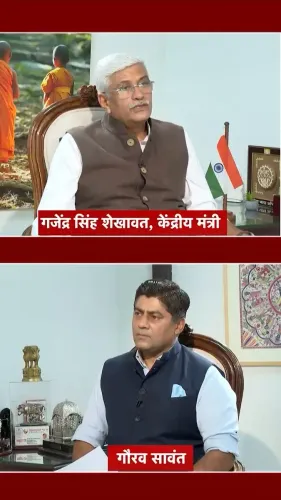
Shekhawat's post, accompanied by a video, marks what the government counts as the twelfth year of this approach — a milestone that the Ministry of Culture and Tourism is using to spotlight the arc of heritage-linked governance since May 2014.
Policy Backdrop
The Swadesh Darshan scheme, launched in 2014-15, created theme-based tourist circuits — including heritage and spiritual routes — aimed at integrating cultural sites into mainstream tourism infrastructure. In parallel, the PRASAD scheme (Pilgrimage Rejuvenation and Spiritual Augmentation Drive), also launched in 2014-15, channelled central funds into infrastructure upgrades at identified pilgrimage destinations across the country.
Together, these two flagship programmes form the institutional backbone of what the government describes as its virasat (heritage) agenda. Both schemes have seen successive budget allocations and expanded lists of beneficiary sites over the past decade, touching destinations from Varanasi and Amritsar to Kedarnath and Dwarka.
Stakeholders and Impact
Domestic tourists and pilgrims are the primary beneficiaries of the policy architecture Shekhawat's post celebrates. Improved connectivity, sanitation, and visitor facilities at heritage and pilgrimage sites have drawn higher footfall to locations that were previously under-served by tourism infrastructure.
For Rajasthan — Shekhawat's home state and one of India's richest repositories of forts, temples, and intangible cultural traditions — the convergence of cultural pride and tourism investment carries particular economic resonance. The state's artisans, hoteliers, and guide communities are directly tied to the health of heritage tourism circuits.
What's Next
Attention now turns to the Union Budget 2026-27, where allocations for the Ministry of Culture and any new project announcements under PRASAD or Swadesh Darshan will signal how ambitiously the government intends to build on the twelve-year record it is now publicly marking. Any expansion of the beneficiary-site lists or fresh funding tranches will be closely watched by state governments and the tourism industry alike.
The twelve-year milestone also sets a political baseline: as the NDA enters what it frames as a consolidation phase, the Vikas Bhi Virasat Bhi narrative is likely to feature prominently in both policy communication and electoral messaging in the months ahead.
Point of View
Using a twelve-year anniversary to anchor the BJP's cultural governance record ahead of what is likely to be a budget and electoral communication cycle. The Vikas Bhi Virasat Bhi framing is significant because it pre-empts the critique that heritage focus comes at the expense of development — it insists both are the same project. By invoking 'faith' and 'pride in heritage' explicitly, the minister is reinforcing an identity-politics dimension that has been central to the NDA's cultural policy since 2014. The post signals that civilisational pride will remain a front-line political asset, not merely a ministerial talking point.
NationPress
21 Sept 2026
Frequently Asked Questions
What is Vikas Bhi Virasat Bhi?
'Vikas Bhi Virasat Bhi' is an NDA government campaign slogan meaning 'Development as well as Heritage,' used since 2014 to frame cultural preservation and economic progress as complementary goals.
What did Gajendra Singh Shekhawat post on 18 June 2026?
Shekhawat posted on X marking twelve years of the NDA government's cultural heritage policy, crediting PM Modi with giving India's culture, heritage, and traditions a renewed national identity.
What are the Swadesh Darshan and PRASAD schemes?
Both launched in 2014-15, Swadesh Darshan creates theme-based tourist circuits including heritage and spiritual routes, while PRASAD funds infrastructure upgrades at pilgrimage destinations across India.
Who is Gajendra Singh Shekhawat?
Gajendra Singh Shekhawat is the Union Minister of Culture and Tourism, a senior BJP leader and Lok Sabha MP from Jodhpur, Rajasthan.
What should we watch for next in India's cultural heritage policy?
Union Budget 2026-27 allocations for the Ministry of Culture and any new project announcements under the PRASAD or Swadesh Darshan schemes will be the key signals to watch.