Shekhawat Hails Modi's 12 Years for Restoring Indian Cultural Pride
Synopsis
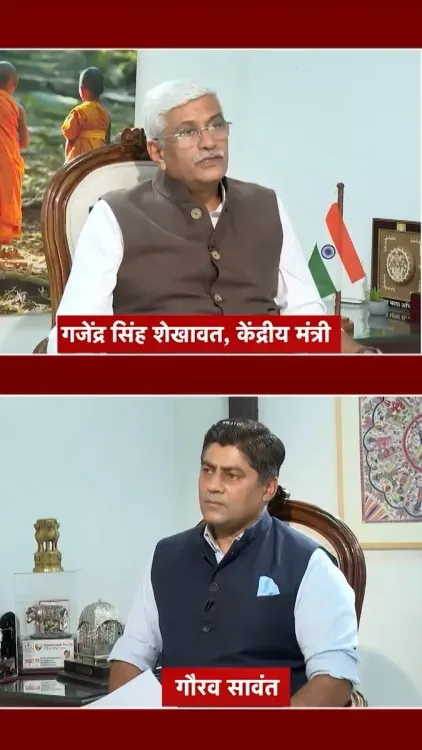
Union Culture Minister Gajendra Singh Shekhawat, marking the BJP's #12YearsOfSeva campaign, credited PM Narendra Modi's 'self-respecting vision' with reversing what he called a deliberate, historical erosion of pride in Indian identity, framing the restoration as unprecedented and permanent.
Key Takeaways
Union Culture and Tourism Minister Gajendra Singh Shekhawat posted on June 14, 2026 under #12YearsOfSeva , marking twelve years of the Modi government.
He stated that pride in Indian identity was 'systematically fragmented' before 2014 and is now being 'empowered in an unprecedented and permanent manner.' The post tags @PMOIndia and @MinOfCultureGoI , giving it an institutional character beyond a personal opinion.
Key government programmes underpinning this narrative include Ek Bharat Shreshtha Bharat and the National Education Policy 2020 , which integrated Indian knowledge systems into curricula.
The claim of prior 'systematic fragmentation' reflects the BJP's political framing and is not drawn from official government records.
Future Culture Ministry budget allocations and heritage development announcements will be the concrete test of the policy direction Shekhawat is articulating.
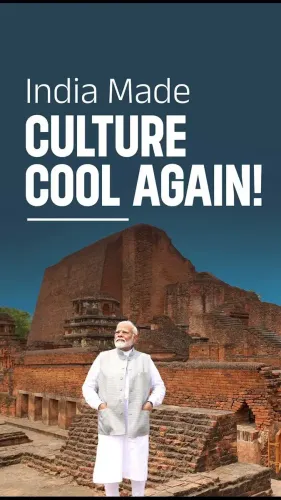
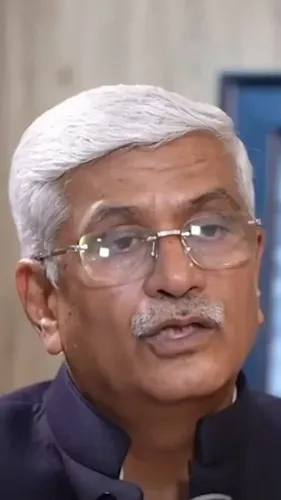
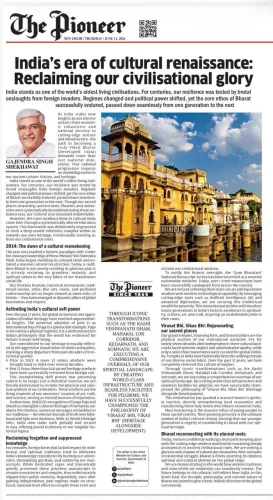
Union Culture and Tourism Minister Gajendra Singh Shekhawat on Sunday, June 14, 2026, credited Prime Minister Narendra Modi's twelve years in office with decisively reversing what he described as a long-running, deliberate erosion of pride in Indian identity, calling the restoration both unprecedented in scale and permanent in character.
Posting on X under the hashtag #12YearsOfSeva, Shekhawat wrote in Hindi: 'पहले भारतीयता पर गर्व के भाव को सुनियोजित तरीके से खंडित किया गया था' ('Earlier, the sense of pride in Indianness was systematically fragmented'), adding that under Modi's 'self-respecting vision' (स्वाभिमानी सोच), it is now being 'empowered in an unprecedented and permanent manner.'
Context
The post marks the BJP's ongoing celebration of twelve years since Narendra Modi assumed office as Prime Minister in May 2014. The #12YearsOfSeva campaign has seen ministers and party functionaries across portfolios highlighting what they frame as a transformative shift in governance philosophy. Shekhawat's contribution focuses squarely on the cultural dimension — the idea that Indian civilisational identity had been marginalised before 2014 and is now being actively restored.
As the minister overseeing both the Ministry of Culture and Ministry of Tourism, Shekhawat is a key voice in articulating the government's heritage agenda. His post tags both @PMOIndia and @MinOfCultureGoI, signalling institutional alignment rather than a purely personal statement.
Policy Backdrop
Since 2014, the Union government has rolled out a series of programmes aimed at embedding Indian cultural identity into public life and policy. The Ek Bharat Shreshtha Bharat initiative was designed to foster cultural exchange and linkages across states, while the National Education Policy 2020 introduced provisions for integrating Indian knowledge systems and classical heritage into school and university curricula.
The Ministry of Culture has also overseen significant investments in the restoration of heritage sites, the promotion of classical languages, and the digitisation of archival material. These efforts form the policy backbone that Shekhawat's statement implicitly references when he speaks of 'unprecedented empowerment' of Indian identity.
Stakeholders and Impact
The message is directed at a broad public audience, but its resonance is felt most immediately within cultural institutions, heritage bodies, and the BJP's core constituency that views civilisational pride as a central political value. Educators, museum administrators, and practitioners of classical arts stand to be directly affected by the policy direction the minister is championing.
Critics of this framing have argued that attributing a 'systematic fragmentation' of Indian identity to earlier governments is a partisan reading of history rather than a neutral policy assessment — a distinction the research underpinning this report flags as important. Shekhawat's post reflects the BJP's established political narrative; it does not constitute an official government finding.
What's Next
Observers of cultural policy will watch the Union Budget for the next fiscal cycle and any announcements in the upcoming parliamentary session for concrete allocations to heritage development, classical language promotion, and tourism infrastructure. The #12YearsOfSeva campaign is also expected to continue generating policy-linked messaging from ministers across portfolios in the weeks ahead.
Shekhawat's statement sets a tone: the government intends to keep cultural self-assertion at the centre of its public communication as it consolidates its third consecutive term in office.
Point of View
This kind of high-visibility messaging serves a dual purpose: it energises the party base while also signalling to cultural institutions and classical arts bodies that heritage promotion remains a political priority. The broader arc points toward continued, and likely deepening, integration of cultural identity politics into mainstream governance communication as the Modi government enters its fourth decade of office.
NationPress
15 Sept 2026
Frequently Asked Questions
What did Gajendra Singh Shekhawat say about Indian culture under Modi?
Shekhawat said that pride in Indian identity, which he claimed was 'systematically fragmented' before 2014, is now being empowered in an 'unprecedented and permanent manner' under PM Modi's leadership.
What is the #12YearsOfSeva campaign?
#12YearsOfSeva is a BJP-led campaign marking twelve years since Narendra Modi assumed office as Prime Minister in May 2014, with ministers and party leaders highlighting achievements across portfolios.
What cultural programmes has the Modi government launched since 2014?
Key programmes include Ek Bharat Shreshtha Bharat, which fosters cultural linkages across states, and the National Education Policy 2020, which integrated Indian knowledge systems and heritage education into curricula.
Who is Gajendra Singh Shekhawat?
Gajendra Singh Shekhawat is the Union Minister of Culture and Tourism, a senior BJP leader, and a Lok Sabha MP representing the Jodhpur constituency in Rajasthan.
What should we watch for next from the Culture Ministry?
Key indicators will be Culture Ministry budget allocations in the next Union Budget and any new heritage development or classical language promotion projects announced in the upcoming parliamentary session.