Shekhawat Hails 12 Years of Modi Rule, Writes on Cultural Renaissance
Synopsis
Union Culture and Tourism Minister Gajendra Singh Shekhawat marked 12 years of the Modi government on June 12, 2026, by sharing an article on India's cultural renaissance, arguing that New India's journey encompasses civilisational rediscovery alongside development and progress.
Key Takeaways
Union Culture and Tourism Minister Gajendra Singh Shekhawat published an article on June 12, 2026 , marking 12 years of the Modi government and India's cultural revival.
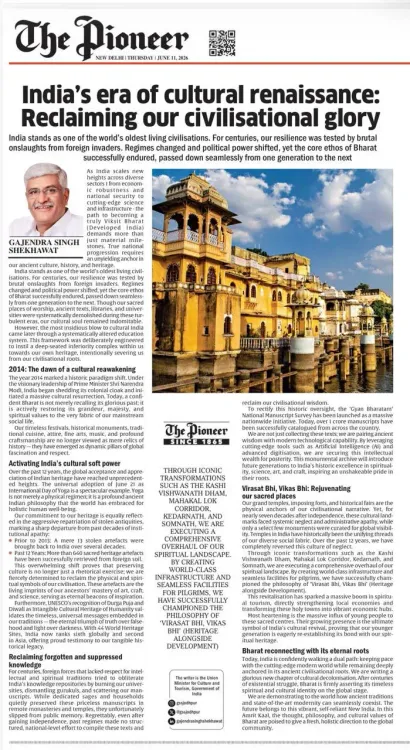
The article, titled 'India's era of cultural renaissance: Reclaiming our civilizational glory' , frames New India's journey as one of civilisational rediscovery alongside economic development.
The Swadesh Darshan scheme (launched 2015 ) and PRASAD scheme (launched 2014-15 ) are central policy instruments linking heritage tourism to the cultural revival agenda.
The Kashi Vishwanath Corridor ( Varanasi , inaugurated 2021 ) and the International Day of Yoga (UN resolution, 2014 ) exemplify the government's domestic and international cultural outreach.
The National Education Policy 2020 embedded Indian Knowledge Systems into curricula, extending the cultural agenda beyond tourism into education.
Next Union Budget 2026-27 allocations to the Ministry of Culture and Tourism will be a key indicator of the government's continued commitment to heritage and cultural infrastructure.
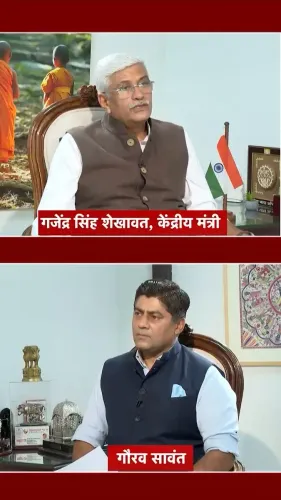
Union Culture and Tourism Minister Gajendra Singh Shekhawat on Friday, June 12, 2026, shared an article he authored on India's cultural revival, marking 12 years of the Narendra Modi government and framing the period as one of civilisational rediscovery alongside economic progress.
Context
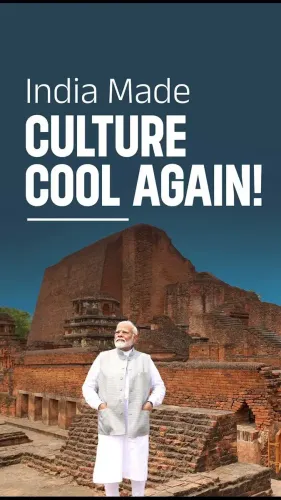
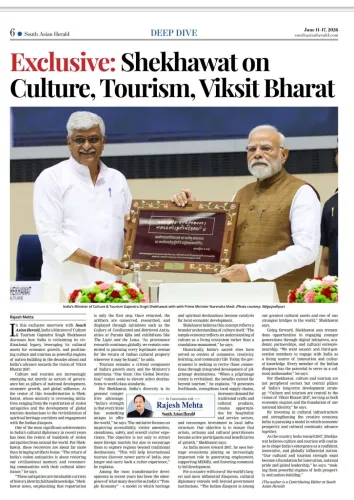
Shekhawat announced the publication of his article titled 'India's era of cultural renaissance: Reclaiming our civilizational glory' ['भारत की सांस्कृतिक पुनर्जागरण की यात्रा'] to mark the anniversary of the Modi government, which completed 12 years in office in May-June 2026. In the post, he wrote that 'the journey of New India is not only about development and progress, but also about rediscovering our civilisational confidence and cultural heritage.' The piece was published in The Pioneer, a national English-language daily.
The minister's commentary arrives as the BJP and its allied organisations have been marking the anniversary with a series of events, publications, and social media campaigns under the hashtag #12YearsOfModiGovernment, linking infrastructure milestones to a broader cultural and civilisational narrative.
Policy Backdrop
Since 2014, the central government has systematically embedded cultural heritage into its development agenda. The Swadesh Darshan scheme, launched in 2015, funds theme-based tourist circuits — including Buddhist, Krishna, and Ramayana circuits — connecting heritage sites across states. The PRASAD scheme (Pilgrimage Rejuvenation and Spiritual Augmentation Drive), initiated in 2014-15, has channelled central funds into upgrading infrastructure at major pilgrimage and heritage destinations.
The Kashi Vishwanath Corridor, inaugurated in 2021 in Varanasi, Uttar Pradesh, became a flagship symbol of this approach — pairing urban infrastructure with the restoration of a prominent religious and cultural site. Internationally, the establishment of the International Day of Yoga through a UN resolution in 2014 following an Indian proposal has been positioned as a cultural diplomacy initiative projecting India's civilisational heritage abroad.
The National Education Policy 2020 further institutionalised this direction by introducing Indian Knowledge Systems and a stronger emphasis on cultural heritage into school and higher education curricula, signalling a policy intent that extends beyond tourism and into identity formation.
Stakeholders and Impact
The cultural revival narrative directly affects heritage tourists, pilgrimage visitors, state archaeology departments, and cultural organisations that depend on central funding and policy attention for site conservation and promotion. Increased allocations to the Ministry of Culture and Tourism in successive Union Budgets have translated into new circuit developments and restoration projects across states.
For Rajasthan — Shekhawat's home state and a major heritage tourism destination — the minister's prominence in this portfolio carries particular significance, with the state hosting several sites under both the Swadesh Darshan and PRASAD frameworks. Broader soft-power goals, including positioning India as a global cultural destination under the Viksit Bharat vision, are also tied to the ministry's work.
What's Next
Attention will now turn to the Union Budget 2026-27 and whether allocations to the Ministry of Culture and Tourism reflect an expanded push on heritage circuits and civilisational tourism. New state-level MoUs and heritage-circuit announcements are expected through the year as the government looks to translate its cultural narrative into measurable tourism and conservation outcomes. Shekhawat's article adds to a growing body of ministerial commentary that frames India's development trajectory in explicitly civilisational terms — a rhetorical register likely to intensify as the government approaches the next electoral cycle.
Point of View
A strategy that serves both a domestic audience seeking identity affirmation and an international audience being courted through soft power. The minister's use of phrases like 'civilisational confidence' mirrors language deployed at the highest levels of the government since 2014, suggesting a coordinated communication exercise rather than an isolated op-ed. For the Culture and Tourism portfolio specifically, such moments double as advocacy for budget allocations, signalling to planners that the ministry's work carries political weight beyond routine heritage administration. The broader pattern points to an increasingly institutionalised fusion of development discourse and cultural nationalism that is likely to deepen as the government approaches its next mandate.
NationPress
19 Sept 2026
Frequently Asked Questions
What did Gajendra Singh Shekhawat write about India's cultural renaissance?
Shekhawat authored an article titled 'India's era of cultural renaissance: Reclaiming our civilizational glory,' arguing that New India's journey under PM Narendra Modi is about rediscovering civilisational confidence and cultural heritage alongside development and economic progress.
Why is the Modi government marking 12 years in 2026?
The Narendra Modi government first came to power in May 2014 , making 2026 the 12th anniversary of its governance. The BJP and its ministers have been marking the occasion with events, publications, and campaigns under #12YearsOfModiGovernment .
What are the Swadesh Darshan and PRASAD schemes?
Swadesh Darshan is a central scheme launched in 2015 to develop theme-based tourist circuits — such as Buddhist, Krishna, and Ramayana circuits — across India. PRASAD (Pilgrimage Rejuvenation and Spiritual Augmentation Drive), launched in 2014-15 , funds infrastructure upgrades at major pilgrimage and heritage sites.
What is Gajendra Singh Shekhawat's role in the Modi government?
Gajendra Singh Shekhawat is the Union Minister of Culture and Tourism and a senior BJP leader. He is a Lok Sabha MP from Jodhpur, Rajasthan , and oversees heritage preservation and tourism development at the national level.
How has India used culture as soft power under Modi?
India has used initiatives such as the International Day of Yoga — established via a UN resolution in 2014 — the Kashi Vishwanath Corridor inauguration in 2021 , and the National Education Policy 2020 's emphasis on Indian Knowledge Systems to project civilisational heritage both domestically and internationally.