Kishan Reddy shares Amit Shah's 'Detect. Delete. Deport.' line on infiltrators
Synopsis
Union Coal and Mines Minister G. Kishan Reddy amplified Home Minister Amit Shah's 'Detect. Delete. Deport.' formulation on infiltrators, framing it as PM Modi's core security doctrine — a message that lands ahead of the Parliament winter session.
Key Takeaways
Kishan Reddy shared Amit Shah's quote on 5 November 2026 describing PM Modi's infiltrator policy as 'Detect.
Deport.' The formulation signals a three-step government doctrine: identify illegal infiltrators, remove their records, and physically deport them.
Amit Shah has led internal-security policy since 2019 , overseeing the Assam NRC exercise and the passage of the Citizenship Amendment Act .
Border fencing along the India-Bangladesh frontier and state-level drives in Assam and northeastern states have been operational pillars of this framework since 2014 .
The winter session of Parliament is expected to see opposition questions on deportation statistics and border infrastructure progress.
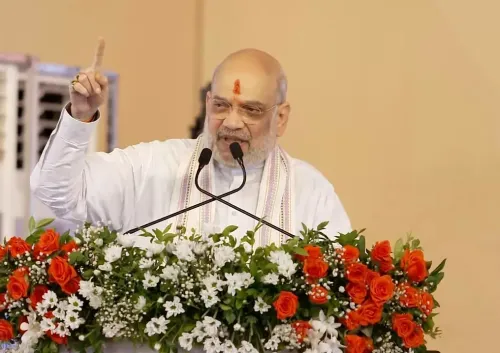
Three words. That is how Union Home Minister Amit Shah has distilled the Modi government's stated policy on illegal infiltrators — and on Thursday, 5 November 2026, Union Coal and Mines Minister G. Kishan Reddy amplified the message from his official X account, putting the formulation squarely back in the national conversation.
The three-word doctrine and what it signals
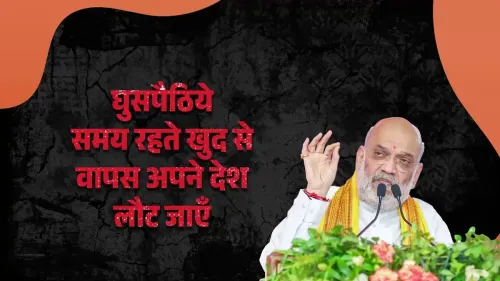
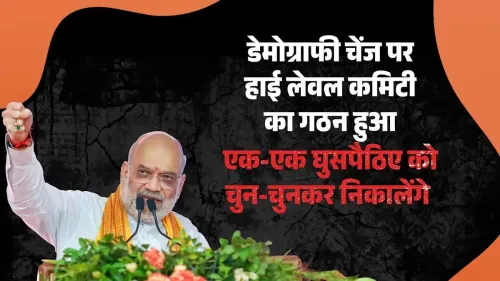
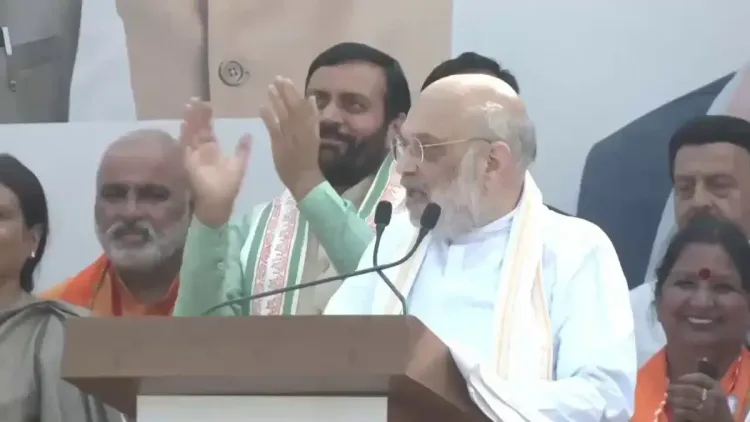
Kishan Reddy's post quotes Home Minister Amit Shah directly: 'Detect. Delete. Deport.' — framed as an encapsulation of Prime Minister Narendra Modi's 'unwavering resolve' on infiltrators inside Indian territory. The phrasing is deliberate and sequential: find them, remove their presence from records, and physically expel them. It is the kind of compressed political language designed to travel — and it did.
Shah has been the principal architect of the central government's internal-security framework since taking charge of the Home Ministry in 2019. That same year, the National Register of Citizens exercise in Assam concluded, identifying individuals who could not establish legal residency in India. The Citizenship Amendment Act, also passed in December 2019, created a parallel track — offering a path to citizenship for persecuted minorities from neighbouring countries while sharpening the legal distinction between refugees and infiltrators.
Border fencing, Assam drives, and the northeast frontier
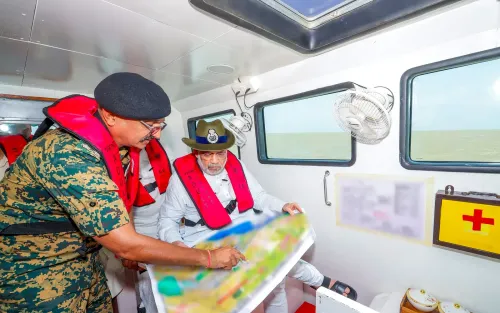
The 'Detect. Delete. Deport.' framing sits atop a longer policy lineage. Since 2014, successive BJP-led administrations have pursued border fencing along the India-Bangladesh frontier and conducted state-level identification drives in Assam and other northeastern states. Security agencies and border state administrations — from Assam to West Bengal — remain the operational arms of this framework, tasked with turning political resolve into ground-level action.
Kishan Reddy himself wears two hats: Cabinet minister overseeing coal and mines policy, and BJP Telangana state president. His amplification of a Home Ministry message underscores how the party mobilises its entire leadership network to push national-security positioning simultaneously across platforms.
What Parliament's winter session may bring
The timing is notable. With the winter session of Parliament on the horizon, opposition benches are likely to press the government on deportation statistics, the pace of border infrastructure completion, and the status of pending NRC-linked cases. The 'Detect. Delete. Deport.' line, now refreshed and recirculated, may well become a talking point on both sides of the aisle when that session opens.
Three words, a consistent ideology, and a government that keeps finding new moments to repeat them — the message is clearly not meant to age.
Point of View
The party demonstrates its capacity for coordinated, pan-national messaging on security themes. The compressed, three-word slogan also performs a secondary function: it pre-empts opposition critiques by asserting that a coherent, enforceable plan — not mere rhetoric — is already in place. Watch for deportation data and border fencing updates to either validate or complicate that claim when Parliament sits.
NationPress
5 Nov 2026
Frequently Asked Questions
What does 'Detect. Delete. Deport.' mean in the context of Indian immigration policy?
'Detect. Delete. Deport.' is a three-step formulation attributed to Home Minister Amit Shah describing the Modi government's approach to illegal infiltrators: identify them, remove their fraudulent records, and physically expel them from India.
What is the NRC in Assam and how does it relate to infiltrators?
The National Register of Citizens exercise in Assam, completed in 2019 , was designed to identify residents who cannot prove legal status in India — effectively a mechanism for detecting illegal immigrants, which aligns with the 'Detect' step of the government's stated policy.
What is G. Kishan Reddy's role in the BJP and why is he sharing this message?
G. Kishan Reddy is both Union Minister of Coal and Mines and BJP Telangana state president. His amplification of the Home Ministry's message reflects the party's practice of mobilising its entire leadership network to broadcast national-security positions simultaneously.
What border infrastructure has India built to stop infiltrators?
India has pursued fencing along the India-Bangladesh border and conducted state-level identification drives in Assam and other northeastern states since 2014 as part of its broader infiltrator-detection framework.
Will Parliament debate the infiltrator deportation policy in the winter session?
The winter session of Parliament is expected to see opposition questions on deportation statistics and the status of border infrastructure projects, making the 'Detect. Delete. Deport.' framing likely to resurface as a parliamentary talking point.