Amit Shah's border mission: security drive or defining political moment?
Synopsis
Amit Shah's border review is no longer a routine Home Ministry exercise — it is the centrepiece of a political project that links border fencing to demographic data, electoral outcomes and national identity. With a Demography Mission, a High-Level Committee and the 'detect, delete, deport' doctrine now embedded in policy, the Modi government is forcing a conversation India deferred for decades.
Key Takeaways
Home Minister Amit Shah is leading a comprehensive border security review that goes beyond fencing to address infiltration networks and forged documentation.
The government cites Census data showing the Hindu population share fell from 84% in 1951 to 79.8% in 2011, while the Muslim share rose from 9.8% to 14.2% .
Shah cited a 29.6% decadal Muslim population growth rate in Assam per the 2011 Census , linking it to illegal immigration.
Prime Minister Narendra Modi announced a Demography Mission in 2025 ; the Centre has also formed a High-Level Committee on demographic change from illegal immigration.
West Bengal is the primary political flashpoint, with the BJP accusing the TMC of enabling infiltration networks for electoral gain.
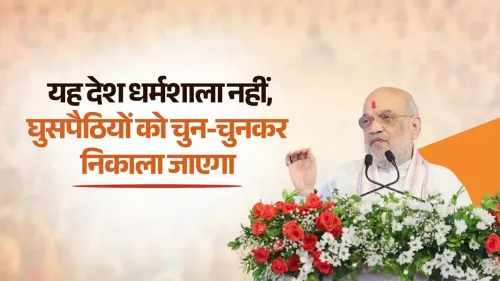
The government's 'detect, delete and deport' doctrine has shifted from campaign rhetoric to declared policy.
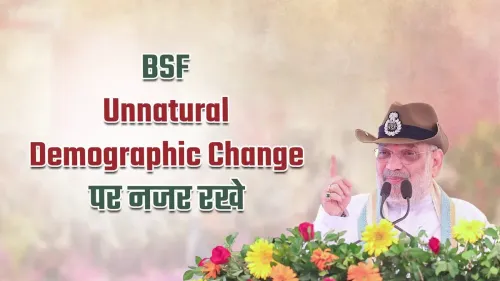
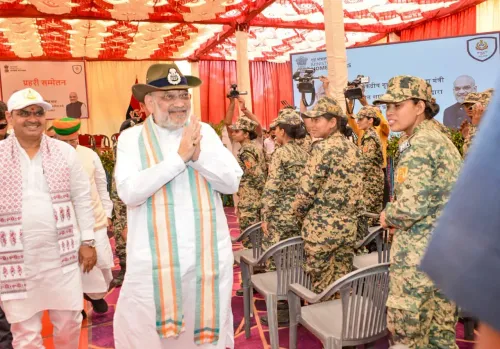
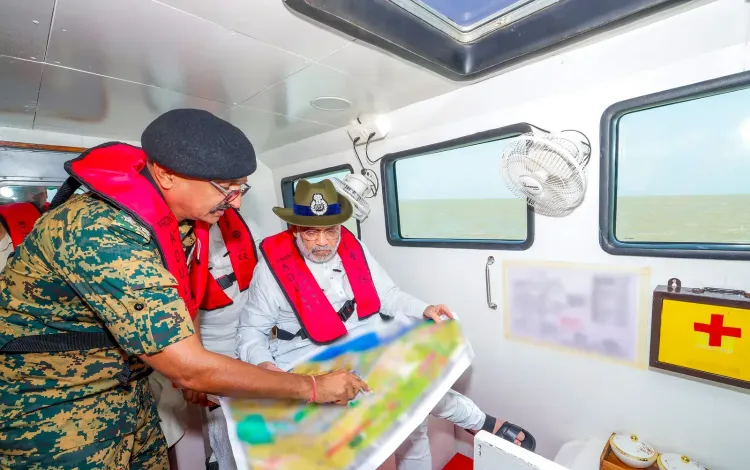
Home Minister Amit Shah's ongoing review and reinforcement of India's international borders has moved well beyond routine administrative exercise, emerging as one of the most politically charged security initiatives of the Modi government's third term. What began as a border-security audit is now reshaping national discourse on infiltration, demography and identity — simultaneously a policy push and a political signal.
A Mission Unlike Earlier Border Reviews
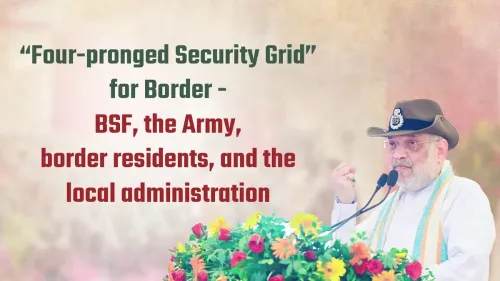
In nearly eight decades since Independence, successive governments addressed border security in incremental terms — more fencing here, additional battalions there. The present government's approach is structurally different. The Centre is pursuing a coordinated effort to identify infiltration networks, detect forged documentation, plug systemic loopholes and address what it characterises as the long-term consequences of unchecked illegal migration across India's land borders.
Shah has framed the issue not merely as a law-and-order challenge but as a demographic, political and national security concern — a framing that is new in mainstream Indian governance. The government's stated objective — 'detect, delete and deport' — has moved from campaign slogan to declared policy.
The Demographic Argument at the Centre of Debate
The most consequential — and contested — element of this mission is its explicit engagement with demographic change. According to Census data, Hindus constituted approximately 84 per cent of India's population in 1951, declining to around 79.8 per cent by 2011. The Muslim share rose from 9.8 per cent to 14.2 per cent over the same period.
Addressing the Narendra Mohan Memorial Lecture in October 2025 on the theme of 'Infiltration, Demographic Change and Democracy', Shah argued that demographic shifts in several border regions were linked not only to fertility rates but also to decades of illegal infiltration from neighbouring countries. He cited the 2011 Census figure showing a decadal Muslim population growth rate of 29.6 per cent in Assam, contending that such a rate could not be explained without factoring in illegal immigration. He made similar observations about specific districts in West Bengal and about demographic changes affecting tribal populations in parts of Jharkhand.
Different political formations draw sharply different conclusions from these figures. Critics argue the data is being selectively deployed to consolidate a political base; the government contends it is confronting a reality that earlier administrations chose to ignore.
West Bengal and the Political Flashpoint
West Bengal has emerged as the most prominent arena in this debate. Recent investigations into undocumented Bangladeshi migrants, forged identity documents and alleged infiltration networks have intensified political scrutiny of the state's border management. Bharatiya Janata Party (BJP) leaders have accused the All India Trinamool Congress (TMC) of facilitating such networks for electoral advantage, arguing that resistance to complete border fencing under Chief Minister Mamata Banerjee's government must be understood in this context.
Notably, as the Modi government enters its thirteenth year in office — reportedly buoyed by a historic win in West Bengal — the political ground is shifting beneath parties that have long relied on identity-based electoral calculations. Questions are now being asked with new urgency: how did illegal entrants obtain documentation, who enabled these networks, and why were corrective measures delayed for so long?
Policy Architecture: The Demography Mission and High-Level Committee
The government's institutional response has taken concrete shape. Prime Minister Narendra Modi announced a Demography Mission in 2025, reflecting the administration's intent to place the issue at the heart of policymaking rather than treating it as a periodic political talking point. The Centre has also constituted a High-Level Committee to study demographic changes arising from illegal immigration and other factors the government describes as abnormal.
This comes amid a broader pattern: for decades, infiltration surfaced in political debates and then receded. Today it occupies the centre of national discourse, tied to questions of identity, representation, public resources and the future character of regions along India's frontiers.
What Comes Next
Whether Shah's border mission delivers measurable results — reduced infiltration, dismantled documentation networks, verifiable deportations — remains to be seen. Implementation faces structural challenges: long, porous borders, entrenched local networks and, in some states, political resistance to enforcement. The success of the mission will ultimately be judged not by the rhetoric it generates but by the data it produces. How the government tracks, reports and independently verifies outcomes will determine whether this becomes a genuine security landmark or a well-publicised exercise that falls short of its stated goals.
Point of View
The policy debate gets conflated with identity politics — making independent evaluation of outcomes harder, not easier. The 'detect, delete, deport' doctrine sounds decisive, but the hard question is measurement: India has no credible real-time system for tracking deportations or verifying that infiltration networks have been dismantled. Without that, the mission risks becoming a powerful political narrative that outruns its administrative results — exactly the pattern that has defined several earlier security announcements.
NationPress
20 Sept 2026
Frequently Asked Questions
What is Amit Shah's border security mission about?
It is a comprehensive review and reinforcement drive aimed at identifying infiltration networks, detecting forged identity documents, plugging border loopholes and addressing what the government describes as the long-term consequences of illegal migration. The mission frames border security as a demographic and national security issue, not just a law-and-order matter.
What is India's Demography Mission announced by PM Modi?
Prime Minister Narendra Modi announced the Demography Mission in 2025 to place the study of demographic change from illegal immigration at the centre of policymaking. The Centre also constituted a High-Level Committee to investigate demographic shifts linked to illegal immigration and related factors.
What does Census data say about India's demographic changes?
According to Census data, Hindus constituted about 84% of India's population in 1951, declining to approximately 79.8% by 2011, while the Muslim share rose from 9.8% to 14.2% over the same period. Amit Shah has cited a 29.6% decadal Muslim population growth rate in Assam in the 2011 Census as evidence that illegal immigration is a contributing factor.
Why is West Bengal at the centre of the infiltration debate?
West Bengal shares a long border with Bangladesh and has seen investigations into undocumented migrants and forged identity documents. The BJP has accused the TMC government of facilitating infiltration networks for electoral benefit and has pointed to resistance to complete border fencing under Chief Minister Mamata Banerjee as a key enabler.
What is the 'detect, delete and deport' policy?
It is the Modi government's declared operational doctrine for dealing with illegal immigrants — identifying them, removing their names from official records and deporting them. The slogan has moved from BJP campaign rhetoric to stated government policy as part of the broader border security mission.