Amit Shah: Bengal border fencing to close infiltration gaps, tech to cover rest
Synopsis
Home Minister Amit Shah has called incomplete Bengal border fencing India's single biggest security weakness — and says a week-old BJP state government has already unlocked the land deadlock that stalled the project for years. With physical fencing on track and a tech-surveillance layer planned for rivers and forests, the Centre is signalling a comprehensive reset of the India-Bangladesh border security architecture.
Key Takeaways
Home Minister Amit Shah on 29 May called incomplete Bengal border fencing one of the 'biggest weaknesses' in India's border security grid.
The newly-formed BJP government in West Bengal granted in-principle approval to transfer all required land within one week of assuming office.
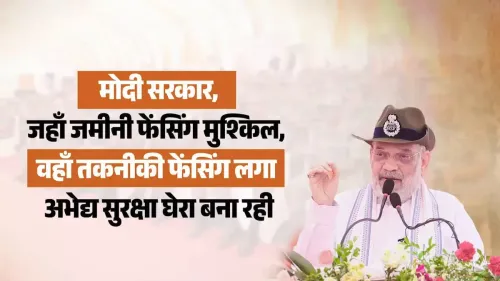
Land transfer work has already begun; Shah said completed fencing would stop infiltration 'on a very large scale.' Forests, rivers, and streams will be covered by technological fencing systems , including drones, radars, and watch towers under the Smart Border Security Project .
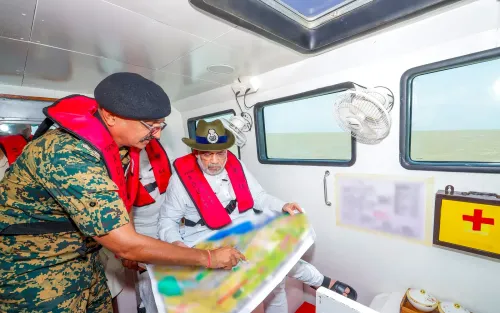
Shah was in Bhuj, Gujarat reviewing security preparedness along the Sir Creek and Harami Nala sectors on the India-Pakistan border.
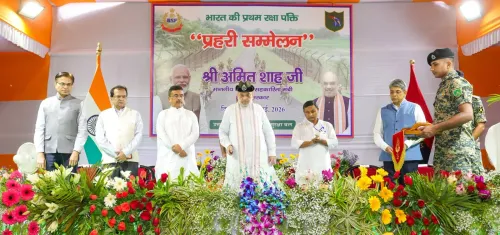
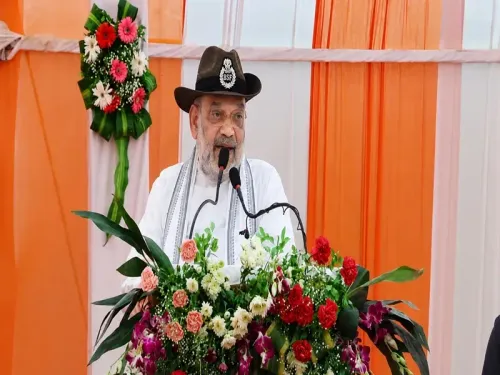
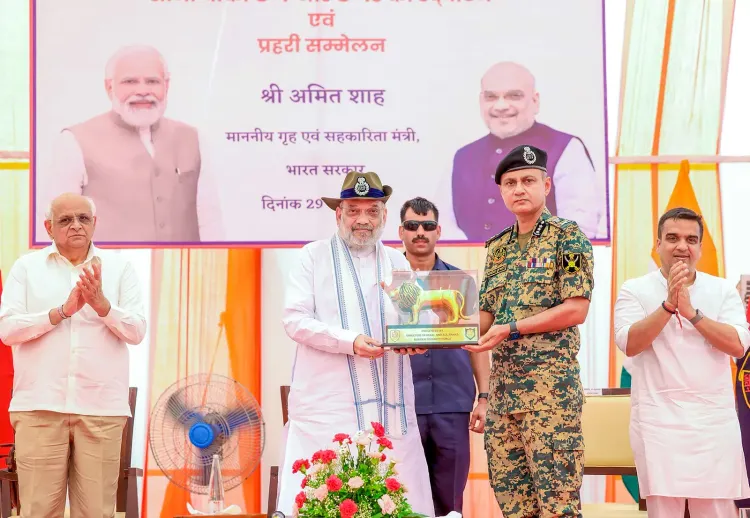
Union Home Minister Amit Shah on Friday, 29 May said the Centre had begun accelerating border fencing work along the India-Bangladesh border in West Bengal, following in-principle approval from the newly-formed Bharatiya Janata Party (BJP) state government to transfer land required for the project. Shah made the remarks while addressing Border Security Force (BSF) personnel at Border Outpost G7 in Bhuj, Gujarat.
Incomplete Fencing Called a 'Biggest Weakness'
Shah described the unfinished fencing along the Bengal stretch of the India-Bangladesh border as one of the 'biggest weaknesses' in India's border security grid. He noted that while geographical constraints exist in certain stretches, fencing had remained incomplete even in areas where construction was entirely feasible — solely because the required land had not been made available by the previous state administration.
'The biggest weakness in our security grid was the incomplete border fencing in Bengal,' Shah said, adding: 'Even where fencing could be constructed on available land, we had not received the land till now.'
New BJP Government Moves Swiftly on Land Transfer
Referring to the recent political transition in West Bengal, Shah said the new BJP government had acted within days of assuming office. 'Just a few days ago, with the blessings of the people of Bengal, a BJP government was formed there in a completely democratic manner, and within one week the Chief Minister gave in-principle approval to provide all land required for fencing,' he said.
According to Shah, work on transferring portions of the land had already commenced. He said that once physical fencing was completed, infiltration could be stopped 'on a very large scale.'
Technology to Secure Forests, Rivers and Streams
Shah acknowledged that forests, rivers, and streams would remain as the only vulnerable stretches after physical fencing was in place. He said the government was simultaneously developing technological fencing systems to address these terrain-specific challenges. 'Then only forests, rivers and streams will remain as possible routes, and we are simultaneously working at great speed on technological fencing for those areas as well,' he said.
He added that the Centre was integrating technology-based surveillance with conventional border management to strengthen security along both the Pakistan and Bangladesh borders.
Smart Border Security Project Outlined
During the interaction, Shah outlined the Centre's 'Smart Border Security Project', which encompasses the deployment of drones, radars, watch towers, and other modern surveillance systems along vulnerable stretches. The project represents a shift toward layered, technology-augmented border management.
Context: Shah's Bhuj Visit
The Home Minister was in Bhuj to review security infrastructure and operational preparedness in the Sir Creek and Harami Nala sectors along the India-Pakistan border. His visit to Border Outpost G7 formed part of a broader assessment of frontier readiness. The Bengal border fencing issue has long been flagged by security analysts as a critical gap enabling illegal cross-border movement, and Friday's remarks signal that the Centre intends to move decisively now that the state-level political obstacle has been removed.
Point of View
Not to logistics or funding. That is a political charge dressed in a security briefing. The more substantive question is timeline — years of incomplete fencing cannot be undone by a single in-principle approval, and the Centre has not disclosed a completion date or cost estimate. The 'Smart Border Security Project' is also not new; similar technology-augmentation announcements have been made along the Pakistan border for over a decade with uneven implementation. The real test is whether this political window translates into measurable fencing kilometres within a defined period — or becomes another headline without a deadline.
NationPress
22 Sept 2026
Frequently Asked Questions
Why was Bengal border fencing incomplete for so long?
According to Home Minister Amit Shah, fencing remained incomplete in West Bengal because the previous state government did not release the land required for construction, even in areas where terrain posed no obstacle. The land deadlock has now been resolved after the new BJP government granted in-principle approval within a week of taking office.
What is the Smart Border Security Project announced by Amit Shah?
The Smart Border Security Project is a Centre-led initiative to deploy drones, radars, watch towers, and other modern surveillance systems along India's borders. It is designed to complement physical fencing by covering terrain — such as forests, rivers, and streams — where constructing conventional barriers is not feasible.
How will India secure stretches where physical fencing cannot be built?
Shah said the government is simultaneously working on technological fencing for areas such as forests, rivers, and streams that cannot be physically fenced. These systems include drone surveillance, radar networks, and watch towers as part of the Smart Border Security Project.
Why was Amit Shah visiting Bhuj on 29 May?
Shah visited Bhuj to review security infrastructure and operational preparedness in the Sir Creek and Harami Nala sectors along the India-Pakistan border. His address to BSF personnel at Border Outpost G7 was part of that broader security review.
What impact is the completed Bengal fencing expected to have?
Shah said completing the fencing would help stop infiltration across the India-Bangladesh border 'on a very large scale.' The Bengal stretch has been identified as a key vulnerability in India's border security grid due to years of incomplete fencing.